
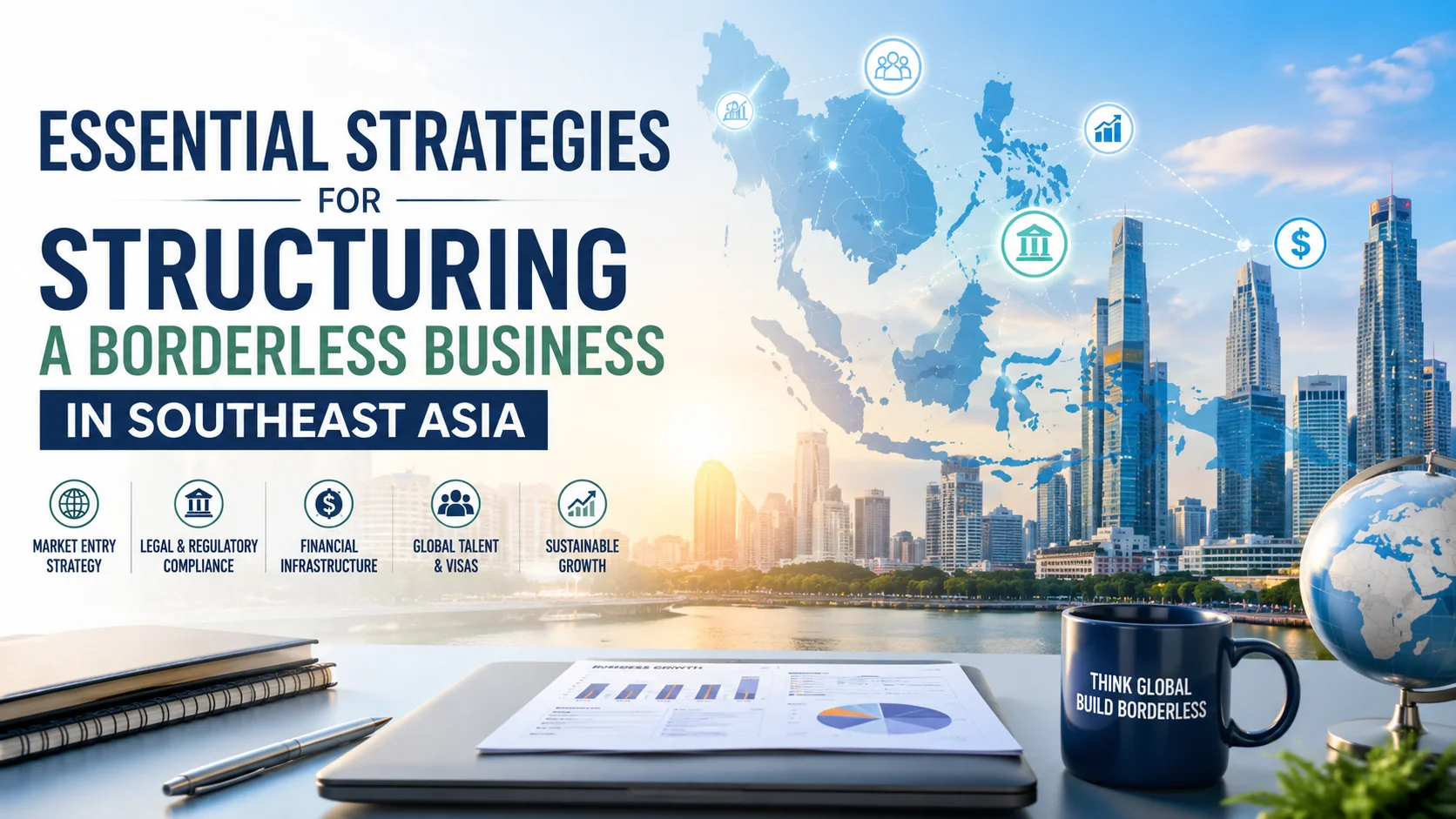

The landscape of global commerce is rapidly evolving, with entrepreneurs and small and medium enterprises increasingly looking beyond their domestic borders. Southeast Asia has emerged as a powerhouse for these borderless operations, driven by sustainable profitability and the rapid adoption of artificial intelligence. Regional digital economy projections indicate a surge past $300 billion in Gross Merchandise Value by the end of 2025. The numbers speak for themselves regarding investor confidence. According to the UN Trade and Development ASEAN Investment Report 2025, foreign direct investment inflows to the region rose by 8 percent to $226 billion, securing its position as a top investment destination globally. For founders seeking scalable growth, establishing a presence in this region offers unparalleled opportunities, provided they implement the right structural and financial strategies. The rise of remote work models and borderless talent acquisition has also made expanding into these emerging markets more feasible than ever before.
Navigating the Regional Boom and Market Entry
To capitalise on this rapid growth, businesses must deeply understand local regulatory frameworks before committing capital. Thailand, for instance, continues to cement its status as the region’s second largest digital economy, with its national digital Gross Merchandise Value expected to hit $56 billion by the close of 2025. To support this, sweeping digital infrastructure plans have been approved, making it an ideal hub for new ventures. Furthermore, the local government has actively encouraged foreign participation in advanced manufacturing, renewable energy, and digital services, creating a fertile environment for innovative enterprises. However, entering such a lucrative market requires careful legal planning. Under Thailand’s Foreign Business Act of 1999, standard foreign corporate ownership is typically restricted to 49 percent in many commercial sectors unless specific licences are secured. Operating without the required credentials can lead to severe fines and criminal penalties.
Fortunately, there are legal pathways to majority ownership, such as the unique bilateral US and Thai Treaty of Amity for American entrepreneurs. For international founders looking for comprehensive guidance on navigating these compliance complexities, understanding how to start a business in Thailand for foreigners is a critical first step. Proper market entry planning ensures that companies can legally operate, hire, and scale without facing unexpected regulatory roadblocks down the line.
Establishing a Resilient Financial Infrastructure
Once the legal foundation is firmly set, managing capital and cash flow across multiple jurisdictions becomes the next major operational hurdle. A truly borderless business requires an agile financial setup that can handle varied currencies, complex tax obligations, and seamless international payroll. Modern enterprises must look beyond traditional, location-bound banking. Instead, they need integrated financial frameworks that minimise currency conversion fees and reduce regulatory friction between borders. Businesses can now utilise advanced corporate virtual accounts and digital wallets that allow for instant cross-border settlements, drastically reducing transaction delays.
For a deep dive into optimising these multi-currency operations and managing international compliance, reviewing smart financial strategies for structuring a borderless business provides an excellent roadmap for small businesses. Building this financial resilience early on prevents cash flow bottlenecks as your enterprise expands across Southeast Asia. It also ensures that capital can be swiftly allocated to regions offering the highest return on investment, such as Thailand’s Eastern Economic Corridor, which offers significant corporate tax exemptions for qualifying foreign operations.
Leveraging Incentives and Visas for Global Talent
Another vital strategy for a borderless enterprise is taking full advantage of government incentives designed to attract foreign capital and high-level expertise. In Thailand, investor confidence is soaring, with the Board of Investment reporting a record 1.87 trillion baht in applications in 2025, representing a massive 67 percent value increase from the previous year. As global supply chains shift, accessing the right talent becomes just as important as securing funding.
To build a distributed, highly skilled team efficiently, borderless businesses should look into specific relocation and investment programmes that offer major structural benefits:
- Targeted Ownership Exceptions: Qualifying foreign businesses that successfully secure Board of Investment promotion can obtain a Foreign Business Certificate. This permits up to 100 percent foreign ownership in targeted sectors, bypassing standard local restrictions.
- Long-Term Resident Visas: The Long-Term Resident Visa programme offers a 10-year multiple-entry visa for eligible professionals and remote workers. This drastically simplifies expatriate administration by replacing the standard 90-day immigration reporting cycle with a simple one-year requirement.
- Tax Advantages: Highly skilled executives and professionals operating under this visa benefit from a highly competitive, flat 17 percent personal income tax rate, which is significantly lower than standard top statutory tax tiers.
- Centralised Processing: Initiatives like the newly opened Thailand Investment and Expat Services Centre in Bangkok consolidate visa, work permit, and foreign investment operations into a single, highly efficient processing hub.
Structuring a borderless business in Southeast Asia is not merely about registering a company overseas. It requires a holistic approach that integrates legal compliance, robust international financial systems, and the strategic utilisation of regional talent incentives. By aligning your corporate structure with the progressive policies of booming markets, your enterprise can achieve sustainable, borderless growth for years to come.