
A single mower is easy to manage. Check the oil, sharpen the blade, keep it under cover when it rains, and it will usually get through a season without much drama. A fleet of ten or twenty machines behaves completely differently. Small inefficiencies multiply, minor maintenance gaps turn into missed jobs, and a business that felt perfectly organised with three mowers can start to feel chaotic the moment it scales past a certain size.
Most landscaping companies learn this the hard way, usually around the middle of a busy season when the cracks in their equipment planning finally show. Working with a dependable grass cutter supplier from the earliest stages of building a fleet is one of the clearest ways to avoid that mid season collapse before it starts.
Why a Single Broken Machine Threatens an Entire Fleet’s Schedule
It seems logical to assume that a fleet of many machines is naturally more resilient than relying on just one or two, since there is more redundancy built in. In practice, this is only true if the fleet was built with that redundancy in mind. Many landscaping businesses grow their equipment count reactively, adding a new mower whenever workload demands it, without ever stepping back to plan for what happens when one machine goes down unexpectedly.
When routes are scheduled assuming every machine will be available every day, a single breakdown throws the whole day off. Crews get reshuffled, jobs get delayed, and the business absorbs a productivity hit that a properly planned fleet would have avoided through built in slack. This is the core difference between a collection of mowers and an actual fleet strategy.
The Mistake of Buying Everything at Once
When a landscaping business finally has the budget to expand its equipment count, the instinct is often to make one large purchase and get the whole fleet upgrade done in a single order. This feels efficient, but it creates a hidden risk. If every machine comes from the same production batch, any defect or design flaw affecting that batch has the potential to affect the entire fleet simultaneously, rather than just one or two units.
Staggering purchases across different times, even from the same trusted supplier, naturally spreads this risk. It also allows a business to evaluate how a new model performs in real conditions before committing the entire fleet budget to it, which is a safer approach than betting everything on a machine that has not yet proven itself under the specific demands of that business’s routes and terrain.
Standardising Equipment Across a Fleet
While staggering purchase timing helps manage risk, mixing too many different machine models across a fleet creates its own problems. Technicians need to learn different maintenance procedures for each model, spare parts inventory becomes more complicated to manage, and operators moving between machines lose the consistency that comes from familiarity with a single, well understood setup.
The businesses that manage fleets most smoothly tend to standardise around one or two core models from a supplier they trust, only introducing a new model deliberately and after proper evaluation, rather than accumulating a random mix of machines picked up opportunistically over the years. This standardisation pays off most clearly during busy periods, when technicians can service any machine in the fleet without needing to look up model specific instructions each time.
Training and Maintenance at Fleet Scale
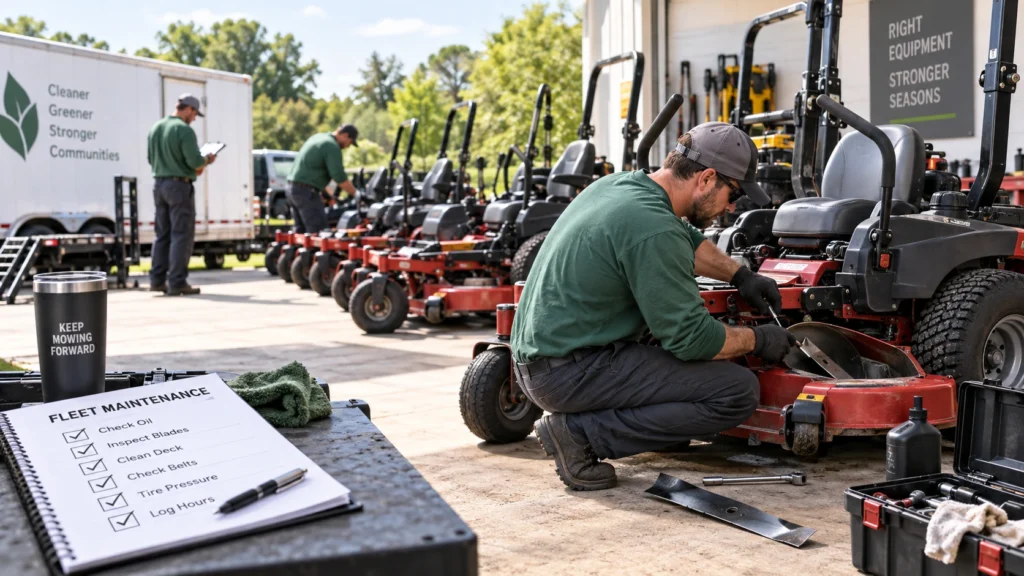
As a fleet grows, informal maintenance habits that worked fine for two or three machines stop being enough. What used to be a quick check before heading out for the day needs to become a documented routine that every crew member follows consistently, regardless of which machine they happen to be assigned that day. Skipping this step is one of the most common reasons fleets start experiencing more frequent breakdowns as they scale, not because the equipment itself got worse, but because oversight became inconsistent across a larger number of machines and operators.
Setting up a simple maintenance log for each machine, tracking hours of use, oil changes, and blade sharpening, gives a business much better visibility into which machines are approaching the end of their reliable lifespan, rather than waiting for a sudden failure to reveal it.
Building Redundancy Into Daily Routes
A well planned fleet accounts for the reality that at least one machine will be out of service at any given time, whether due to routine maintenance or an unexpected issue. Scheduling routes with this assumption built in, rather than assuming full fleet availability every single day, prevents a single mechanical issue from cascading into missed appointments and frustrated clients.
This might mean keeping one machine slightly underutilised as a buffer, or structuring routes so that a temporary reduction in available equipment can be absorbed without cancelling jobs outright. It requires a bit more planning upfront, but it is far less disruptive than scrambling to rearrange an entire day’s schedule after a breakdown that could have been anticipated.
Choosing Partners Who Can Support Fleet Growth
As a landscaping business scales from a handful of machines to a genuine fleet, the demands placed on an equipment supplier change considerably. A supplier who handled occasional single unit orders without issue may not be equipped to support consistent bulk orders, faster turnaround on replacement parts, or the kind of ongoing relationship that fleet level operations require.
This is why evaluating a supplier’s capacity to grow alongside a business matters just as much as evaluating the equipment itself. Asking directly about bulk order lead times, dedicated support for repeat business customers, and how the supplier handles larger volume requests during peak season gives a much clearer picture of whether that relationship will hold up as the fleet expands.
Signs a Fleet Is Outgrowing Its Current Setup
Certain warning signs tend to appear before a fleet’s equipment strategy fully breaks down. Increasingly frequent repairs across multiple machines, technicians spending more time on maintenance than on new jobs, and routes that consistently need last minute adjustments are all indicators that the current approach to fleet management needs revisiting. Catching these signs early, rather than waiting for a full season of disruption to force the issue, gives a business room to make deliberate changes rather than reactive ones.
Businesses that regularly review fleet performance, rather than only thinking about equipment when something breaks, tend to catch these patterns months before they become serious operational problems.
Final Thoughts
Building a mowing fleet that holds up through a full season takes more than simply buying enough machines to cover the workload. It requires deliberate planning around staggered purchasing, standardised equipment, consistent maintenance routines, and a supplier relationship capable of supporting growth rather than just fulfilling a one time order.
Landscaping businesses that invest this kind of thought into their fleet strategy early tend to spend far less time firefighting equipment issues once the season gets busy, freeing up energy to focus on the actual work instead.