
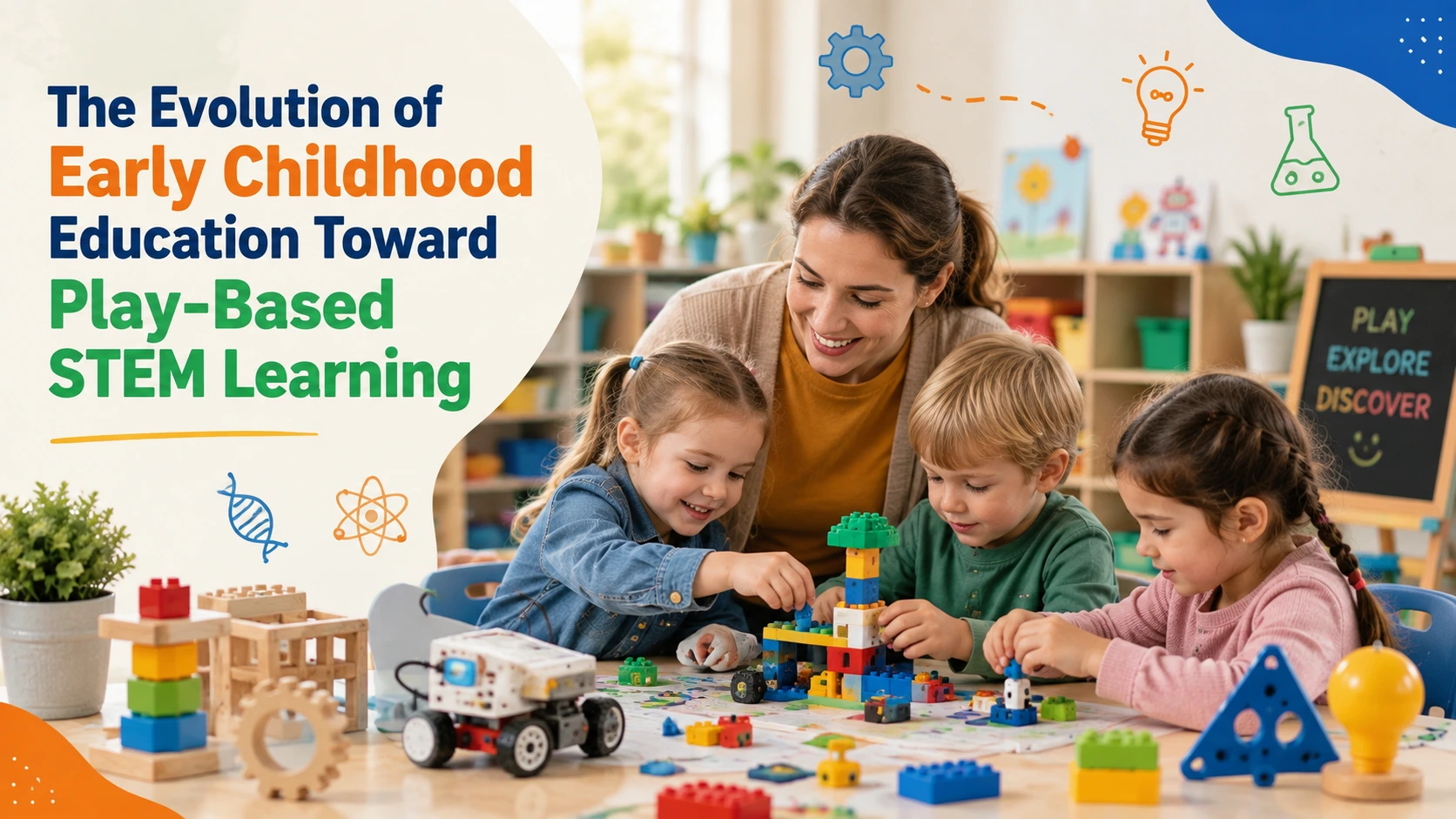
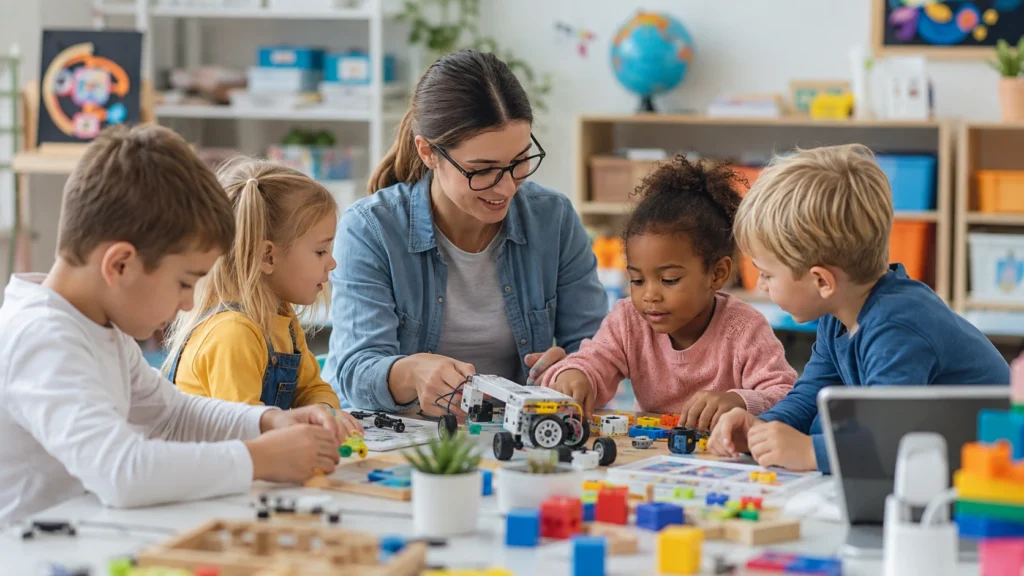
Early childhood education has transformed significantly in Australia. It is no longer viewed merely as a safe place for basic supervision while parents are at work. Today, early learning centres operate as dynamic environments focused on building foundational cognitive skills. Preschool participation has continued to grow, reflecting a strong national emphasis on school readiness well before children enter primary education. The focus has decisively shifted toward equipping young learners with the skills they need to thrive in an increasingly complex world.
The Shift to Intentional Play in Early Years
The updated Early Years Learning Framework introduces clearer guidance for the thoughtful and purposeful integration of digital technology and STEM concepts in early learning. One of the strongest educational trends is the growing emphasis on intentional, inquiry-driven play. Educational research highlights that early childhood educators should use intentional teaching practices to balance unstructured play with guided skill-building, helping children transition confidently into formal schooling.
Parents are becoming increasingly aware of this important shift in early childhood education. For example, when evaluating local options, such as a dedicated childcare Merrylands service, parents should look for programs that actively balance unstructured play with guided, inquiry-based STEM activities. Research suggests that these play-based approaches can support both academic development and student engagement.
How Future Classrooms Drive Early STEM
The urgency to introduce science, technology, engineering, and mathematics at a young age is heavily influenced by the changing landscape of primary and secondary education. Since primary schools are rapidly changing due to the rise of EdTech and connected classrooms shaping traditional teaching models, establishing a foundational play-based STEM framework in early learning is more crucial than ever. Modern primary environments rely heavily on AI-driven personalised learning and interactive technologies.
To prepare children for these modern, technology-rich classroom environments, early learning programs should build social-emotional skills alongside cognitive development. Government-supported initiatives also help educators deliver inquiry-based STEM experiences that encourage curiosity, resilience, and problem-solving from an early age.
Real-World Examples of Play-Based STEM
Translating complex STEM concepts into toddler-friendly activities requires a mix of creativity and structural support. Recent pedagogical guidelines in New South Wales highlight that best practice requires a blend of explicit teaching and inquiry-based instruction. Children need structured guidance to master complex new concepts, but they also need the freedom to explore at their own pace. High-quality early learning centres incorporate STEM into daily routines through the following practical methods:
- Water play physics: By experimenting with filling different-shaped containers, children naturally develop foundational understandings of volume, capacity, and logical reasoning. This hands-on experimentation serves as a perfect early physics lesson.
- Tinkering tables: Construction challenges using blocks or recycled materials serve as early engineering tasks. These activities require children to plan structures, negotiate with peers, and solve complex spatial problems independently.
- Digital applications: Innovative programs like Early Learning STEM Australia utilise play-based apps linked directly to the EYLF. These tools are designed specifically to build spatial and logical reasoning skills in preschool-aged children.
- Everyday mathematics: Routine tasks such as sorting natural objects like rocks and leaves, or measuring ingredients during cooking activities, are commonly incorporated into school readiness programs. Educational initiatives also encourage educators and parents to develop children’s numeracy skills naturally through everyday play experiences.
Building Cognitive Skills Through Inquiry
The ultimate goal of this evolution in early education is to foster deep, lifelong curiosity. Official guidelines strongly support this modern methodology. For instance, the Government of Western Australia notes that when educators encourage children to ask questions and take an active role in their own learning, kids actively develop their critical thinking skills and build their foundational STEM capabilities.
The childcare sector continues to strengthen the quality of early learning experiences across Australia. Ongoing improvements in teaching practices and quality standards reflect a shared commitment to supporting children’s cognitive development and school readiness. By viewing early childhood education as a critical period for STEM learning and inquiry, educators and parents are working together to build strong foundations for lifelong learning.