

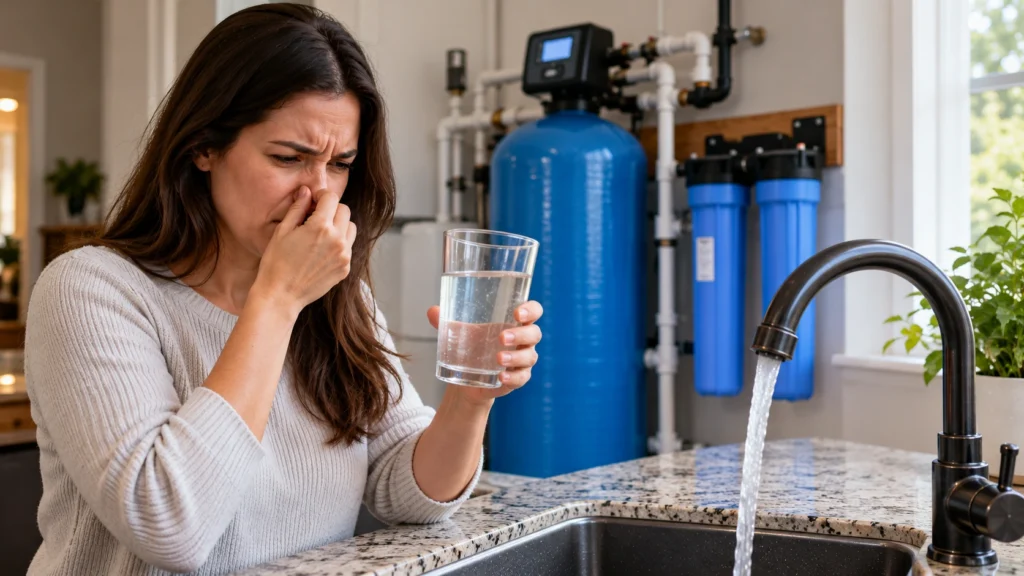
There is nothing quite as jarring as stepping into a warm morning shower only to be greeted by the pungent, stomach-churning smell of rotten eggs. If this sounds familiar, you are not alone. More than 43 million Americans, representing approximately 15 percent of the U.S. population, rely on private domestic wells as their primary source of drinking water. Because the federal Safe Drinking Water Act does not regulate private wells, individual homeowners are completely responsible for testing and treating their own water quality.
A widespread study by the U.S. Geological Survey found that roughly one in five private wells contained at least one chemical contaminant at levels exceeding health benchmarks. While some underground issues go completely unnoticed, water that smells like sulfur is impossible to ignore. Fortunately, understanding the source of this odor is the first step toward restoring fresh, clean water to your household.
The Science Behind the Stench
That distinctive rotten egg smell is caused by hydrogen sulfide gas. This gas is typically created when sulfur-reducing bacteria break down naturally occurring sulfates found deep in the groundwater. Human senses are incredibly sensitive to hydrogen sulfide. Most people can detect its musty or swampy odor at concentrations as low as 0.5 parts per million.
When hydrogen sulfide concentrations exceed 1 part per million, the gas produces a strong odor that becomes particularly offensive in the shower. The heat from the water forces the trapped gas out of the liquid and into the confined air of your bathroom, amplifying the unpleasant smell. To combat this issue, many homeowners rely on the top sulfur removal systems to keep their indoor environment smelling fresh.
However, it is important to pay attention to exactly when the smell occurs. If the foul odor only happens when you run the hot water, the well itself might not be the culprit. Instead, the smell is likely caused by a chemical reaction between the water and the standard magnesium anode rod located inside your home water heater. In rare instances, hydrogen sulfide odors in well water can indicate sewage pollution. Health departments strongly recommend testing for bacterial contamination if a nearby septic leak is suspected.
How Sulfur Impacts Your Home Plumbing
Living with hydrogen sulfide is not just an assault on your sense of smell. This gas is highly corrosive to iron, steel, and copper pipes. Over time, untreated sulfur water can lead to expensive pipe leaks and significantly shorten the lifespan of your home plumbing infrastructure.
High concentrations of hydrogen sulfide will also leave persistent black or yellow stains on bathroom tiles and kitchen fixtures. It can even quickly tarnish household silverware or copper cooking utensils. The situation worsens when hydrogen sulfide combines with dissolved iron in the water. This combination creates iron sulfides, which form a thick, clogging sludge that can permanently damage well casings, water pumps, and underground pipes. Because of these costly infrastructure risks, property owners often invest in whole-house filtration equipment that neutralizes the gas before it ever enters the plumbing lines.
Actionable Steps to Treat Your Water Supply
Treating hydrogen sulfide requires matching the solution to the specific severity of your water conditions. The U.S. Environmental Protection Agency does not enforce a primary health standard for hydrogen sulfide in drinking water, but they do establish a Secondary Maximum Contaminant Level for odor and sulfate. Ultimately, this means it is up to you to implement the right treatment method.
Here are the most effective ways to eliminate sulfur smells from your home:
- Replace the Anode Rod: If the smell is completely isolated to your hot water taps, contact a local plumber to swap the standard magnesium anode rod in your water heater for an aluminum or zinc alternative.
- Aeration and Carbon Filtration: For mild cases of sulfur gas, aeration systems work by forcing air into the water to release the gas safely. Granular activated carbon filters can also be used in tandem to trap the odor before it reaches your faucet.
- Chemical Injection Systems: In homes dealing with extreme concentrations of hydrogen sulfide, water treatment professionals frequently install advanced chemical injection systems. Methods utilizing hydrogen peroxide or chlorine oxidation will permanently neutralize the sulfur bacteria at the source.
- Verify System Certifications: Organizations like the Water Quality Association and NSF International advise homeowners to ensure that any whole-house filtration equipment is independently certified specifically for hydrogen sulfide reduction.
Taking control of your water quality requires a bit of basic investigation and the right equipment. Living on a private well offers wonderful independence from municipal water fees, but it demands proactive home maintenance. By correctly identifying the source of the sulfur smell and investing in the appropriate filtration treatment, you can protect your plumbing infrastructure. More importantly, you can enjoy fresh, odor-free water every time you turn on the tap.