

A small growth on genital skin can become a surprisingly large source of uncertainty. You notice it in the shower. Then you notice it again. Soon you are comparing photographs online, wondering whether it was always there and trying to decide whether you should leave it alone or have it removed.
That is where genital wart removal in Singapore can be a useful search, but the better starting point is not the removal method. It is finding out what the growth actually is. Genital warts can look different from one person to another, and other skin conditions can resemble them. A clear diagnosis makes the treatment decision much simpler.
Start With The Diagnosis
Genital warts are commonly diagnosed by examining the affected skin. They can appear as small raised growths, alone or in groups, and may be skin-coloured or otherwise different from the surrounding skin. Some cause itching or irritation, while others are barely noticeable.
The important part is that not every genital bump is a wart. A clinician may consider other possibilities, especially when a lesion looks unusual, is bleeding, ulcerated, firmly attached to deeper tissue, or does not respond to standard treatment. In those situations, further assessment may be needed.
A useful rule is simple: diagnose first, remove second.
Treatment Is Not One Size
Once genital warts have been identified, there is no single treatment that is best for every person or every wart. The choice can depend on the size, number and location of the lesions, as well as convenience, side effects, cost and personal preference.
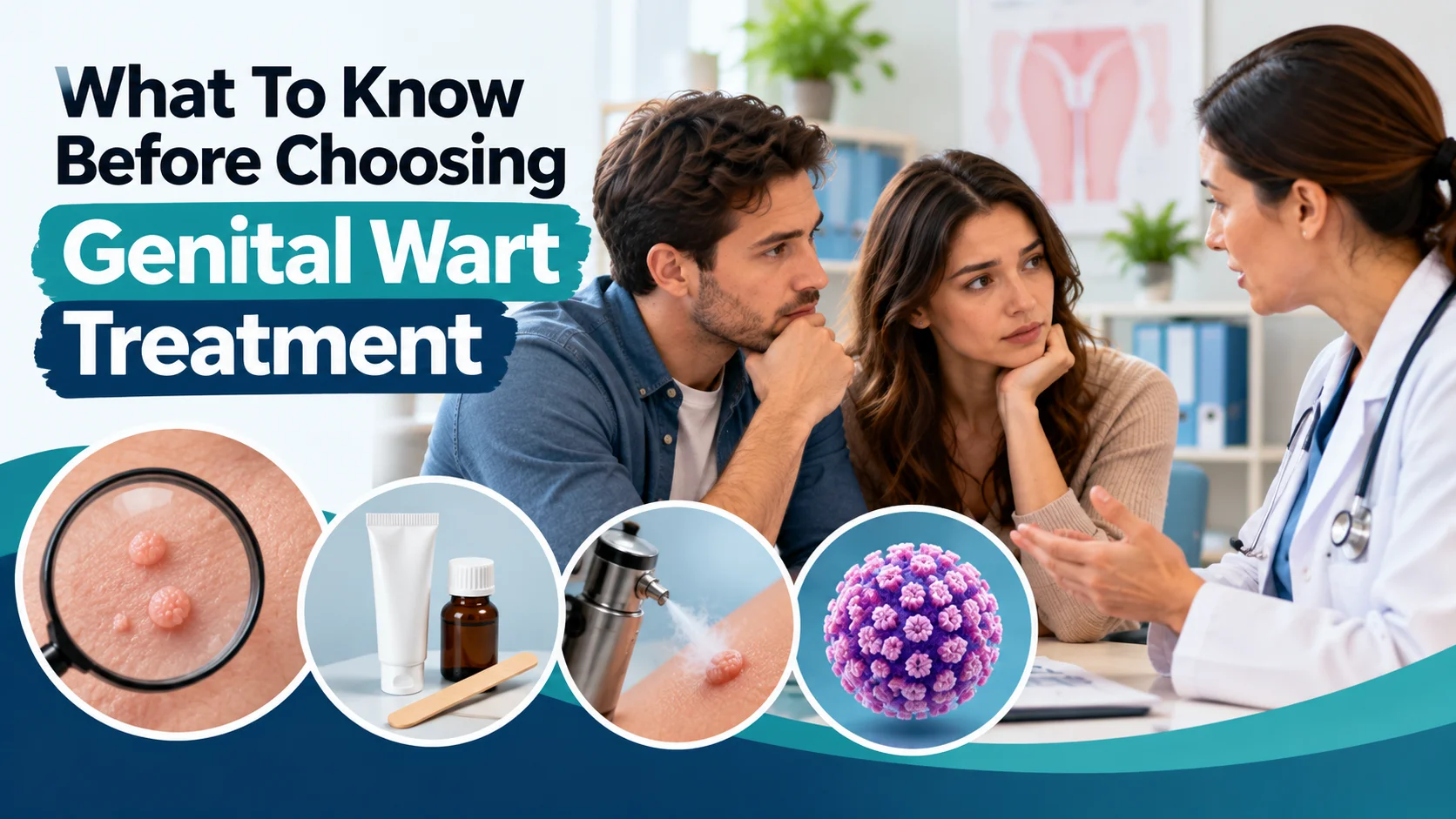
Options can include prescribed topical treatments, freezing, chemical treatment or procedures that physically remove the visible wart. Some approaches are repeated over several sessions, while others can clear most visible growths in a single procedure.
This creates a trade-off that is easy to overlook. The fastest-looking option is not automatically the most suitable one. A person with a few accessible lesions may value quick removal, while someone with multiple or sensitive areas may care more about the treatment experience and recovery.
Do Not Chase The Fastest Fix
People naturally want the growth gone as quickly as possible. That can make a treatment sound attractive simply because it promises speed.
But “quick” needs context. A procedure may remove visible warts promptly while still requiring follow-up if new lesions appear. A topical approach may take longer but allow treatment without a procedure. The practical choice depends on the individual situation rather than on the number of days written beside a treatment name.
Before choosing, ask three questions: How many lesions are there? Where are they? And what matters most to me: speed, convenience, discomfort, cost or avoiding a procedure?
The Costly DIY Mistake
One of the easiest mistakes is treating a genital wart like a wart on your hand.
That logic is understandable. If a wart-removal product works on ordinary skin, why would it not work here? Because genital skin is different, and products intended for common warts are not designed for genital lesions. The NHS specifically advises against using pharmacy wart treatments on genital warts.
A burning sensation is not proof that a product is working. It may simply mean healthy skin has been irritated or injured.
The decision rule here is even simpler: do not experiment on genital skin with ordinary wart-removal products.
Removal Does Not End HPV
Another point is easy to miss because the visible problem is the part you can see.
Treatment aims to remove the warts and improve symptoms. It may reduce the amount of visible disease, but treatment does not necessarily eradicate HPV infection. Warts can also recur after treatment.
That means recurrence is not automatically proof that the original treatment “failed”. It may mean that new visible lesions have appeared after the first treatment.
This distinction matters because it changes what success means. The goal is to manage the visible warts appropriately, understand the possibility of recurrence and follow the treatment plan rather than judging everything by whether the skin stays completely clear forever.
Know When To Reassess
If a lesion changes, multiplies, bleeds, becomes painful or fails to respond as expected, it deserves another look rather than repeated guesswork. The same applies when you were never certain that the original growth was a wart in the first place.
It can also help to remember what you actually want from treatment. “I want it gone” is understandable, but a more useful goal might be clearing several visible lesions, reducing irritation or finding the least disruptive option for a sensitive area.
Genital wart treatment becomes much easier to navigate once you stop treating removal as the whole problem. First establish what you are looking at. Then weigh the location, number of lesions, treatment experience and your own priorities. Most importantly, do not let embarrassment push you into guessing. Once the diagnosis is clear, the choices become far less mysterious, and you can deal with the problem as a medical issue rather than a private puzzle.