
Buying a motorcycle is an exciting decision, but choosing the right motorcycle dealer can be just as important as choosing the motorcycle itself. A reputable dealer can make the buying process easier, provide useful guidance, and continue supporting you with maintenance and service after your purchase.
Whether you are buying your first motorcycle or adding another bike to your collection, it is worth taking time to compare dealerships before making a decision. Looking beyond the motorcycle itself can help you find a dealer that offers fair pricing, knowledgeable staff, quality service, and dependable after-sales support.
What to Look for When Choosing a Motorcycle Dealer
Not every motorcycle dealership offers the same level of service or selection. Before committing to a purchase, consider several factors that can affect both your buying experience and your ownership experience. A good dealer should be transparent, professional, and willing to help you find a motorcycle that matches your needs and budget.
1. Check the Dealer’s Reputation
A dealer’s reputation can tell you a lot about what to expect after you walk through the doors. Start by checking reviews and feedback from previous customers. Pay attention to comments about customer service, pricing, communication, vehicle quality, and how the dealership handles problems after a sale.
You can look for customer feedback on Google, social media, and other review platforms. Reading several reviews rather than relying on one comment can give you a more balanced picture of the dealership’s complete customer satisfaction. It is also worth asking friends, family members, or other motorcycle enthusiasts if they have experience with local dealers.
2. Look at the Motorcycle Selection
The selection available at a dealership should match what you are looking for. Some dealers specialize in particular motorcycle brands, while others offer several makes and models. A dealership with a broader selection can make it easier to compare different motorcycles based on engine size, riding style, features, and price.
Also find out whether the dealer sells new motorcycles, used motorcycles, or both. Used motorcycles can provide more affordable options, while a new bike may offer the latest features and manufacturer warranty coverage. If possible, ask which models are currently available and whether the dealer can order a specific motorcycle that is not in stock.
3. Evaluate Customer Service
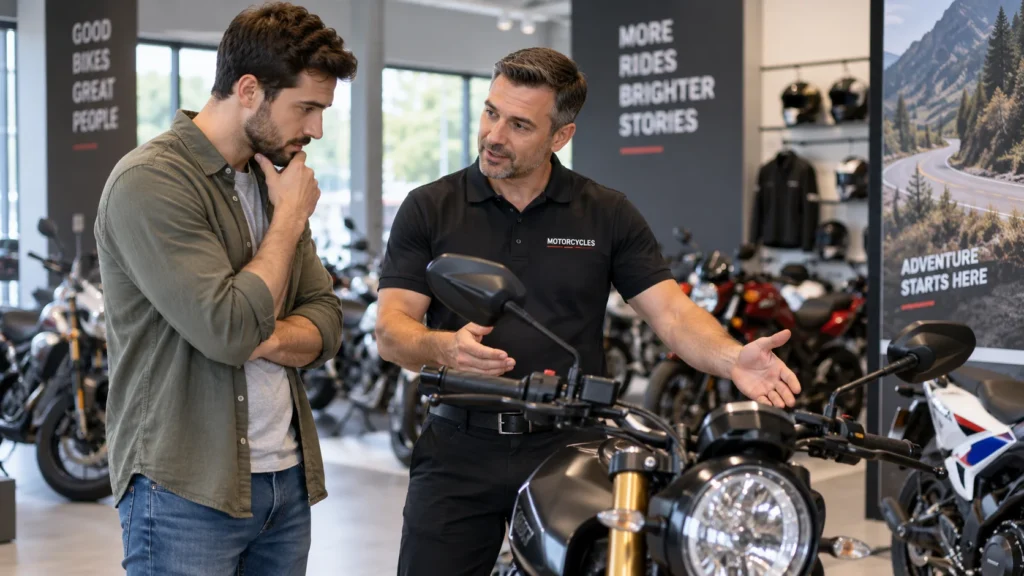
Pay attention to how dealership staff treat you from your first interaction. Good customer service should not disappear once you show interest in purchasing a motorcycle. The sales team should be approachable, knowledgeable, and willing to answer your questions without putting unnecessary pressure on you.
Ask questions about the motorcycles you are considering and see whether the staff take the time to explain the differences. A reputable dealer, such as an MV Augusta motorcycle dealer, should focus on helping customers make informed decisions rather than simply trying to complete a sale.
4. Compare Prices and Additional Fees
The advertised price of a motorcycle does not always represent the total amount you will pay. Before agreeing to a purchase, ask the dealer for a clear breakdown of the final price. Depending on the dealership and motorcycle, additional costs may include documentation, registration, delivery, accessories, preparation, or other dealer fees.
Comparing the total purchase price between several dealers can help you determine whether you are getting a competitive deal. Do not focus only on the lowest advertised price. A slightly higher price may be worthwhile if the dealer provides better warranty support, servicing, parts availability, or customer service.
5. Ask About Financing Options
If you plan to finance your motorcycle, ask about the financing options available through the dealership. Compare interest rates, loan terms, required deposits, monthly payments, and the total cost of financing rather than looking only at the monthly payment.
You can also compare the dealer’s financing offer with options from your bank or another lender. Understanding the complete cost before signing can help you avoid unexpected expenses later.
6. Check Service and Maintenance Support
Buying the motorcycle is only the beginning of ownership. Regular maintenance is essential for keeping a motorcycle safe, reliable, and performing properly. For this reason, the dealership’s service department should be an important part of your decision.
Find out whether the dealer has an on-site service center and ask what types of maintenance and repairs they handle. You can also ask about service costs, appointment availability, technician experience, and the estimated time required for common repairs. A dealer with reliable after-sales service can save you time and inconvenience throughout your motorcycle’s ownership.
7. Ask About Parts and Warranty Coverage
Before purchasing a motorcycle, ask how easily replacement parts can be obtained. Parts availability can affect how quickly repairs are completed, particularly if you own a less common model.
You should also understand what warranty coverage comes with the motorcycle. Ask what components are covered, how long the warranty lasts, and where warranty repairs can be performed. Knowing these details in advance can prevent unpleasant surprises if a problem occurs after your purchase.
8. Take a Test Ride
A motorcycle can look perfect on paper but still feel uncomfortable once you ride it. Whenever possible, take a test ride before making your final decision. A test ride allows you to evaluate the riding position, handling, controls, braking, acceleration, and overall comfort.
If you are comparing several motorcycles, testing more than one model can help you understand which bike suits your experience level and riding preferences. Ask the dealership about its test-ride requirements and make sure you understand any rules before riding.
9. Understand the Purchase Agreement
Never rush through the paperwork simply because you are excited about getting your motorcycle. Read the purchase agreement carefully and make sure the details match what you discussed with the dealer.
Pay particular attention to the motorcycle’s price, fees, financing terms, warranty information, accessories, and any other conditions included in the agreement. If something is unclear, ask the dealer to explain it before signing.
Tips for Finding the Right Motorcycle Dealer
Once you know what to look for, comparing dealerships becomes much easier. Keep these practical tips in mind while researching your options:
- Research several dealerships before making a decision.
- Read recent customer reviews and look for consistent feedback.
- Visit different dealerships and compare their customer service.
- Compare motorcycle prices and ask about additional fees.
- Test-ride different motorcycles when possible.
- Ask about financing, warranty coverage, servicing, and replacement parts.
- Compare new and used motorcycles if both options fit your budget.
- Read all terms and conditions carefully before signing a contract.
- Avoid dealers who pressure you into making a decision before you are ready.
Red Flags to Watch for When Choosing a Dealer
Knowing what to avoid is just as important as knowing what to look for. Be cautious if a dealer refuses to provide clear pricing information, avoids answering questions, pressures you to sign immediately, or gives vague answers about warranty and service support.
You should also be careful when a deal seems unusually good without a clear explanation. Ask questions and verify the motorcycle’s condition, history, fees, and paperwork before handing over your money.
Make Your Dealer Decision Carefully
The right motorcycle dealer should offer more than a selection of motorcycles. You want a dealership that provides honest information, fair pricing, dependable customer service, quality maintenance, and useful support throughout your ownership experience.
Take your time to research different dealers, compare motorcycles and prices, ask detailed questions, and take a test ride before making your decision. By considering reputation, customer service, inventory, financing, warranty coverage, and after-sales support, you can choose a motorcycle dealer with greater confidence and enjoy a smoother buying experience.