
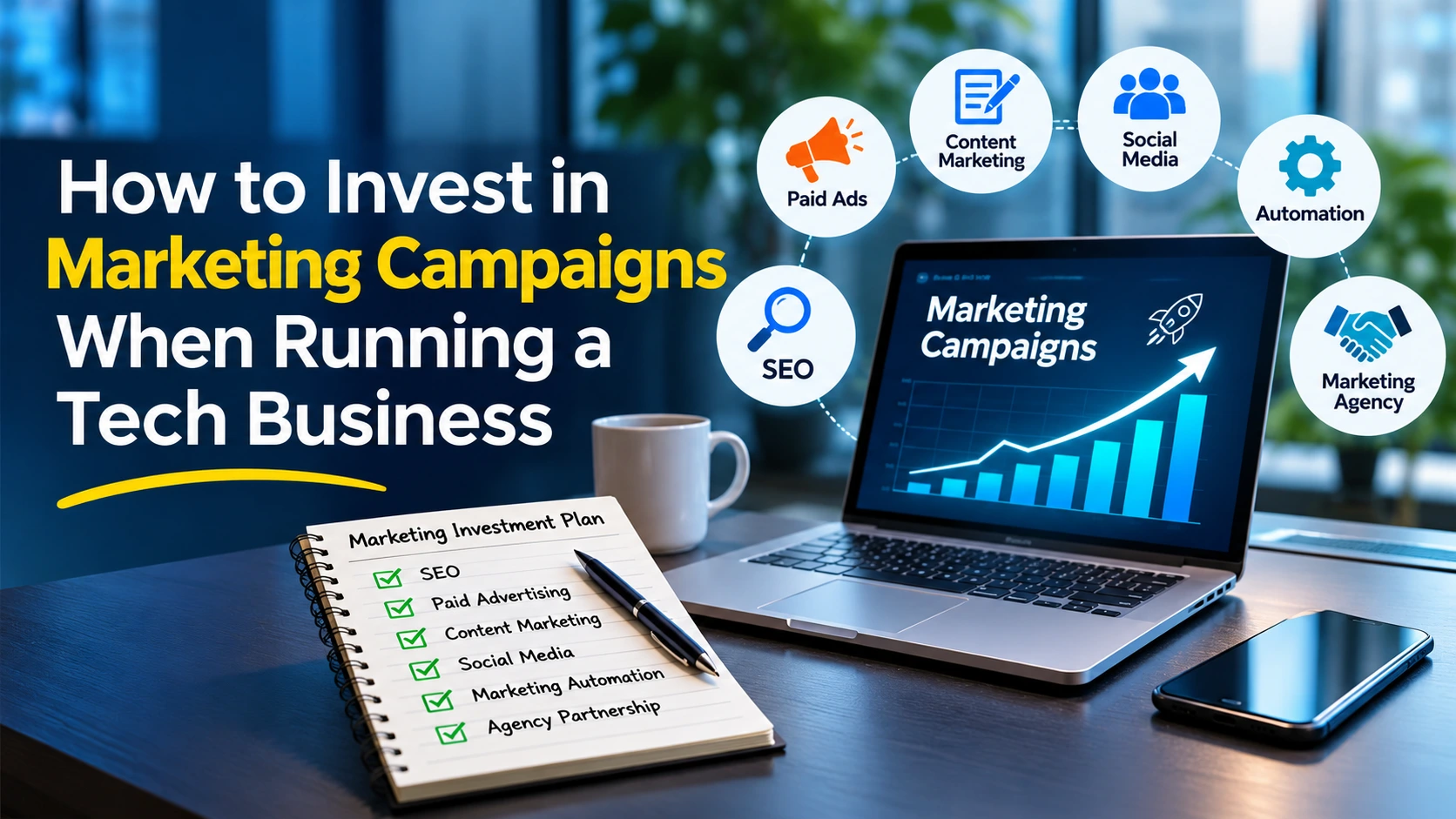

Running a technology business requires more than developing innovative products or offering reliable services. To attract customers, build brand awareness, and compete in an increasingly crowded market, you also need an effective marketing strategy. However, deciding where to invest your marketing budget can be challenging, especially when multiple channels promise different results.
From search engine optimization (SEO) and content marketing to paid advertising and marketing automation, technology companies have several opportunities to reach potential customers. The key is identifying the marketing channels that align with your business goals, target audience, and available resources.
A well-planned marketing investment can help your technology company generate qualified leads, improve customer acquisition, strengthen brand credibility, and achieve sustainable growth. Rather than spending money on every available platform, focus on strategies that deliver measurable value over time.
In this guide, we explore six effective ways to invest in marketing campaigns when running a tech business, along with practical considerations for maximizing your marketing budget.
1. Outsource Your Marketing to a Professional Agency
One of the most practical ways to strengthen your marketing strategy is to work with an experienced marketing agency. Managing multiple marketing activities internally can be time-consuming, particularly for technology businesses that need to prioritize product development, customer support, and innovation.
Outsourcing marketing allows you to access specialists with experience in areas such as search engine optimization, paid advertising, content creation, social media management, and campaign analytics.
A professional agency can also help you identify your target audience, understand competitor strategies, develop marketing campaigns, and measure performance using relevant data.
For example, partnering with Growthbound’s marketing services can give your business access to marketing expertise and specialized tools without requiring you to build a complete in-house marketing department.
Before choosing an agency, consider the following factors:
- Industry experience: Look for an agency that understands technology products, SaaS businesses, or your specific market.
- Proven results: Review previous campaigns, client feedback, and measurable performance improvements.
- Service offerings: Make sure the agency provides the services your business actually needs.
- Reporting and transparency: Choose a partner that provides clear performance reports and communicates campaign progress.
- Budget flexibility: Compare pricing structures and ensure the proposed services align with your available marketing budget.
Although outsourcing requires an investment, it can be more cost-effective than hiring several full-time marketing specialists. It also allows your internal team to concentrate on developing products and improving customer experiences.
2. Use Marketing Automation Tools
Marketing automation is another valuable investment for technology companies. As your business grows, manually managing email campaigns, customer follow-ups, lead generation, and social media activities can become increasingly difficult.
Marketing automation tools help streamline repetitive tasks, improve campaign consistency, and reduce the amount of time employees spend on routine marketing activities.
Depending on your business requirements, you can use automation software for:
- Email marketing: Send automated welcome emails, product updates, promotional messages, and follow-up campaigns.
- Lead nurturing: Deliver relevant information to potential customers based on their interests and interactions.
- Social media scheduling: Plan and publish content across multiple social media platforms.
- Customer segmentation: Organize audiences according to their preferences, behavior, and purchase history.
- Campaign tracking: Monitor engagement, conversions, and other important marketing metrics.
For example, a SaaS company can create an automated email sequence for people who register for a free trial. Instead of manually contacting every potential customer, the system can send product tutorials, feature explanations, and relevant reminders throughout the trial period.
When exploring automation strategies, consider aligning your campaigns with advertising formats that appeal to your target audience. For example, understanding the different types of podcast ads can help you integrate audio advertising into your marketing funnel.
However, automation should not replace meaningful customer communication. Use it to improve efficiency while maintaining relevant, personalized interactions with your audience.
3. Invest in Search Engine Optimization (SEO)
Search engine optimization is one of the most valuable long-term marketing investments for technology businesses. SEO helps improve your website’s visibility in organic search results, making it easier for potential customers to discover your products, services, and expertise when searching online.
Unlike paid advertising, which generally stops generating traffic when your budget runs out, well-executed SEO can continue attracting relevant visitors over time. However, results depend on competition, website quality, content relevance, and ongoing optimization.
A successful SEO strategy should focus on several important areas.
Keyword Research
Start by identifying the search terms your potential customers use when looking for technology products or solutions. For example, a cybersecurity company might target keywords related to network security, data protection, cloud security, and business cybersecurity solutions.
Focus on search intent rather than selecting keywords based only on search volume. Understanding what users want to accomplish helps you create content that answers their questions and attracts more qualified visitors.
On-Page SEO
On-page SEO involves optimizing individual website pages to help search engines and visitors understand their content. Important elements include:
- Writing descriptive and relevant SEO titles.
- Creating compelling meta descriptions.
- Using appropriate headings and subheadings.
- Including relevant keywords naturally.
- Optimizing images and descriptive alt text.
- Improving internal linking between related pages.
- Ensuring pages provide useful and accurate information.
Technical SEO
Technical SEO focuses on making your website accessible, crawlable, and easy for search engines to understand. Technology businesses should pay particular attention to website speed, mobile usability, HTTPS security, XML sitemaps, structured data, and indexing issues.
Off-Page SEO
Off-page SEO includes activities that help establish your website’s reputation and authority beyond its own pages. These activities may include earning relevant backlinks, building industry relationships, publishing useful resources, and participating in reputable industry discussions.
Working with experienced professionals can help you develop a more effective strategy. Learn more about the important qualities to look for when selecting an SEO company before choosing a service provider.
For additional marketing insights, explore our guide to digital marketing strategies for business growth.
4. Use Paid Advertising to Reach Your Target Audience
Paid advertising can help technology businesses reach potential customers more quickly than many organic marketing strategies. It allows companies to promote products and services to specific audiences based on factors such as demographics, interests, search behavior, and location.
When managed effectively, paid advertising can generate website traffic, increase product awareness, encourage free-trial registrations, and produce qualified leads.
Some popular paid advertising channels include:
Pay-Per-Click (PPC) Advertising
PPC advertising allows businesses to display advertisements on search engines and other digital platforms. With search advertising, your company can appear when potential customers search for products or services related to your business.
For example, a software company offering project management solutions could target relevant search queries from businesses actively looking for project management software.
Social Media Advertising
Social media advertising helps technology companies connect with specific audiences on platforms such as Facebook, Instagram, and LinkedIn. LinkedIn can be particularly useful for B2B technology companies targeting business owners, decision-makers, and industry professionals.
Display Advertising
Display advertising uses visual advertisements, such as banners and graphics, across websites and digital advertising networks. It can help increase brand awareness and reconnect with people who have previously visited your website.
Retargeting Campaigns
Retargeting allows businesses to reach people who have already interacted with their website or digital content. For instance, if someone visits your product page without signing up, a retargeting campaign may remind them about your product or encourage them to explore its features.
Start with a manageable advertising budget and monitor campaign performance regularly. Pay attention to metrics such as cost per click, conversion rate, cost per acquisition, and return on advertising spend.
Choosing the right advertising channel is essential. Consider your audience, business objectives, and available resources before committing to a long-term advertising campaign. You can also learn how to find the options that work best for your business requirements.
5. Invest in Content Marketing
Content marketing is an effective way for technology businesses to educate potential customers, establish industry credibility, and generate organic traffic. Instead of relying entirely on promotional advertisements, content marketing focuses on providing useful information that helps people understand problems and evaluate possible solutions.
Technology products can sometimes be complicated, especially when they involve software integrations, cybersecurity, cloud computing, or specialized technical features. High-quality content makes these subjects easier to understand and helps potential customers make informed decisions.
Consider investing in the following content formats:
- Educational blog posts: Publish articles explaining industry trends, common problems, and practical solutions.
- How-to guides: Create step-by-step tutorials that demonstrate how to use your products or services.
- Case studies: Show how your technology solutions have helped customers overcome specific business challenges.
- Infographics: Present complicated information through clear and engaging visual content.
- eBooks and white papers: Provide detailed industry research and useful resources for potential customers.
- Product comparison articles: Help readers understand how your solution compares with alternative products.
- Video demonstrations: Explain product features, demonstrate functionality, and answer common customer questions.
For example, a company selling cloud storage solutions could publish articles about data security, cloud migration, backup strategies, and common storage challenges. These resources can attract people researching related topics while introducing them to the company’s services.
Content marketing also supports SEO by creating opportunities to target relevant search queries and build meaningful internal links between related pages. However, focus on originality, accuracy, and genuine usefulness rather than publishing large volumes of repetitive content.
When planning content, identify the questions your customers ask throughout their buying journey. Creating relevant resources around those questions can help turn website visitors into interested prospects.
You can also explore practical approaches to creating a preventive maintenance schedule to understand how useful educational content can address specific business needs.
6. Use Social Media Marketing to Build Brand Awareness
Social media marketing provides technology companies with opportunities to connect directly with customers, share industry knowledge, promote products, and build long-term relationships.
Rather than creating accounts on every available platform, identify where your target audience spends time and concentrate your efforts on the channels that offer the greatest potential.
Some popular platforms for technology businesses include:
LinkedIn is particularly valuable for B2B technology companies. Businesses can share industry insights, publish professional articles, connect with decision-makers, and promote products or services to relevant professional audiences.
Facebook offers opportunities to build communities, share company updates, publish educational content, and run targeted advertising campaigns. It can also help businesses maintain relationships with existing customers.
Instagram is useful for visual storytelling, product demonstrations, short-form videos, and behind-the-scenes content. Technology companies can use it to make complex products more accessible through engaging visuals.
YouTube
YouTube can be an effective platform for publishing tutorials, product demonstrations, customer testimonials, and educational videos. Video content can help potential customers understand how a product works before making a purchasing decision.
Successful social media marketing requires consistency and meaningful engagement. Share useful information, respond to customer questions, participate in relevant discussions, and monitor which types of content generate the strongest response.
Building genuine professional relationships is equally important. Read this Forbes article about building relationships that matter for additional insights into developing meaningful connections.
How to Choose the Right Marketing Investments for Your Tech Business
Although all six marketing strategies can provide value, not every technology business needs to invest equally in each channel. Your marketing priorities should depend on your business model, target customers, growth stage, and available resources.
Before allocating your budget, consider these important steps:
Define Your Marketing Goals
Decide what you want your marketing campaigns to achieve. Your objectives might include increasing website traffic, generating qualified leads, improving brand awareness, increasing software subscriptions, or retaining existing customers.
Clear objectives make it easier to select appropriate marketing channels and evaluate campaign performance.
Understand Your Target Audience
Identify your ideal customers and understand their challenges, purchasing behavior, and preferred communication channels. A technology company selling enterprise cybersecurity software may require a different marketing strategy from a startup offering a consumer mobile application.
Allocate Your Budget Strategically
Avoid spending your entire marketing budget on one channel without evaluating its performance. Consider dividing your investment between long-term strategies such as SEO and content marketing and shorter-term activities such as paid advertising.
Keep some flexibility in your budget so you can increase investment in campaigns that demonstrate strong results.
Measure Campaign Performance
Tracking marketing performance helps you understand which activities generate the greatest value. Depending on your objectives, useful metrics include:
- Website traffic and organic search impressions.
- Lead generation and conversion rates.
- Customer acquisition cost (CAC).
- Customer lifetime value (CLV).
- Cost per lead (CPL).
- Email engagement and click-through rates.
- Return on advertising spend (ROAS).
Review these metrics regularly and use the findings to improve future campaigns. Marketing decisions should be based on meaningful performance data rather than assumptions or short-term trends.
Final Thoughts
Investing in the right marketing campaigns is essential for technology businesses that want to attract customers, increase brand visibility, and achieve sustainable growth. Whether you choose to outsource marketing, implement automation tools, improve SEO, run paid advertisements, create valuable content, or strengthen your social media presence, every investment should support a clear business objective.
The most effective approach is to combine complementary marketing strategies rather than depending on a single channel. Start by understanding your audience, setting measurable goals, and identifying the platforms that offer the greatest opportunities for your business.
Monitor your results, adjust your strategy when necessary, and continue investing in the marketing activities that deliver measurable value. With a well-planned approach, your technology business can build a stronger online presence and create lasting customer relationships.
Frequently Asked Questions (FAQs)
1. What is the best marketing strategy for a technology business?
The best marketing strategy depends on your business model, target audience, and objectives. However, SEO, content marketing, paid advertising, social media marketing, and email automation are effective options for many technology companies. Combining several complementary channels can help generate leads and build long-term brand awareness.
2. How much should a tech business spend on marketing?
There is no universal marketing budget for every technology business. Spending depends on factors such as company size, revenue, competition, growth objectives, and customer acquisition costs. Start with a realistic budget, monitor campaign performance, and adjust spending based on measurable results.
3. Is SEO worth investing in for technology companies?
Yes. SEO can help technology companies attract potential customers who are actively searching for relevant products, services, and solutions. A strong SEO strategy can improve organic visibility, generate qualified website traffic, and support long-term business growth.
4. Why should technology companies use marketing automation?
Marketing automation helps technology companies streamline repetitive activities such as email campaigns, lead nurturing, customer segmentation, and social media scheduling. It can improve operational efficiency, support consistent communication, and allow marketing teams to focus on more strategic activities.
5. Is paid advertising better than organic marketing?
Paid advertising and organic marketing serve different purposes. Paid campaigns can generate targeted traffic relatively quickly, while organic strategies such as SEO and content marketing can build long-term visibility. Using both approaches can help businesses balance immediate marketing needs with sustainable growth.
6. Which social media platform is best for a B2B technology company?
LinkedIn is often a strong choice for B2B technology companies because it provides access to business professionals, industry specialists, and decision-makers. However, platforms such as YouTube, Facebook, and Instagram can also support brand awareness, product education, and customer engagement.
7. How can a tech business measure the success of a marketing campaign?
Businesses can measure campaign performance using metrics such as website traffic, conversion rates, qualified leads, customer acquisition cost, customer lifetime value, and return on advertising spend. The most relevant metrics depend on the campaign’s original objectives.
8. Should a technology startup hire an in-house marketing team or outsource marketing?
The decision depends on the startup’s budget, available expertise, and marketing requirements. Outsourcing can provide access to experienced specialists without the expense of building a complete internal team. An in-house team may become more practical as the business grows and requires ongoing marketing management.