
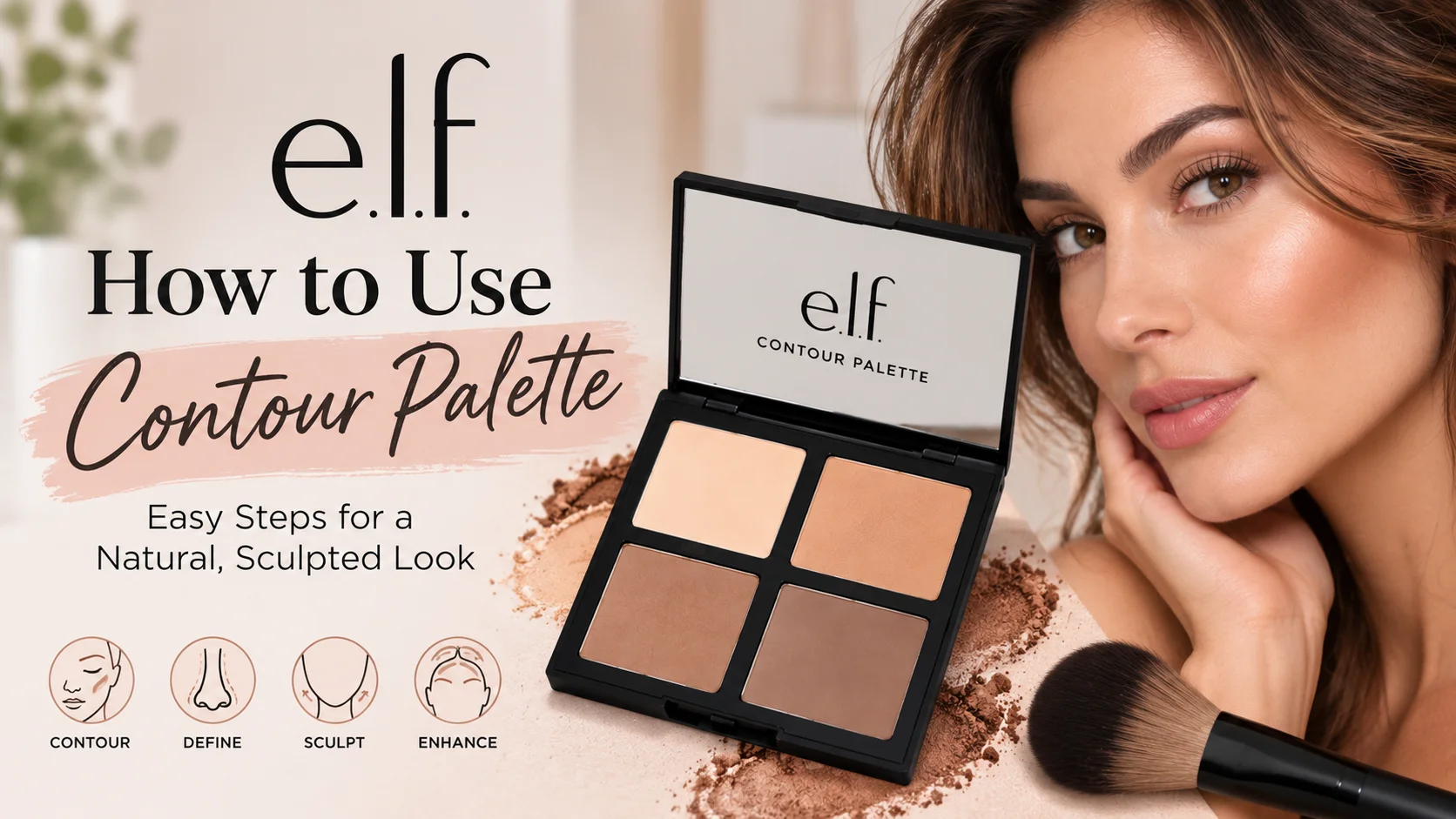
Contouring is a makeup technique that uses strategically placed darker and lighter shades to add dimension and definition to the face. When applied with a light hand and blended properly, contour can create subtle-looking shadows that complement your natural features.
If you’re learning how to use the e.l.f. Contour Palette, the key is to choose the right shade, use the correct brush, apply a small amount of product and blend thoroughly. This guide explains how to use a powder contour palette step by step, including cheekbones, nose, jawline, temples, highlighting, blending and setting.
How to Use the e.l.f. Contour Palette
The e.l.f. Contour Palette is designed to make powder contouring easier by providing complementary shades that can be used to sculpt, define and add dimension to the complexion. Because the palette is powder-based, it works particularly well over foundation and other set makeup products.
For a natural result, start with less product than you think you need. You can always build the intensity gradually, but removing an overly strong contour can be more difficult.
Understanding the e.l.f. Contour Palette
The current e.l.f. Contour Palette is a four-shade powder palette designed to help sculpt, shade, define, illuminate and warm the complexion. The shades can be used individually or combined depending on your skin tone and the makeup look you want to create.
Because product versions and shade selections can change over time, check the packaging and current product information for the exact palette you own before following a specific shade recommendation.
Contour vs. Bronzer
Contour and bronzer serve different purposes. Contour is generally used to create the appearance of natural-looking shadows and definition, while bronzer is usually applied to add warmth and a sun-kissed effect.
For sculpting, choose a shade that looks more like a natural shadow on your skin rather than simply choosing the darkest shade available.
Choosing the Right Contour Shade
Your skin tone and undertone both affect how a contour shade looks. A shade that is too warm can look more like bronzer, while a shade that is too dark can create an unnatural appearance.
- Fair skin: Start with a soft, buildable contour shade and avoid applying too much at once.
- Light to medium skin: Use a neutral or subtly cool-toned shade that creates a believable shadow.
- Medium to tan skin: Build definition gradually and choose a shade that provides enough contrast without looking muddy.
- Deep skin: Select a contour shade with enough depth to remain visible while still blending naturally into the complexion.
If you’re unsure which shade suits you, test a small amount along the cheek area or jawline in natural light. The right shade should blend into the skin rather than appear as an obvious stripe.
Prepare Your Skin Before Contouring
Good skin preparation can make powder contour look smoother and easier to blend. Start with a clean face and apply your normal skincare products before makeup.
Cleanse and Moisturize
Cleanse your skin gently to remove excess oil, dirt and leftover makeup. Follow with a moisturizer suitable for your skin type and allow it to absorb before applying makeup.
Apply Foundation
Apply your foundation evenly and blend it around the face. If you use concealer, apply it where needed before moving on to powder contour.
Set Areas Where Necessary
Since the e.l.f. Contour Palette is a powder product, it generally applies most predictably over a dry or lightly set base. If your foundation is very creamy or tacky, lightly setting selected areas with powder can make blending easier.
What Brush Should You Use for Powder Contour?
The brush you use can significantly affect the intensity of your contour. A smaller angled or tapered brush provides more precision, while a fluffy brush creates a softer result.
- Use a small angled brush for precise cheekbone definition.
- Use a small tapered brush for nose contouring.
- Use a medium fluffy brush for temples and jawline application.
- Use a clean blending brush to soften edges.
Always tap excess powder from the brush before applying it to your face. This helps prevent concentrated patches of product.
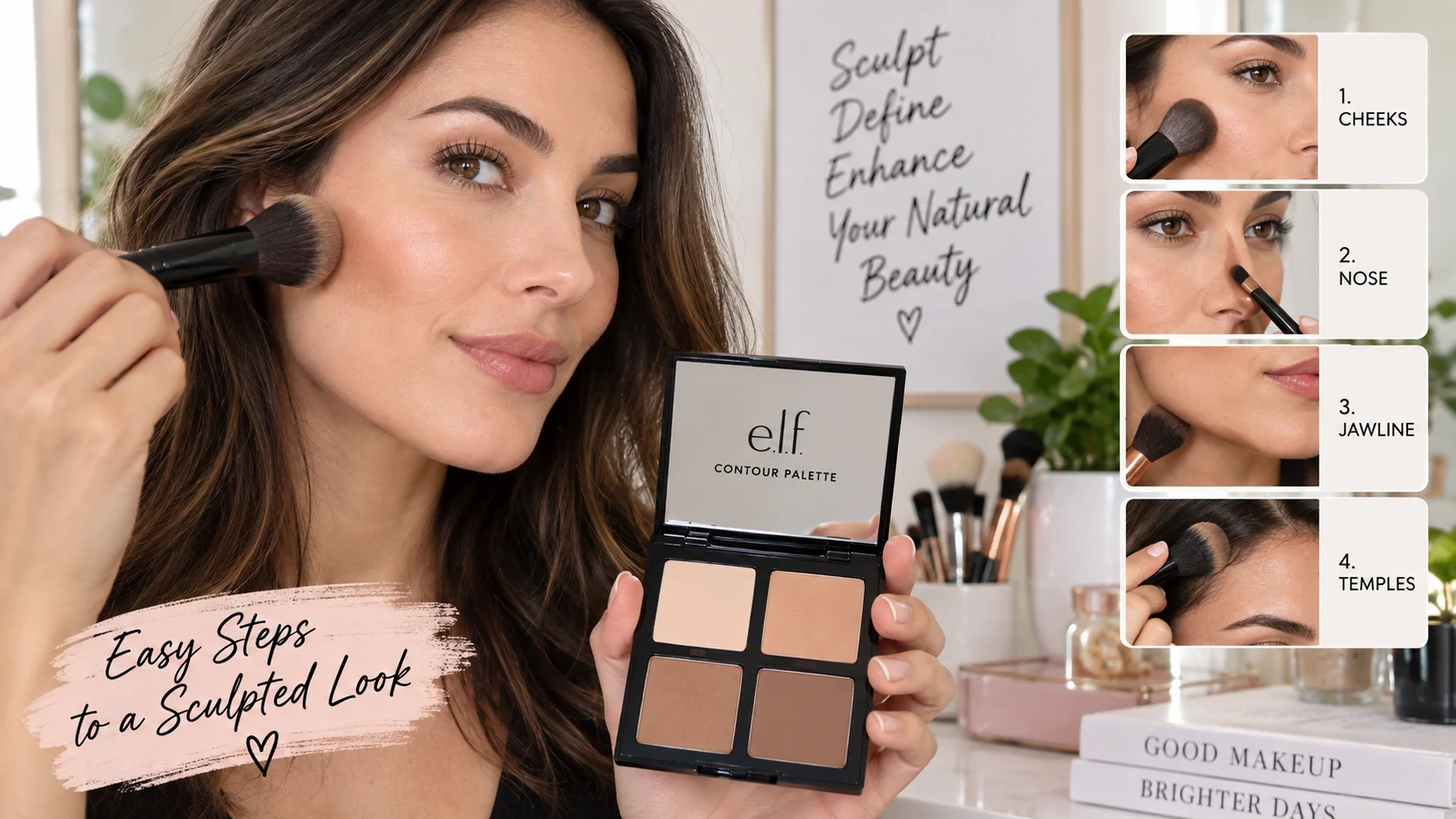
How to Contour Your Cheekbones
Cheek contouring is one of the easiest places to begin when learning how to use the e.l.f. Contour Palette.
- Use a small amount of contour powder on your brush.
- Locate the natural hollow underneath your cheekbone.
- Place the contour slightly below the cheekbone rather than directly on top of it.
- Blend upward and outward toward the hairline.
- Use a clean brush to soften the edges.
Avoid taking the contour all the way toward the corners of your mouth. Keeping the application concentrated toward the outer portion of the cheek generally creates a softer appearance.
How to Contour Your Nose
Nose contouring requires a smaller brush and a particularly light touch. The goal is to create subtle shadows rather than obvious lines.
- Choose a small tapered brush.
- Pick up a small amount of contour powder.
- Apply a thin shadow along the areas you want to visually define.
- Blend the edges carefully.
- Add a small amount of lighter product down the center if you want additional contrast.
Keep the lines as soft and narrow as possible. If the contour is immediately noticeable from a normal conversational distance, use a clean brush to diffuse it.
How to Contour the Jawline
To define the jawline, apply a small amount of contour underneath the jaw and blend it downward toward the neck. Avoid creating a sharp horizontal stripe.
Blending the product gradually into the surrounding skin helps the contour look more natural, especially in daylight and photographs.
Contouring the Temples and Hairline
You can also use contour around the temples and along selected areas of the hairline to add dimension. Apply a small amount and blend inward toward the face.
This area is easy to overdo, so begin with very little product. The transition between your contour and foundation should be difficult to detect.
How to Highlight After Contouring
Highlighting can be used alongside contouring to create additional contrast. Apply a lighter product to areas you want to visually bring forward, such as the upper cheekbones, center of the forehead, bridge of the nose or cupid’s bow.
For a natural daytime look, use a small amount of highlight rather than creating a heavily reflective finish.
Blend for a Seamless Finish
Blending is one of the most important steps in contour makeup. Use a clean fluffy brush to soften the edges of your contour without completely removing the definition.
Work in small circular or sweeping motions and check your makeup from different angles. Natural lighting is particularly useful for spotting areas that need additional blending.
Add Blush for a Balanced Makeup Look
After contouring, blush can bring color back into the complexion and help connect the sculpted areas with the rest of your makeup. Apply blush according to your preferred placement and blend it toward the contour rather than leaving a visible separation between products.
A small amount of blush is often enough. You can build additional color gradually if needed.
How to Set Your Contour
Because the e.l.f. Contour Palette is already a powder product, you usually do not need to cover it with a heavy layer of setting powder. Instead, lightly set other areas of your makeup where needed.
A setting spray can also be used at the end of your makeup routine if it is compatible with the rest of your products. Hold the spray at the recommended distance and allow your makeup to dry naturally.
Contouring Different Face Shapes
There is no single contouring pattern that works for everyone. Face shape guides can be useful starting points, but your own features and preferred makeup style should determine where you place the product.
- Round face: Focus on subtle definition beneath the cheekbones and around the outer face.
- Square face: Softly blend around the temples and jawline to reduce the appearance of sharp transitions.
- Heart-shaped face: Consider gentle contouring around the upper forehead and temples while keeping the cheek area balanced.
- Oval face: Use a light amount of contour around the cheekbones and jawline where additional definition is desired.
- Long face: Keep the contour subtle and consider horizontal placement that visually balances the proportions.
These are general guidelines rather than strict rules. Makeup is highly individual, so experiment with placement to find what works for you.
Common Contouring Mistakes to Avoid
- Using too much product: Start with a small amount and build gradually.
- Choosing a shade that is too dark: A dramatic shade can be difficult to blend naturally.
- Using the wrong undertone: A very warm shade may look more like bronzer than contour.
- Skipping blending: Visible edges can make contour look artificial.
- Applying contour too close to the mouth: Keep cheek contour toward the outer cheek area.
- Ignoring natural lighting: Makeup can look different indoors and outdoors.
- Using dirty brushes: Product buildup can affect application and hygiene.
Tips for Long-Lasting Contour
- Begin with properly cleansed and moisturized skin.
- Use a suitable makeup primer if it works with your skin type.
- Apply foundation evenly before powder contour.
- Allow cream products underneath to settle before applying powder.
- Use thin layers instead of one heavy layer.
- Blend the edges carefully.
- Use setting spray at the end of your routine if desired.
Can You Use the e.l.f. Contour Palette on Mature Skin?
Yes. Powder contour can be used on mature skin, but application technique becomes especially important. Use a small amount of product and avoid building heavy layers over areas where makeup naturally settles into fine lines.
Proper skin preparation, lightweight layers and careful blending can help create a softer result. If powder tends to emphasize dryness on your skin, you may prefer a cream contour product underneath followed by a very light amount of powder where needed.
How to Clean Your Contour Brushes
Clean makeup brushes regularly to remove product buildup, oil and residue. Apply a suitable brush cleanser or mild cleanser to the damp bristles, gently work the product through them and rinse thoroughly.
After rinsing, gently squeeze out excess water and reshape the bristles. Lay the brush flat or position it so water does not run into the handle and ferrule. Allow it to dry completely before using it again.
How to Care for Your e.l.f. Contour Palette
Keep the palette closed when it is not being used and store it in a clean, dry location. Avoid allowing water or liquid makeup remover to enter the powder pans.
If excess powder accumulates around the palette, gently wipe the exterior with a clean, slightly damp cloth and make sure the palette is completely dry before closing it.
Frequently Asked Questions
How do you use the e.l.f. Contour Palette for beginners?
Start with a small amount of powder on a suitable contour brush. Apply it beneath the cheekbones, around the temples or along the jawline as desired, then blend thoroughly. Beginners should build the color gradually instead of applying a heavy layer immediately.
Do you apply contour before or after foundation?
Powder contour is generally applied after foundation and after any cream products that need to be blended first. This allows the powder contour to sit on top of the complexion makeup and makes it easier to control the final intensity.
How do you use an e.l.f. contour wand?
The e.l.f. Halo Glow Liquid Contour Wand is a separate liquid contour product. Apply a small amount to areas you want to sculpt, such as the cheekbones, jawline or temples, and blend with a brush or makeup sponge. Start with a small amount because liquid contour can be built up gradually.
What brush is best for the e.l.f. Contour Palette?
A small angled or tapered brush is useful for precise contouring, while a fluffy brush works well for softer application and blending. The best brush depends on the size of the area and the intensity you want.
Which e.l.f. Contour Palette shade is best for pale skin?
For pale skin, begin with the lightest suitable contour shade and apply a very small amount. The correct shade should create a subtle shadow rather than appearing significantly darker than your natural complexion.
Can you use a contour palette for a natural makeup look?
Yes. Use a small amount of product, focus on the natural shadow areas of the face and blend thoroughly. For everyday makeup, subtle contouring usually looks more natural than highly defined lines.
Can you use powder contour on mature skin?
Yes. Use a light hand and avoid applying excessive powder to areas with visible dryness or fine lines. Good skin preparation and careful blending can help create a smoother appearance.
Final Tips for Using the e.l.f. Contour Palette
Learning how to use the e.l.f. Contour Palette is mostly about controlling product, placement and blending. Start with a small amount, choose a shade that works with your complexion, and build the definition gradually.
For the most natural result, concentrate contour where natural shadows would appear, soften every edge and check your makeup in natural lighting. With practice, the palette can become a useful part of both everyday makeup and more defined looks.