
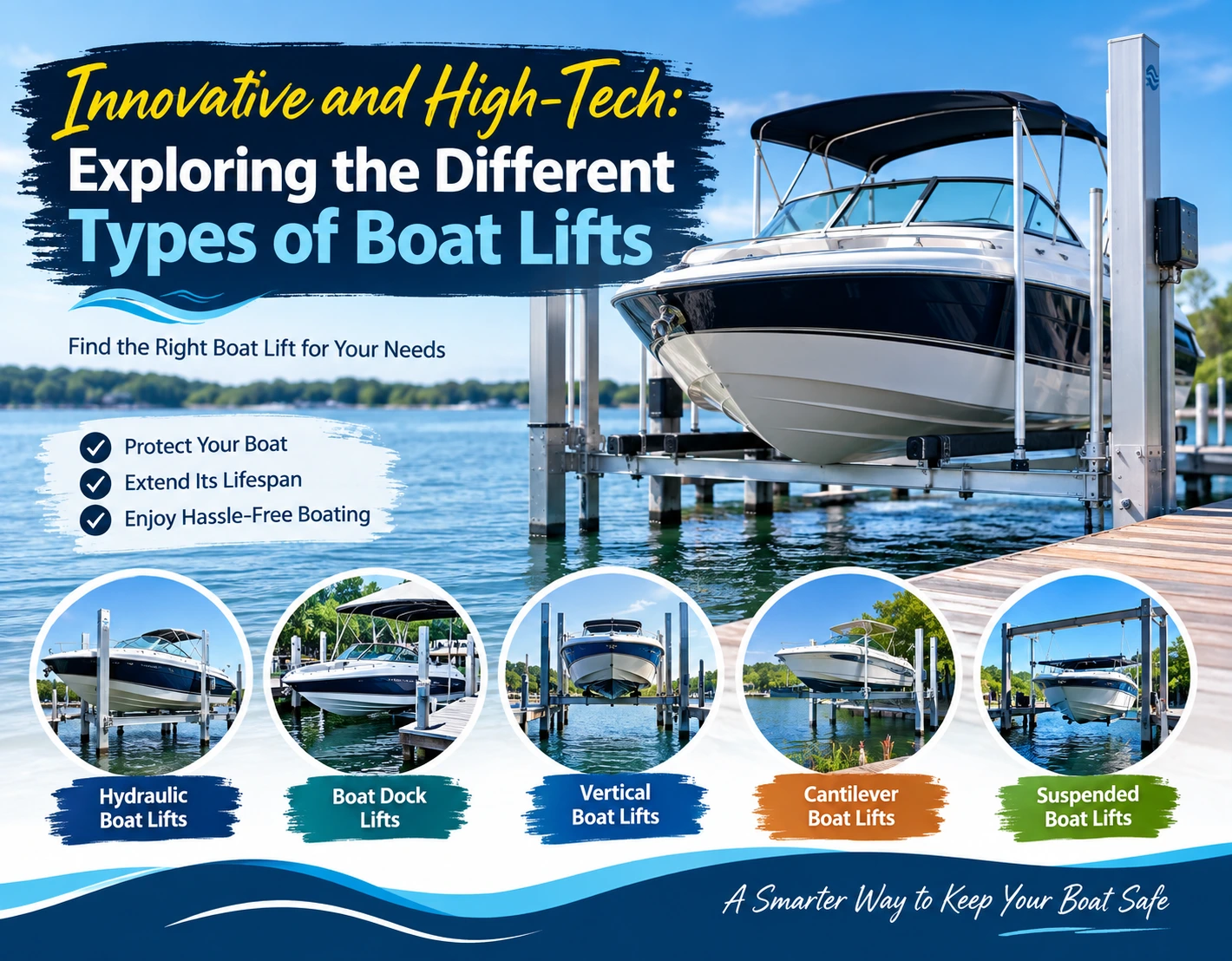

Keeping a boat in the water is convenient, but long-term exposure to water can take a toll on the hull, hardware, and other components. That is why many boat owners use a boat lift to raise their vessel out of the water when it is not being used.
Boat lifts come in several designs, and the right option depends on factors such as your boat’s size and weight, water depth, dock configuration, and how much the water level changes throughout the year. Some systems are designed for heavy boats and demanding conditions, while others are better suited to smaller vessels or shallow-water locations.
In this guide, we’ll look at the most common types of boat lifts, how they work, and where each design can be particularly useful. Understanding the differences can make it much easier to choose a lift that fits both your boat and your waterfront property.
Hydraulic Boat Lifts
Hydraulic boat lifts are known for their smooth operation, strength, and ability to handle substantial loads. They are often considered when a boat owner needs a dependable lifting system for a larger or heavier vessel.
The system uses a hydraulic pump to move fluid into cylinders connected to the lift frame. As hydraulic pressure builds, the cylinders extend and raise the boat above the water. Reversing the process lowers the vessel back into the water.
One of the main advantages of hydraulic technology is its controlled movement. A well-designed hydraulic lift can raise and lower a boat smoothly without the abrupt movement associated with some simpler lifting systems. This makes it an attractive option for boat owners who value convenience and stability.
When choosing a hydraulic system, make sure the lift’s rated capacity matches your boat’s actual weight, including equipment, fuel, and other items that may remain onboard.
Boat Dock Lifts
Boat dock lifts, sometimes called boat hoists, are installed alongside or directly onto a waterfront dock. Their biggest appeal is convenience: your boat can be lifted and stored right at the dock rather than requiring a separate storage location.
Depending on the design, dock-mounted systems can raise the boat clear of the water when it is not being used. This can help reduce prolonged exposure to water and provide an additional layer of protection against conditions that may affect the hull and other components.
Dock lifts are available in different configurations and capacities, so the design of your existing dock matters when selecting one. You should also consider the available water depth, dock structure, boat dimensions, and local environmental conditions.
For waterfront properties where convenience is a priority, a properly sized boat dock lift can make launching and securing a boat much easier.
Vertical Boat Lifts
Vertical boat lifts raise a boat straight upward out of the water. They typically use an electric motor, cables, pulleys, and supporting cradle components to move the boat between the water and its raised storage position.
One reason vertical lifts are popular is their versatility. They are available in a range of sizes and weight capacities, allowing them to accommodate different types of boats, from smaller recreational vessels to larger models.
Vertical lifts can also be useful in areas where water levels change significantly. The amount of lift available and the installation design determine how effectively a particular system can accommodate those changes, so the local water conditions should be considered before purchasing.
For the best results, choose a vertical lift based on your boat’s exact specifications rather than relying only on its length. Weight distribution, hull shape, beam width, and the location of lifting points can all affect compatibility.
Cantilever Boat Lifts
Cantilever boat lifts use a pivoting mechanism to move the boat out of the water. Rather than lifting the vessel directly upward like a conventional vertical system, the cradle pivots as the lift moves into its raised position.
This straightforward design can make cantilever lifts an appealing option for smaller boats and waterfront properties where a simpler installation is preferred. They are commonly used for personal watercraft and other relatively lightweight recreational boats, although available capacities vary by model.
Another potential advantage is that cantilever systems can be practical where water depth and shoreline conditions make certain other lift designs less suitable. However, the lift must still be correctly sized for the boat and the specific installation site.
If you are looking for a convenient way to clean, maintain, and board your boat while it is out of the water, you may also want to consider a HydroPort.
Suspended Boat Lifts
Suspended boat lifts use straps, cables, or similar support components to hold a boat above the water. Their configuration can make them useful for waterfront locations where conventional lift installations are difficult.
These systems can be particularly helpful in shallow water or at locations where underwater obstacles, unusual shoreline conditions, or limited space create installation challenges.
Because installation requirements vary considerably, it is important to evaluate the dock structure, water depth, bottom conditions, boat dimensions, and expected load before choosing a suspended lift. Professional installation can also help ensure that the support points and lifting components are properly configured.
How to Choose the Right Boat Lift
Choosing between different boat lift types is not simply a matter of picking the most powerful system. The best choice is the one that matches your boat and the conditions at your waterfront property.
Start by checking your boat’s overall weight, length, beam, and hull design. Remember to account for fuel, batteries, onboard equipment, and other gear that contributes to the total load.
Next, look at your water depth and water-level fluctuations. A lift that works well in deep, relatively stable water may not be the best solution for a shallow-water location with a changing shoreline.
Your dock structure and available space are equally important. Some lifts require specific mounting arrangements, while others may be more flexible depending on the property.
Finally, consider how frequently you use your boat and how much automation or convenience you want. A simple system may be perfectly adequate for occasional recreational use, while frequent boaters may prefer a powered system that makes launching and storage quick and effortless.
Benefits of Using a Boat Lift
A boat lift does more than make launching and storing a boat easier. Raising your vessel out of the water when it is not being used can help reduce the amount of time the hull remains exposed to water.
- Protects the hull: Keeping the boat out of the water can help reduce prolonged exposure to water and marine conditions.
- Makes maintenance easier: An elevated boat is generally easier to access for cleaning and routine inspections.
- Simplifies launching: A properly installed lift can make getting on the water more convenient.
- Provides secure storage: Raising the boat can help keep it above the water when it is not being used.
- Offers different installation options: With hydraulic, vertical, cantilever, dock, and suspended designs available, boat owners have several configurations to consider.
Frequently Asked Questions About Boat Lifts
What is the main purpose of a boat lift?
A boat lift raises a boat out of the water when it is not being used. This can make storage and maintenance more convenient while reducing the boat’s prolonged exposure to water.
What type of boat lift is best for a large boat?
The best lift depends on the boat’s exact weight, dimensions, hull design, and the conditions at the installation site. Hydraulic and heavy-duty vertical systems may be suitable for larger boats, but the manufacturer’s rated capacity should always be checked before making a decision.
Are vertical boat lifts suitable for changing water levels?
They can be. Vertical boat lifts provide significant vertical travel and are available in different configurations, making them a common option in areas where water levels fluctuate. However, the lift’s available travel and installation requirements should be compared with the expected water-level changes.
Are cantilever boat lifts good for smaller boats?
Yes. Cantilever lifts are commonly considered for smaller recreational boats and personal watercraft. Their suitability ultimately depends on the specific lift’s weight capacity and the dimensions of your boat.
Can boat lifts be used in shallow water?
Some boat lift designs are better suited to shallow-water locations than others. Suspended and certain cantilever configurations may work where conventional systems are difficult to install, but water depth, bottom conditions, and the boat’s draft must be evaluated first.
How do I choose the correct boat lift capacity?
Choose a lift based on the boat’s total operating weight rather than its dry weight alone. Include fuel, batteries, equipment, and other items that may remain on board. Always compare those requirements with the manufacturer’s stated capacity.
Do boat lifts require regular maintenance?
Yes. Regular inspections and maintenance are important for keeping a boat lift operating safely and reliably. The exact maintenance schedule depends on the lift design, manufacturer recommendations, exposure to weather and water, and frequency of use.
Explore the Different Types of Boat Lifts
There is no single boat lift that is perfect for every waterfront property. Hydraulic lifts offer controlled lifting and can be suitable for heavier vessels, while vertical lifts provide a versatile solution for many boat sizes. Dock lifts prioritize convenience, cantilever systems can be a practical choice for smaller boats, and suspended designs can offer an alternative where shallow water or installation obstacles create challenges.
The key is to look beyond the lift’s appearance and consider the complete installation. Your boat’s weight and dimensions, water depth, changing water levels, dock structure, and maintenance requirements should all play a role in the decision.
With the right boat lift, storing and launching your vessel can become a much simpler part of your boating routine. Take the time to compare your options and choose a system designed for your boat and your specific waterfront conditions.