
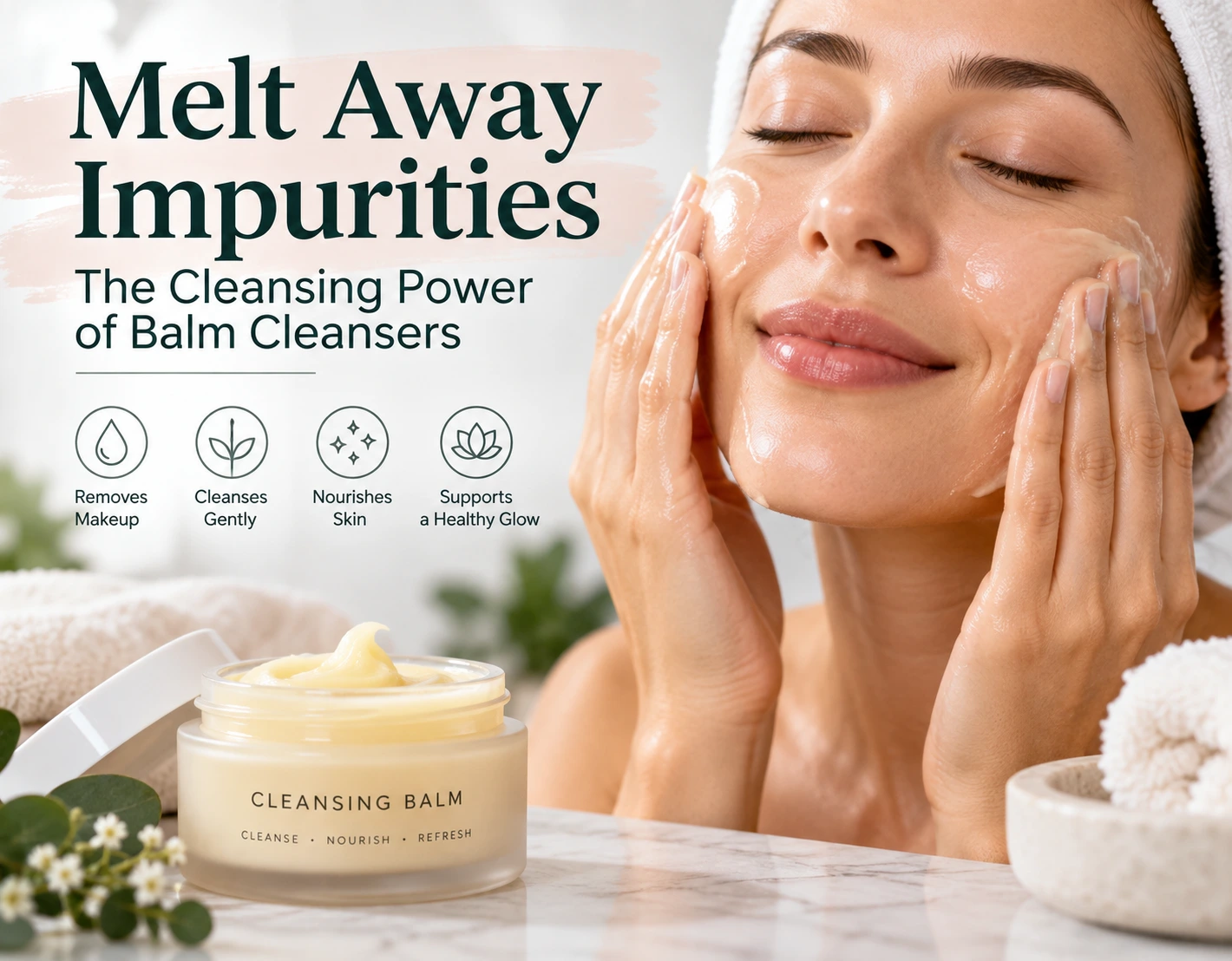
Balm cleansers have become a popular choice for people looking for an effective yet gentle way to remove makeup, excess oil, dirt, and everyday impurities from the skin. Unlike traditional foaming cleansers, these rich, solid formulas melt when they come into contact with the warmth of your skin, transforming into a silky oil that glides easily across the face.
A well-formulated cleansing balm can make the first step of your skincare routine feel less like a chore and more like a relaxing self-care ritual. Depending on its ingredients and formulation, a balm cleanser may help lift stubborn makeup and sunscreen while leaving the skin feeling soft and comfortable rather than excessively dry.
What Is a Balm Cleanser?
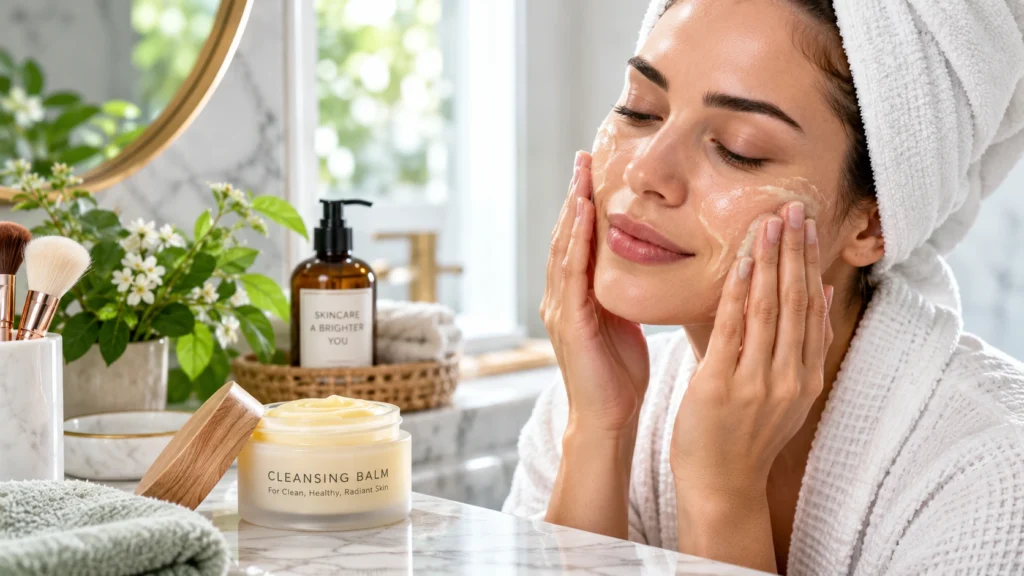
A balm cleanser is a type of oil-based facial cleanser that usually has a solid or semi-solid texture at room temperature. When massaged onto dry skin, the balm melts into an oil, allowing it to spread smoothly across the face.
Most cleansing balms are designed to help dissolve oil-soluble substances such as makeup, sunscreen, excess sebum, and accumulated daily grime. Many formulas can then be emulsified with a little water, turning into a milky texture that can be rinsed away.
This makes balm cleansers particularly useful as the first step in a double-cleansing routine, although whether you need a second cleanser depends on your skin type, the product you use, and your personal skincare routine.
How Does a Cleansing Balm Work?
The cleansing action of a balm cleanser is largely based on the principle that oil can help dissolve other oil-based substances. When you massage the balm over dry skin, its oils and emulsifying ingredients can loosen makeup, sunscreen, sebum, and other surface impurities.
The massaging process also helps distribute the product evenly across the face. After adding water, many cleansing balms emulsify into a lighter, milky consistency that can be rinsed from the skin.
The result is a cleansing step that can effectively remove buildup without relying solely on aggressive scrubbing.
Deep Cleansing and Makeup Removal
One of the main reasons people choose cleansing balms is their ability to remove makeup and other oil-based products. Foundation, concealer, waterproof mascara, sunscreen, and long-wearing cosmetics can sometimes be difficult to remove with a conventional water-based cleanser alone.
A balm cleanser can help break down these products before they are rinsed away. This can make the cleansing process more efficient while reducing the need for repeated rubbing.
However, stubborn eye makeup should still be removed carefully. The eye area is delicate, so avoid vigorous rubbing and follow the instructions provided for your particular product.
Nourishment and Hydration
Cleansing does not have to leave your skin feeling tight or uncomfortable. Many cleansing balms contain emollient ingredients such as plant oils, butters, and other conditioning agents that can help leave the skin feeling soft after washing.
Some formulas also include antioxidants, vitamins, and botanical ingredients. These additions can complement a skincare routine, although the benefits depend on the specific ingredients, their concentrations, and how the formula is designed.
For people who dislike the stripped feeling that can sometimes follow cleansing, a balm may provide a more comfortable alternative. If your skin is particularly dry or sensitive, however, it is still important to choose a formula that suits your individual needs.
Soothing and Calming Ingredients
Some cleansing balms are formulated with ingredients traditionally used for their soothing properties. Examples may include chamomile, aloe vera, oat-derived ingredients, or certain botanical oils.
These ingredients can contribute to a pleasant cleansing experience and may be suitable for people who prefer skincare products with a comforting, nourishing texture.
If your skin is sensitive, always check the ingredient list before introducing a new product. Fragrance and essential oils, for example, may not be suitable for everyone.
Aromatherapy and the Self-Care Experience
For many people, skincare is about more than simply washing the face. The texture, scent, and application method of a product can turn an everyday routine into a relaxing ritual.
Some balm cleansers contain aromatic ingredients or essential oils that create a spa-like sensory experience. Scents such as lavender, rose, or citrus may make cleansing feel more enjoyable, although fragrance preferences and sensitivities vary from person to person.
Taking a minute or two to gently massage a cleansing balm onto the face can also encourage you to slow down and pay attention to your skincare routine.
Antioxidant and Protective Benefits
Some cleansing balms contain antioxidant-rich ingredients such as vitamin E, green tea extracts, or plant-derived oils. Antioxidants are commonly included in skincare formulations because they help address oxidative stress caused by free radicals.
However, it is important to understand that a cleansing balm is primarily a cleanser. Because it is applied and then washed away, it should not automatically be expected to provide the same benefits as a leave-on antioxidant serum or moisturizer.
The most practical benefit is its ability to remove daily buildup while providing a comfortable cleansing experience. Choosing a product with ingredients that work well with your skin can help make this step a useful part of a consistent skincare routine.
How to Use a Cleansing Balm Correctly
Using a cleansing balm is generally straightforward, but application technique can make the experience more effective and comfortable.
- Start with dry hands and a dry face: Unless the product instructions say otherwise, begin by applying a small amount of balm to dry skin.
- Warm the balm: Rub a small amount between your fingertips until it softens and begins to melt.
- Massage gently: Spread the balm across your face using gentle circular movements, paying particular attention to areas with makeup, sunscreen, or excess oil.
- Emulsify with water: Add a little lukewarm water to your hands and continue massaging until the balm develops a milky texture, if your product is designed to emulsify.
- Rinse thoroughly: Remove the cleanser with lukewarm water or a soft damp cloth, following the product’s directions.
- Continue your routine: If you use a second cleanser, apply it after removing the balm. Follow with the rest of your normal skincare routine.
Who Can Use a Balm Cleanser?
Cleansing balms can work for many different skin types, but there is no single cleanser that is perfect for everyone. People with normal, dry, combination, or oily skin may all find a suitable balm cleanser depending on its formulation.
If you have oily or acne-prone skin, look for a formula that rinses clean and does not leave an uncomfortable residue. If your skin tends to be dry, a nourishing balm may be more appealing.
People with sensitive skin should pay particular attention to fragrance, essential oils, and other ingredients that may cause irritation. When trying a new product, introducing it gradually can help you determine whether it works comfortably with your skin.
Cleansing Balm vs. Traditional Facial Cleanser
The main difference between a cleansing balm and a traditional facial cleanser is texture and formulation. Traditional cleansers often have a gel, cream, or foaming consistency, while cleansing balms generally begin as a thicker solid or semi-solid product.
A balm is particularly useful when your main goal is to dissolve makeup, sunscreen, and oil-based products. A water-based cleanser, on the other hand, may be more appropriate for removing water-soluble sweat and surface debris.
This is why some people use both products as part of double cleansing. However, double cleansing is not necessarily required every day for everyone. Your routine should depend on your skin, the products you use, and how your skin feels after cleansing.
Common Mistakes to Avoid When Using a Cleansing Balm
Although cleansing balms are easy to use, a few common mistakes can make the experience less effective.
- Using too much product: A small amount is often enough to cover the face.
- Rubbing too aggressively: Gentle massage is generally preferable to vigorous scrubbing.
- Using very hot water: Lukewarm water is usually more comfortable for facial cleansing.
- Not rinsing properly: Follow the manufacturer’s instructions to remove the product thoroughly.
- Ignoring your skin’s reaction: Stop using a product if it causes persistent irritation or discomfort.
- Choosing based only on fragrance: A pleasant scent does not necessarily mean a product is suitable for your skin.
Frequently Asked Questions About Balm Cleansers
What does a cleansing balm do?
A cleansing balm helps dissolve and remove makeup, sunscreen, excess oil, dirt, and other surface impurities. Its oil-based texture makes it particularly useful for breaking down oil-based products before rinsing.
Can I use a cleansing balm every day?
Many people can use a cleansing balm daily, particularly as part of their evening skincare routine. However, the ideal frequency depends on your skin type and the specific product. If your skin becomes irritated, dry, or uncomfortable, reconsider how frequently you use it.
Should I use a cleansing balm before or after face wash?
A cleansing balm is typically used first when following a double-cleansing routine. It helps dissolve makeup, sunscreen, and oil-based impurities, followed by a water-based cleanser to complete the cleansing process.
Can cleansing balm remove waterproof makeup?
Many cleansing balms are formulated to help dissolve long-wearing and waterproof makeup. However, performance varies between products. Always use gentle movements around the eyes and follow the manufacturer’s directions.
Is cleansing balm suitable for oily skin?
Yes, people with oily skin can use cleansing balms. The important factor is choosing a formulation that suits your skin and rinses away comfortably without leaving an unwanted heavy residue.
Is cleansing balm good for dry skin?
A cleansing balm can be a comfortable option for dry skin because many formulas contain emollient ingredients that help leave the skin feeling soft after cleansing. Look for a product designed for your skin type and avoid formulas that cause tightness or irritation.
Do I need to double cleanse after using a cleansing balm?
Not necessarily. Some people prefer to follow a cleansing balm with a water-based cleanser, especially when removing heavy makeup or sunscreen. Others may find that their balm rinses clean enough on its own. Your routine can depend on your skin and the products you use.
Can cleansing balms clog pores?
It depends on the formulation and your individual skin. A cleansing balm that works well for one person may not suit another. If you are prone to clogged pores, check the ingredient list and pay attention to how your skin responds after regular use.
How long should I massage a cleansing balm into my skin?
There is no universal amount of time required. A gentle massage for long enough to dissolve makeup and surface impurities is generally sufficient. Avoid prolonged or aggressive rubbing, particularly if your skin is sensitive.
Final Thoughts
Cleansing balms offer a simple and enjoyable way to remove makeup, sunscreen, excess oil, and everyday impurities. Their unique texture allows them to melt into the skin and transform into a cleansing oil, while many formulas also contain nourishing and conditioning ingredients.
Beyond their cleansing function, balm cleansers can make an evening skincare routine feel more relaxing and luxurious. The key is choosing a formulation that matches your skin type, using gentle application techniques, and following the product’s instructions.
When used appropriately, a cleansing balm can become a practical first step toward clean, comfortable, and refreshed-looking skin.