
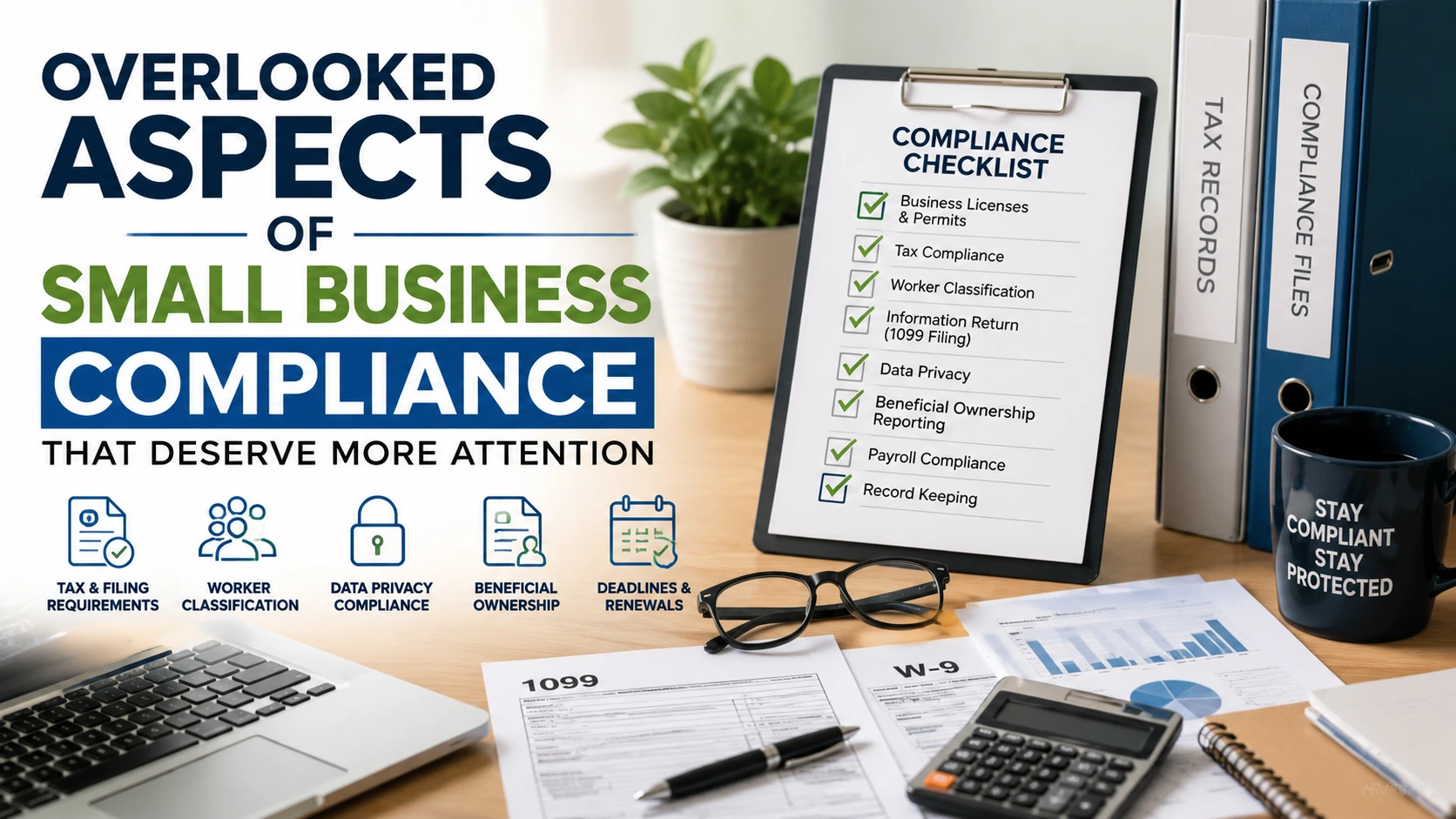

Running a small business is hard work.
Slashing sales targets, overseeing employees and pleasing customers push compliance way down the priority list. Trouble is, that’s precisely where it should not be. Awareness of the big items is common among owners:
- File your taxes on time
- Pay your employees correctly
- Keep your licenses up to date
However there’s another level of compliance that goes unnoticed. And can cost you thousands if overlooked.
Here’s what you need to know…
What you’ll uncover:
- Why Small Business Compliance Gets Ignored
- The Overlooked Compliance Areas That Matter Most
- Information Return Filing — The Silent Killer
- Simple Steps To Stay Compliant Year-Round
Why Small Business Compliance Gets Ignored
Small business compliance is a lot like flossing.
Everyone knows they should file their taxes. However, not many owners take it seriously until they have a problem. But when you have a problem it’s too late. The Small Business Institute Journal reported the IRS assessed over 50 million civil penalties totaling $84 billion in 2024. Eighty-four billion. That’s insane…and a lot of that headache falls on the back of small business owners.
Why does it happen?
Growers want to grow. They are wearing 10 hats. Compliance seems tedious compared to sealing the deal. Some people just listen to outdated advice from a buddy or google blog. The problem is the same. Late deadlines. Wrong paperwork. Penalty notices show up in the mail.
The Overlooked Compliance Areas That Matter Most
Not all compliance is created equal.
Certain areas of compliance receive a lot of focus. Others receive hardly any. Here are the ones that silently trip up small business owners the most.
Worker Classification
This one trips up more businesses than any other.
Are the people working for you employees or independent contractors? Although this sounds like a straightforward question, your answer has major consequences for your taxes, your insurance, and your liability. If you get it wrong, you could be liable for back taxes and penalties. You may even face lawsuits from workers who believe they were improperly classified. The IRS has strict guidelines about worker status, and a robust tool like AMS 1099 software can help you track contractor payments so you can file information returns when the time comes.
Take a good look at:
- Degree of control over the work. If you set hours and methods of work, they are likely an employee.
- Who provides the tools and equipment — contractors usually bring their own
- Whether the relationship is ongoing — long-term relationships often signal employment
Data Privacy Rules
Most small business owners think data privacy laws only apply to big tech companies.
That’s no longer accurate. States like California, Colorado, and Virginia have implemented comprehensive privacy laws that affect companies of all sizes. If you collect email addresses from customers or have an e-commerce store you could already be liable. Penalties aren’t trivial and enforcement is increasing annually.
Beneficial Ownership Reporting
This is a newer requirement that catches a lot of owners off guard.
Many small businesses are required to file beneficial owner information with FinCEN under new federal regulations. Failure to file this information could result in severe penalties. The regulations have changed several times so you should verify if you need to file.
Information Return Filing — The Silent Killer
Why is it that small businesses have such a hard time getting compliance policies right?
Information return filing.
Whenever you make a payment to a contractor, vendor, or other specified party in excess of a specified amount, you generally must file an information return (e.g., 1099). File one late or improperly and the fines can quickly add up. The IRS assesses fines by return, by error. So if you have 20 contractors and file late 20 1099’s you could owe a substantial amount.
Here’s the kicker:
Beginning in 2024, the IRS reduced the threshold for mandatory e-file to 10 or more information returns. Basically, if you have 10x contractors/vendors which require a 1099, you no longer have the option to send it via snail mail. It must be filed electronically.
Many small filers were unaware of this development. That is the issue with information return filing… Constant rule changes and looming deadlines.
To stay on top of information return filing, focus on these three things:
- Get W-9 forms from contractors ASAP — don’t wait until January when you have to send them tax IDs
- Keep clean records of payments throughout the year — reconcile your books monthly
- File electronically to avoid the paper filing penalty — and get confirmation from the IRS
Information return filing may not be sexy. However, it’s one of the quickest ways to prevent avoidable penalties and keep your business operation humming along.
Simple Steps To Stay Compliant Year-Round
Compliance isn’t a one-time task.
It’s a discipline. Companies that avoid compliance problems schedule it like clockwork – once a month – instead of a once-a-year frenzy. Follow this easy system.
Build A Compliance Calendar
Sit down at the beginning of the year and chart out ALL deadlines relevant to your business. That includes:
- Quarterly estimated tax payments
- Payroll tax deposits
- Information return filing dates
- State filings and renewals
Schedule every deadline on your calendar with reminders one week and one day before. This one trick will keep you from almost all late filing fees.
Do A Monthly Compliance Review
Set aside 30 minutes each month to review your compliance status.
Review upcoming events for the next 60 days. Ensure supporting documentation is available. Correct any discrepancies.
Use The Right Tools
Managing compliance with a spreadsheet and shoebox of receipts is asking for trouble.
Invest in proper software for:
- Bookkeeping and expense tracking
- Payroll processing
- 1099 and W-2 filing
The price is nothing compared to an IRS penalty you could get.
Talk To A Professional Once A Year
Even if you do most compliance on your own, an annual visit to your CPA/tax advisor is money well spent.
They will identify risks you may have overlooked and assist you with planning for legislative changes. Regulatory compliance is always changing and having an advocate on your side can mean everything.
Bringing It All Together
Small business compliance doesn’t have to be scary.
Owners often run into trouble by paying attention to the glaring issues and overlooking the silent hazards. Worker classification, data privacy and information return filing top the list of silent killers. Successful businesses make compliance a daily practice — not an April drill.
To quickly recap:
- Know which compliance areas get overlooked
- Take information return filing seriously
- Build a compliance calendar
- Review your status monthly
- Get professional help once a year
Here’s how to avoid IRS notices and spend more time growing your business.