

Understanding the role of a self serve DSP
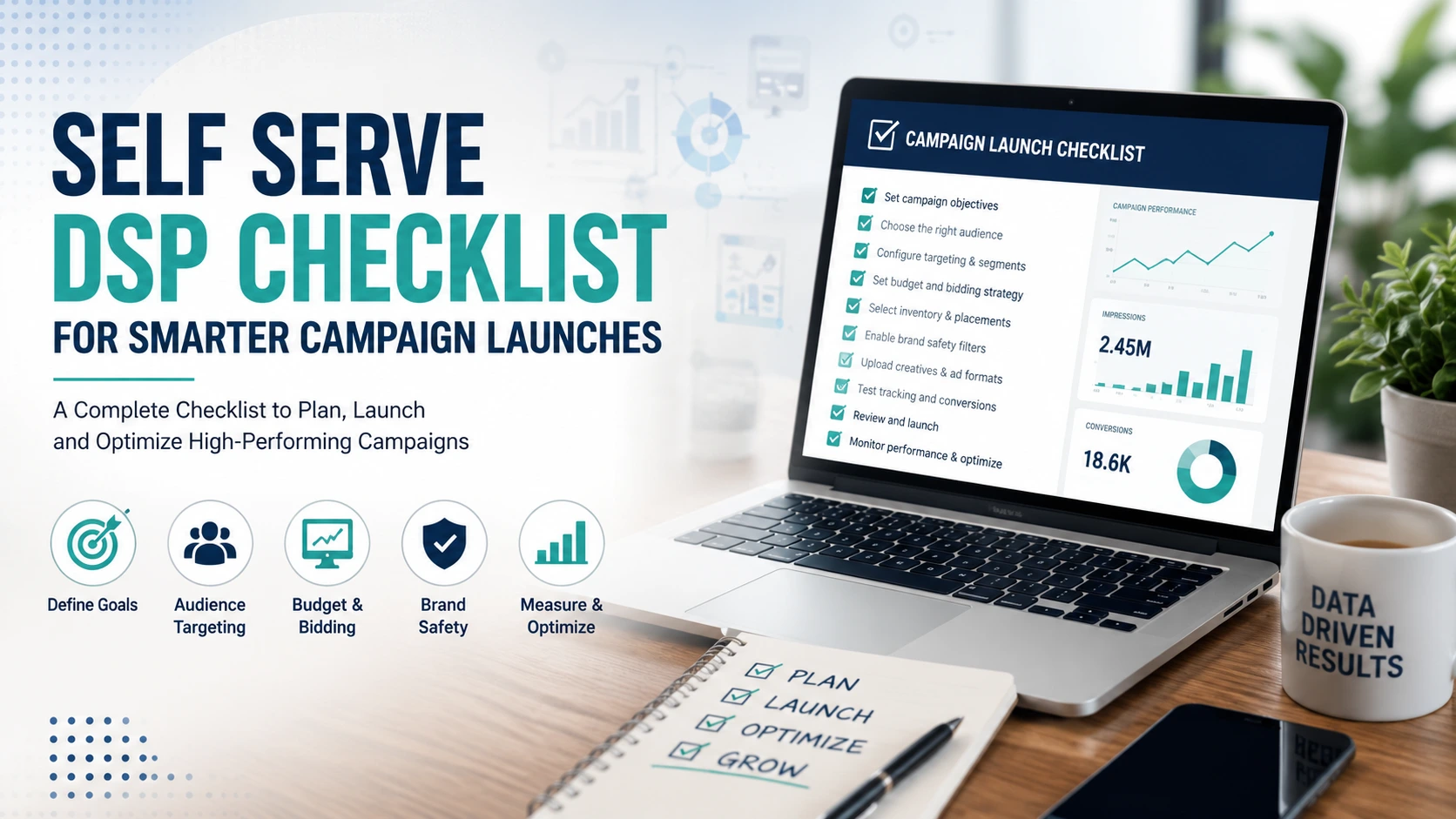
Adopting a self serve DSP allows marketing teams to take direct ownership of their media buying strategy. By removing intermediaries, brands manage their own bids and placements, ensuring that marketing budgets align closely with specific goals. This approach shifts the burden of campaign execution away from external agencies and onto internal operations, fostering a more direct connection between strategy and performance.
How a self serve DSP differs from managed service models
Managed services offer convenience by delegating technical heavy lifting to outside professionals, whereas a self-service model focuses on accessibility and autonomy. While a managed service might provide strategic depth, the self-service route offers greater transparency and direct influence over every creative decision. Teams using a self-serve platform remain in the driver’s seat, making real-time adjustments without waiting for an agency to update parameters.
Evolution from enterprise-only tools to accessible platforms
Historically, programmatic advertising was restricted to organizations with massive monthly budgets, often pricing smaller players out of the market. Newer platforms, notably Version2 with its ORION interface, have bridged this divide by removing high minimum spend requirements. This accessibility allows mid-sized businesses to leverage the same market-leading technology once reserved for the largest advertisers, democratizing the path to competitive ad performance.
Weighing the trade-offs of in-house media buying
Transitioning to in-house management requires clear assessment of internal capabilities versus the desire for full control. While internal teams gain speed by managing campaigns directly, they must also invest in training to navigate the complexities of real-time bidding. When done correctly, this transition enables a brand to gain granular control over every bid and tactic, ensuring that every dollar spent is optimized for specific business outcomes.
Evaluating your team’s readiness for programmatic
Assessing whether your organization is prepared for the leap into programmatic involves reviewing your current talent and technical infrastructure. The move toward self-service requires a shift in mindset, where team members become comfortable managing digital auctions rather than simply reviewing status reports. Readiness hinges on having the foresight to anticipate the learning curve and the discipline to maintain consistent output across multiple channels.
Assessing internal bandwidth and technical expertise
Media buying requires consistent attention to campaign pacing and budget management. Before launching, identify which team members will oversee daily operations and if your staff has a baseline understanding of digital buying principles. A team that is already familiar with performance metrics like CPC or ROAS will adapt more quickly to the interface of a chosen DSP than a group starting without analytical experience.
Identifying the need for ongoing training and support
Even the most intuitive platforms require a period of adjustment for new users. Ongoing support from a partner like Version2 is often essential, as it ensures that your team can troubleshoot technical issues or refine their strategies during the initial launch phases. Training should focus on both the mechanical aspects of the platform and the broader principles of programmatic buying effectiveness.
Determining when to transition from managed to self-service
Moving to self-service is most effective when a brand desires full visibility into the nuances of their ad delivery. If your previous campaigns have been successful but you find yourself wanting to test new creative formats or change bids mid-campaign, the infrastructure of a self-service model becomes a clear advantage. Establish a pilot period to compare performance between your existing agency model and your new in-house workflows to monitor growth.
Prioritizing AI-driven targeting features
Targeting now relies heavily on predictive modeling rather than static audience selections. By incorporating sophisticated algorithmic tools into your toolkit, your team can reduce the manual effort required to find high-intent users. The focus shifts from checking boxes in a platform to evaluating the AI’s ability to find audiences, ultimately increasing the return on your advertising spend.
Leveraging machine learning for audience segmentation
Machine learning allows platforms to analyze millions of data points to identify patterns in user behavior that humans would miss. This tech observes which segments respond most favorably to specific creative assets, automatically clustering these prospects together. By refining your segments through algorithmic observation, you ensure that your campaigns reach audiences based on genuine relevance rather than outdated demographic assumptions.
Shifting from manual adjustments to algorithmic optimization
Manual pacing is often inefficient, as it cannot keep pace with the instant nature of digital auctions. Modern optimization software takes over the task of checking impressions, constantly rebalancing spending to prioritize those environments yielding the best conversion rates. This shift gives human team members more time for high-level creative strategy while the platform handles the complexity of bidding adjustments.
Ensuring budget efficiency through predictive analytics
Predictive models assess the likelihood of a conversion before a bid is even placed, effectively filtering out low-quality traffic. By allocating your budget toward the highest-scoring inventory, you minimize wasted spend on non-performing impressions. This predictive accuracy turns a platform like ORION into a competitive advantage, as each dollar is guided toward the most promising paths to acquisition.
Auditing inventory quality and brand safety
Quality matters when your budget enters the open web, as not all inventory provides the same level of viewability or brand alignment. An audit of your traffic sources ensures that your ads appear in contexts that reinforce your messaging rather than diluting it. A vigilant approach prevents your brand from surfacing in sites or apps that contradict your core business objectives.
Differentiating between open web and premium CTV inventory
| Inventory Type | Quality Characteristics | Control Level |
| Open Web Display | High reach, broad scale | Moderate to Low |
| Premium CTV | Immersive, non-skippable | High |
| Site-Specific | Known environment | Maximum |
Understanding these distinctions is essential for planning your programmatic strategy. While open web display offers the volume required for large-scale awareness, premium inventory like Connected TV offers a more controlled, high-impact environment that often leads to better engagement. By balancing these types, you create a robust mix of reach and brand-safe engagement.
Implementing Programmatic Guaranteed deals for control
Programmatic Guaranteed deals provide the best of both worlds by combining the automation of digital buying with the security of traditional direct placements. These deals allow your team to secure specific, high-quality inventory in advance, removing the uncertainty of the instant auction model. For brands sensitive to where their messaging appears, these deals represent a critical bridge between modern efficiency and premium quality control.
Protecting brand reputation across diverse ad tech ecosystems
Reputation management requires a combination of automated filters and manual overrides to block unsuitable domains. Establishing a clear set of standards before launching your campaign will stop your ads from appearing on sites that could damage your image. Regularly updating your inclusion and exclusion lists is essential to maintain safety as the broader ecosystem evolves.
Ensuring transparency and centralized analytics
Fragmentation has long been a hurdle for advertisers working across various platforms. When data is trapped within separate dashboards, it is impossible to see the big picture of your campaign progress. Standardizing your approach through a centralized platform resolves this, providing a single source of truth for your digital performance.
Overcoming the challenge of walled garden data silos
Most platforms lock data inside their own ecosystems, forcing advertisers to manually patch information together. Breaking out of these silos requires a platform that aggregates data in one place, permitting direct comparisons between channels. Removing the roadblocks created by siloed measurement allows for a clearer view of which strategies are actually driving engagement.
Standardizing cross-channel performance reporting
Reporting consistency allows for apples-to-apples comparisons of creative, budget, and audience effectiveness. By defining standardized metrics across your programmatic strategy, you can easily determine which DSPs are performing best. This unified reporting structure helps teams see when a creative set needs adjustment or when a channel budget should be increased.
Using unified pixel solutions for accurate attribution
Accurate attribution is the bedrock of identifying success and refining your future trajectory. Implementing a centralized pixel allows you to track and verify results from multiple channels without duplicating setup tasks. This one-and-done solution streamlines the technical process for your developers and provides marketers with clean data about customer conversions across the open web.
Streamlining campaign management workflows
Operational efficiency defines the difference between a high-performing team and one stuck in technical maintenance. By removing repetitive manual tasks, you free your staff to focus on driving results rather than navigating dashboard friction. A streamlined workflow is the ultimate tool for achieving scale in today’s rapid environment.
Reducing onboarding time with integrated platforms
Efficiency begins the moment a campaign is planned. Utilizing an integrated platform eliminates the need to configure multiple disconnected logins, allowing your team to move from ideation to launch in a fraction of the time. This reduction in onboarding friction is essential for companies aiming to remain agile in a changing landscape.
Consolidating multiple DSPs into a singular interface
Fragmented workflows lead to confusion and inconsistencies that stall your progress. Consolidating your programmatic efforts into a single interface offers several advantages for your team:
- Increases speed of deployment across multiple platforms.
- Minimizes the chance of human error during cross-channel setups.
- Provides a singular view to monitor campaign pacing.
- Simplifies the training requirements for new team members.
By uniting these capabilities into a single dashboard, you maintain full control while significantly reducing the administrative burden on your staff.
Balancing granular control with automated execution
Automation should never replace your strategic input; instead, it should amplify your capabilities. The ideal balance is found when your team uses a platform to delegate repetitive execution tasks while retaining the final say on strategic creative and audience targeting. This synergy allows your organization to reach its goals with greater precision and far fewer manual hours.
Conclusion
Successful programmatic buying is no longer about managing complexity but about selecting the right tools to simplify your path forward. By prioritizing centralized data, high-quality inventory, and strategic automation, you turn your advertising into a growth machine. Take the opportunity to audit your current stack and consider how a unified platform could elevate your programmatic efforts, enabling your team to focus on results rather than fragmented processes.
Frequently Asked Questions
What is a Self-serve DSP?
A self serve DSP is an advertising technology platform that enables marketers to independently plan, launch, and optimize their programmatic campaigns without relying on third-party intermediaries to execute the ad buying process.
Why should a business consider an in-house programmatic strategy?
Bringing data and ad-buying in-house provides complete ownership of data and ad-buying tactics, enabling greater transparency and speed when making real-time adjustments to a campaign based on its ongoing performance.
How do AI-driven features help optimize ad spend?
Artificial intelligence evaluates thousands of data points in an instant to identify which impressions are most likely to drive a conversion, automatically shifting your budget toward the best inventory and away from wasted spend.
How can a brand ensure its ads remain safe and high-quality?
Brands can maintain safety by using inclusion and exclusion lists to block undesired sites and by utilizing Programmatic Guaranteed deals to secure space on premium, verified publisher inventory.
Are there minimum spend requirements for these platforms?
While many platforms historically required massive commitments, many modern providers now offer enterprise-level access to programmatic technology with no minimum spend requirements, opening the market to brands of all sizes.
How does a centralized dashboard improve campaign performance?
A centralized dashboard aggregates analytics from multiple sources into a single location, breaking down data silos so your team can gain a complete view of how campaigns are performing and which actions drive the highest returns.
What is the advantage of using a unified pixel solution?
A unified pixel serves as a single-tag solution for tracking and attribution across ad channels, simplifying technical implementation and ensuring all conversion data is accurately tracked in one place.