
E Find Anything
Saturday, December 20, 2025
  • Home
  • Health & Fitness
  • Technology
  • Pets
  • Business
  • Financial Services
  • Home Products & Services
  • Other Categories
    • Cars & Other Vehicles
    • E Money
    • Education
    • Entertainment
    • Foods
    • Games
    • Lifestyle
    • Other
    • People and Society
    • Relationships
    • Spirituality
    • Travel
  • About Us
  • Contact Us
No Result
View All Result
  • Home
  • Health & Fitness
  • Technology
  • Pets
  • Business
  • Financial Services
  • Home Products & Services
  • Other Categories
    • Cars & Other Vehicles
    • E Money
    • Education
    • Entertainment
    • Foods
    • Games
    • Lifestyle
    • Other
    • People and Society
    • Relationships
    • Spirituality
    • Travel
  • About Us
  • Contact Us
No Result
View All Result
E Find Anything
No Result
View All Result
Home Pets

The Difference Between Aggression and Play in Dogs 2025

Bryan Davis by Bryan Davis
June 16, 2025 - Updated on November 4, 2025
in Pets
Reading Time: 6 mins read
0
0
SHARES
2
VIEWS
Share on FacebookShare on Twitter

You’re standing at the edge of the dog park, takeaway coffee in one hand, lead in the other, watching your pup sprint circles around another dog. There’s growling, there’s tumbling, and for a moment, you squint and wonder – is this all fun and games, or has it started to sour? You’re not alone in that pause. Dogs often throw out mixed signals – growls that sound like a threat but belong to a game, nips that aren’t meant to hurt, and wrestling that looks like a brawl to the untrained eye.

Learning how to tell play from conflict can spare yaou from a whole lot of worry – and in some cases, save your dog from a fight. It’s not about labelling one dog as “good” and another as “aggressive.” It’s about learning the cues, reading the room, and stepping in when things start to tip.

RELATED POSTS

Can Donkeys Eat Carrots? The Sweet Truth About This Classic Treat

Can Donkeys Eat Bananas? Your Guide to Feeding Donkeys

Why It’s Important to Know the Difference

Think of it like this: if you misread a joke as an insult, you might walk away from a good friend. If you brush off a warning as a joke, you might walk straight into trouble. The same logic applies to dogs. Mistaking rowdy play for hostility can make owners overly cautious, leading them to muzzle dogs or avoid parks altogether. But brushing off real aggression as just “rough play” can create a recipe for injury, stress, or worse.

Understanding the difference doesn’t just protect your dog – it also sharpens your own sense of confidence. You’ll know when to give space, when to let things flow, and when to call time on the wrestle match before it turns ugly. It also helps prevent scuffles between dogs that don’t speak the same social language, which is especially important if you’re raising a pup who’s still figuring things out.

What Does Play Look Like in Dogs?

Play doesn’t stride or march – it flings itself. It spirals, wiggles, and tosses its limbs like a creature stitched from springs. One of the clearest signs you’re watching a game, not a standoff, is the classic play bow – elbows dipped low, backside hoisted high, tail flapping like a windsock in a paddock breeze. That posture says, without a bark, “Let’s muck about.”

You’ll notice roles swapping faster than a footy pass. One pup bolts, the other gives chase. A moment later, the chaser throws itself onto the grass while the first one darts back with a gleam in its eye. It’s messy, it’s loud, and it moves with the strange rhythm of kids flinging themselves off swings – unstructured but oddly in sync.

Movements stretch beyond the usual. Legs sprawl, paws flail, and bodies tumble like tossed laundry. Dogs pause mid-roll to glance at each other, then spring back into the fray like nothing happened. The whole thing crackles with excitement but never quite tips into chaos.

The soundtrack is telling too. Many dogs growl during play – long, groaning rumbles that bubble up from deep in the chest. Not shrill. Not tight. These sounds roll out alongside floppy lips, open jaws, and that look dogs get when they’re buzzing with energy but haven’t lost control – eyes soft, mouths wide, teeth nowhere near business mode.

Aggression and Play in Dogs

Big dogs often dial it back when they’re romping with a smaller mate. You’ll see this when a towering Rottweiler sprawls onto its belly to meet a sprightly terrier on equal ground. They’ll let themselves get toppled or chase with half-hearted steps – just enough to keep things cheeky but safe. That restraint doesn’t sprout from authority. It grows out of social instinct – the same way older kids know when to slow down during tag with toddlers.

What Does Aggression Look Like in Dogs?

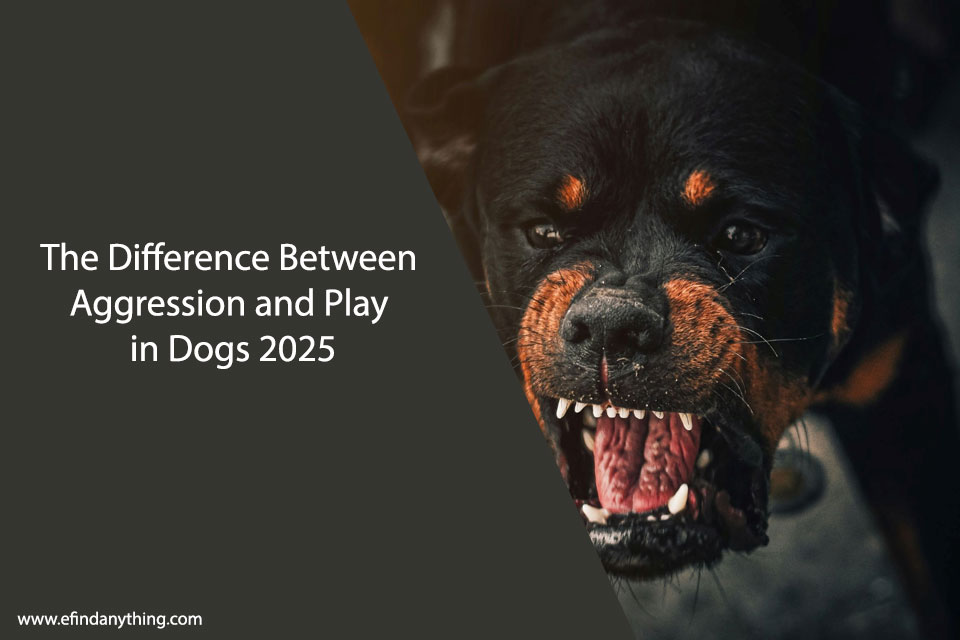
Aggression doesn’t dance. It holds still. While play zips and bounces and loops through the air, aggression roots itself in stillness, tightness, and intent.

A dog that’s feeling tense won’t flop around or offer floppy limbs. Instead, you’ll spot a posture that looks coiled – muscles pulled taut like rope, legs locked straight, tail raised and stiff as a fence post. Hackles (that ridge of fur along the spine) may stand up like bristles, and the eyes? They lock in like lasers, staring without blinking, scanning the other dog for a single wrong move.

The sound is different too. This isn’t the low rumble of a game growl – it’s sharper, louder, and often paired with bared teeth or that deep-chested bark that seems to shake the ground. There’s no mistaking it. The dog isn’t inviting a game; it’s setting a boundary and daring the other dog to cross it.

Another clue? The lack of give-and-take. In play, dogs swap roles. But in a conflict, one dog chases and the other flees, or one lunges while the other crouches or freezes. There’s no back-and-forth rhythm – just push.

And while some dogs might snap in the air or nip gently to communicate space, true aggression carries weight. These aren’t warnings wrapped in play – they’re attempts to land a message through teeth. If one dog bites and the other doesn’t bounce back for more, the mood has shifted.

It’s also worth watching for those pre-fight moments. A dog may stiffen, lean forward, and curl its lip before a full-on lunge. If you catch those signals early, you might be able to call your dog away before things boil over.

Tips to Safely Monitor Dog Play

You don’t need a degree in animal behaviour to keep things from tipping sideways – you just need a watchful eye, a bit of gut instinct, and a willingness to step in before chaos kicks off.

One of the best habits you can build? Look for breaks. Dogs that play well together naturally stop and start. They pause for a breath, shake their fur loose, and check on each other like teammates regrouping after a rough tackle. That shake-off is a built-in stress reset – it tells you they’re self-regulating and still enjoying the moment.

Use the three-second rule. If you’re feeling unsure, interrupt the play for just three beats. Call your dog over or step between them. If both pups come back wagging or re-engage in a light, bouncy way, great – carry on. But if one slinks away or the vibe suddenly cools, you’ve done the right thing by stepping in.

Also pay attention to facial check-ins – those little glances dogs give mid-wrestle, as if to say, “Still good?” If those moments disappear and one dog starts bulldozing ahead without waiting, that’s a sign things have tilted.

Keep your eyes peeled for imbalance. Is one dog always on top? Always chasing? Always pinning the other down? If the roles don’t flip now and then, the play isn’t as mutual as it looks.

And finally, don’t wait for a full-on fight to step in. If your dog stiffens, the other dog starts tucking their tail, or either begins yelping or darting away, call it. End the game with calm body language, leash up if needed, and walk off without fuss. No need to make it dramatic – just change the scene and reset the mood.

Conclusion: Reading the Room (and the Dog)

Here’s the long and short of it – dogs don’t come with subtitles. Their language isn’t written down, but it’s spoken all the time through posture, movement, and little flickers in the face and tail. Learning to read that language doesn’t happen in a day, but once it starts to click, you’ll wonder how you ever missed it.

If you’re ever stuck in the middle ground – unsure whether that bark was an invite or a warning – step in, slow things down, and let your dog reset. It’s better to call a time-out early than to break up a scuffle later.

ShareTweetPin
Previous Post

From NDA to IPO: Why Translation Matters at Every Stage of Growth

Next Post

Paint Protection Film Installers in Orange County

Bryan Davis

Bryan Davis

Bryan Davis is a seasoned author with a focus on health, pets, technology, and a multitude of other subjects. Possessing a wide array of interests, Bryan enriches his writing with an abundance of knowledge and expertise.

Related Posts

Can Donkeys Eat Carrots

Can Donkeys Eat Carrots? The Sweet Truth About This Classic Treat

by Bryan Davis
December 15, 2025
0

Donkeys and carrots seem like a perfect match, often pictured in storybooks and farm visits. But many donkey owners find...

Can Donkeys Eat Bananas

Can Donkeys Eat Bananas? Your Guide to Feeding Donkeys

by Bryan Davis
November 29, 2025
0

Feeding donkeys can be a delightful experience, but it's essential to ensure they're getting the right nutrients. If you're wondering whether bananas are a safe treat for your donkey, you're not alone. Many donkey owners are curious about adding variety to their donkey's diet. Understanding donkey nutrition is crucial for their overall health and well-being. Donkeys are known to be hardy animals, but their dietary needs are specific. So, what do donkeys typically eat, and can bananas be part of their diet? This guide will explore the ins and outs of feeding donkeys, including the safety of bananas as a treat. We'll delve into the basics of donkey diet and provide insights into what you can do to keep your donkey happy and healthy. Key Takeaways Understanding the basics of donkey nutrition is vital. Bananas can be a safe treat for donkeys when given in moderation. A balanced diet is crucial for maintaining a donkey's overall health. Donkeys have specific dietary needs that must be met. Consulting with a veterinarian can provide personalized feeding advice. Understanding Donkey Nutrition Basics Understanding the nutritional requirements of donkeys is essential for their care and well-being. Donkeys are often considered hardy animals, but they have specific dietary needs that must be met to ensure their overall health. Natural Diet of Donkeys in the Wild In their natural habitat, donkeys are adapted to eating a variety of plants, including grasses, shrubs, and trees. Their diet is typically high in fiber and low in protein, reflecting their evolution in harsh environments where nutrient-rich food is scarce. Donkeys are browsers, meaning they eat a wide range of vegetation, which helps them survive in areas with limited food resources. The natural diet of donkeys also includes a variety of minerals and vitamins, obtained from the plants they consume. This diverse intake is crucial for maintaining their health, particularly in regions where the soil and plants may be deficient in certain nutrients. Nutritional Requirements for Domestic Donkeys Domestic donkeys have similar nutritional requirements to their wild counterparts, needing a diet rich in fiber and low in protein. High-quality hay is often recommended as the main staple of their diet, supplemented with minerals and vitamins as necessary. It's also important to ensure access to clean, fresh water at all times. Unlike horses, donkeys are more prone to obesity and related health issues if overfed, particularly with high-energy foods. Therefore, their diet should be carefully managed to prevent overfeeding and ensure they maintain a healthy weight. Can Donkeys Eat Bananas? The Simple Answer The question of whether donkeys can eat bananas is a common concern among donkey owners and enthusiasts. To address this, we need to consider the safety of bananas for equines and understand any differences between donkeys and horses when it comes to fruit consumption. Safety of Bananas for Equines...

What Plants Do Mice Eat

What Plants Do Mice Eat? A Guide to Their Dietary Preferences

by Bryan Davis
September 25, 2025
0

Mice are common pests that can cause significant damage to gardens and homes. Understanding their dietary preferences is crucial in...

Smartest Dog Breeds

The Smartest Dog Breeds: A Comprehensive Guide

by Gihan Manawasinghe
September 24, 2025
0

Discovering the intelligent canine breeds that stand out for their exceptional cognitive abilities can be a fascinating journey for dog...

How to Choose a Safe and Trustworthy Boarding Facility

How to Choose a Safe and Trustworthy Boarding Facility

by Gihan Manawasinghe
August 29, 2025 - Updated on September 24, 2025
0

When it comes to ensuring the safety and comfort of your furry friend, choosing the right boarding facility becomes a...

Next Post
Paint Protection Film Installers in Orange County

Paint Protection Film Installers in Orange County

Why Immediate Legal Advice is Crucial in Criminal Defense

Why Immediate Legal Advice is Crucial in Criminal Defense

Leave a Reply

Your email address will not be published. Required fields are marked *

RECOMMENDED

Business Visibility

What’s Business Visibility About? 5 Quick Things About It

December 19, 2025
lacking confidence

5 Reasons You Could Be Lacking Confidence

December 18, 2025 - Updated on December 19, 2025

MOST VIEWED

  • What Is VACP Treas 310

    What Is VACP Treas 310

    0 shares
    Share 0 Tweet 0
  • Babata Namak Sinhala – Babata Lassana Namak

    7129 shares
    Share 0 Tweet 0
  • 15 Best Sites to Download Paid Android Apps for Free

    1 shares
    Share 0 Tweet 0
  • 42 Dugg Height Life, Career, Net Worth, and More

    0 shares
    Share 0 Tweet 0
  • Top 5 Trends in Sunglasses for 2026

    0 shares
    Share 0 Tweet 0

Follow Us on Social Media

efindanything-logo

This is a lifestyle blog offering an everything about Health & Fitness,Financial Services,Insurance,Travelling and more.Join us. Dive in. Improve your Life

CATEGORY

  • Art & Design (1)
  • Business (271)
  • Careers (8)
  • Cars & Other Vehicles (127)
  • Construction (5)
  • E Money (26)
  • Education (62)
  • Engineering (1)
  • Entertainment (16)
  • Environment (1)
  • Fashion (48)
  • Financial Services (147)
  • Foods (45)
  • Games (42)
  • Health & Fitness (410)
  • History (2)
  • Home Products & Services (355)
  • Insurance (12)
  • Law (147)
  • Lifestyle (30)
  • Other (24)
  • Parenting (2)
  • People and Society (28)
  • Pets (1,220)
  • Political (1)
  • Psychology (2)
  • Real Estate (54)
  • Relationships (46)
  • Safety (15)
  • Spirituality (40)
  • Sports (21)
  • Technology (213)
  • Travel (57)
  • Wishes (1)

RECENT POSTS

  • What’s Business Visibility About? 5 Quick Things About It December 19, 2025
  • 5 Reasons You Could Be Lacking Confidence December 18, 2025
  • Common Things That Lead to Will and Trust Disputes December 18, 2025
  • How Regular Podiatry Care Can Prevent Serious Foot Problems December 17, 2025
  • The Things Nobody Tells You About Taking Care of Aging Parents at Home December 16, 2025
  • Home
  • About Us
  • Contact Us
  • Privacy Policy
  • Terms & Conditions
  • Disclaimer
  • Sitemap

© 2018- 2025 E Find Anything

No Result
View All Result
  • Homepages
    • Homepage Layout 1

© 2018- 2025 E Find Anything

Go to mobile version