
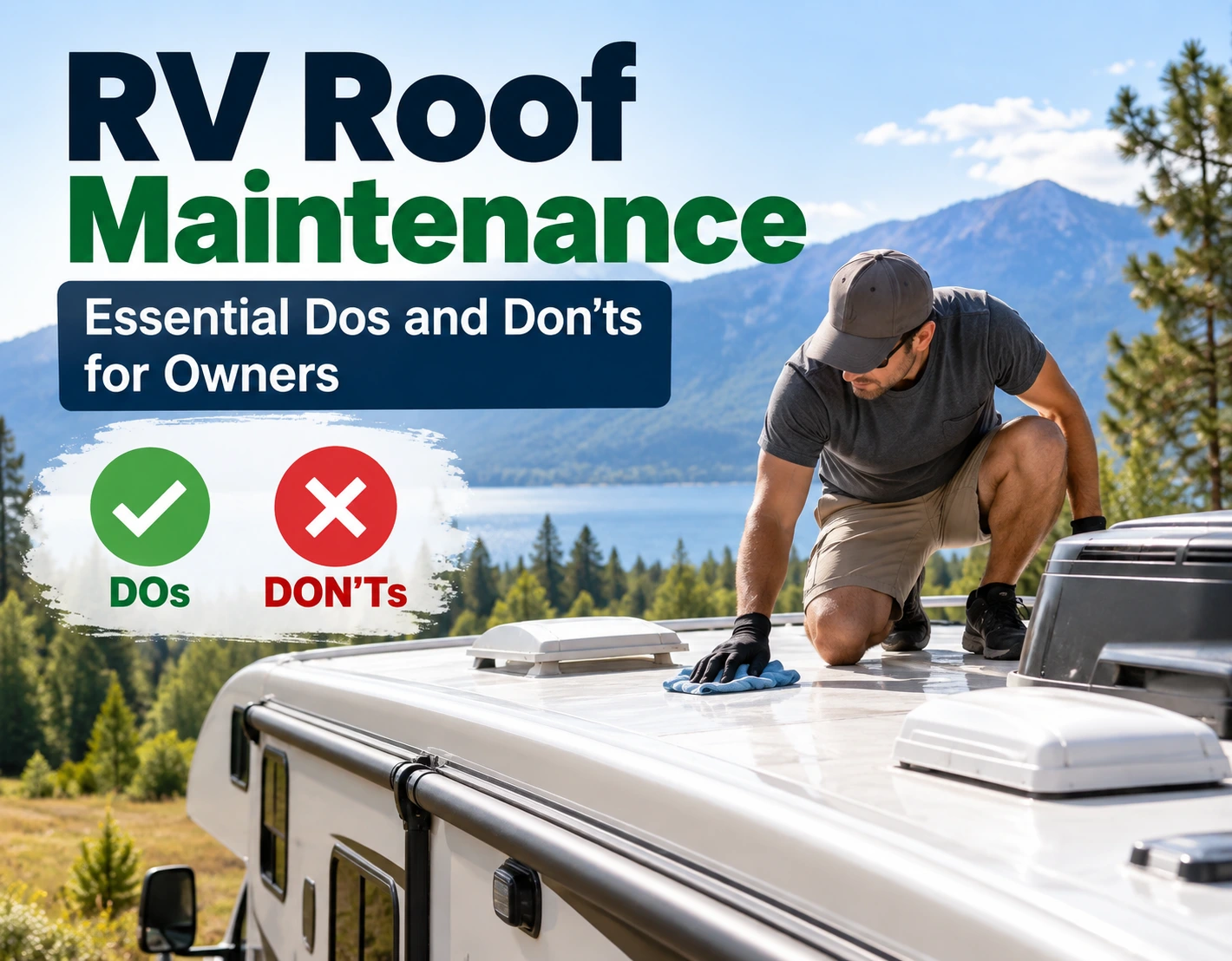

Owning an RV gives you the freedom to travel with many of the comforts of home. But just like a house, an RV needs regular maintenance to stay safe and comfortable. One area that deserves special attention is the roof.
Your RV roof protects the interior from rain, sun, wind, dirt, and other outdoor elements. A small crack, damaged seal, or overlooked leak can eventually lead to expensive water damage. That is why regular RV roof maintenance should be part of every owner’s routine.
Whether you are preparing for a camping trip or storing your RV for the season, knowing what to do—and what to avoid—can help extend the life of your roof. Here are some important dos and don’ts of RV roof maintenance.
RV Roof Maintenance Dos
Taking a few simple steps throughout the year can help prevent roof damage and keep your RV ready for the road.
Inspect Your RV Roof Regularly
Regular inspections are one of the easiest ways to catch roof problems before they become expensive repairs. Look for cracks, tears, loose seals, damaged areas, or signs that water may be getting inside.
A thorough inspection should be carried out at least twice a year, particularly before and after the main camping season. You should also inspect the roof after severe weather or if you notice signs of water damage inside the RV.
Check out canopyrvresort.com to learn more about RV roof care tips and how to approach roof repairs.
Clean Your RV Roof
Dirt, leaves, bird droppings, and other debris can accumulate on an RV roof over time. Regular cleaning helps keep the roof in better condition and makes it easier to spot cracks, damaged seals, or other problems during your inspection.
Use a mild soap and water solution that is suitable for your particular roof material. Avoid aggressive cleaners that could damage the roof surface. After washing, rinse the roof thoroughly so that no soap residue remains.
Protect the Roof When Your RV Is Not in Use
If your RV will be sitting unused for an extended period, consider using a cover specifically designed for RVs. A suitable cover can help reduce exposure to sunlight, rain, dirt, and other weather conditions.
Before covering the RV, make sure the roof is clean and completely dry. It is also a good idea to inspect the roof first so that any existing problems can be addressed rather than hidden underneath the cover.
Keep Overhanging Tree Branches Away
Parking your RV under trees can provide welcome shade, but low or overhanging branches can become a hazard. Wind can cause branches to rub against the roof or fall onto it, potentially damaging the roof membrane, vents, or other components.
Before parking your RV for an extended period, check the surrounding trees and trim branches that could come into contact with the roof. This simple precaution can help prevent avoidable damage.
RV Roof Maintenance Don’ts
Knowing what not to do is just as important as knowing how to maintain your RV roof. Some common cleaning and maintenance practices can actually cause damage.
Don’t Ignore Signs of Roof Damage
Never ignore a small crack, damaged seal, soft spot, stain, or possible leak. Roof problems can become significantly more serious when they are left untreated, especially when moisture reaches the RV’s interior.
If you notice water stains, damp areas, peeling materials, or other signs of water intrusion inside your RV, inspect the roof and surrounding seals as soon as possible. When you are unsure about the extent of the damage, professional inspection and repair may be the safest option.
Don’t Use Harsh Chemicals
Avoid using harsh chemicals such as bleach or ammonia unless the manufacturer specifically says they are safe for your roof material. Strong cleaning products can damage certain roof surfaces, seals, or finishes and may cause discoloration.
Always check the RV and roof manufacturer’s cleaning recommendations before using a new product. When in doubt, a gentle cleaner and soft cleaning tools are generally a better choice than aggressive chemicals.
Don’t Walk on the RV Roof Without Checking the Manufacturer’s Instructions
Not every RV roof is designed to be walked on. Putting your weight on a roof that is not walkable can result in damage to the roof surface or underlying structure.
If roof access is necessary for inspection or maintenance, first check your RV manufacturer’s instructions. Use a secure ladder and follow the recommended safety procedures rather than assuming the roof can support your weight.
Don’t Use a Pressure Washer
Pressure washers may be useful for certain outdoor cleaning jobs, but they are not a good choice for cleaning an RV roof unless the manufacturer specifically approves their use. High-pressure water can damage roof materials, seals, vents, and other components, potentially creating pathways for water to enter.
For more information about why caution is needed when pressure washers are used around RVs, see the manufacturer’s recommendations and use a gentler cleaning method whenever possible.
How Often Should You Maintain an RV Roof?
There is no single maintenance schedule that works for every RV because roof materials, storage conditions, climate, and usage can vary. However, regular visual inspections are important throughout the year.
A more thorough inspection at least twice a year is a good starting point. Consider checking the roof before the camping season begins and again when you are preparing the RV for storage. Additional inspections may be worthwhile after heavy rain, strong winds, falling branches, or other severe weather.
Why Regular RV Roof Maintenance Matters
Your RV roof is constantly exposed to the elements, so normal wear and tear is unavoidable. However, regular maintenance can help you identify problems while they are still manageable.
Keeping the roof clean, checking seals and roof components, protecting the RV during storage, and responding quickly to damage can reduce the risk of leaks and costly repairs. Most importantly, follow the maintenance instructions provided by your RV and roof manufacturer because different roof materials require different care.
Frequently Asked Questions About RV Roof Maintenance
How often should I inspect my RV roof?
You should inspect your RV roof regularly and perform a more thorough inspection at least twice a year. It is also wise to check the roof after severe weather or whenever you notice signs of a possible leak.
What should I look for during an RV roof inspection?
Look for cracks, tears, loose or damaged seals, soft spots, holes, deteriorating areas, and anything that appears out of place. Also check roof vents, skylights, air-conditioning components, and other areas where water could potentially enter.
Can I use bleach to clean my RV roof?
It is best to avoid bleach and other harsh chemicals unless your RV or roof manufacturer specifically recommends them. Some roof materials and seals can be damaged by strong cleaning products. Always follow the manufacturer’s cleaning instructions.
Can I pressure wash an RV roof?
Pressure washing an RV roof can cause damage to some roof materials, seals, vents, and other components. Unless the manufacturer specifically approves pressure washing, use a gentler cleaning method instead.
Is it safe to walk on an RV roof?
It depends on the RV and its roof construction. Some roofs are designed to be walked on while others are not. Check your RV manufacturer’s instructions before getting onto the roof, and never assume that a roof is strong enough to support your weight.
How can I protect my RV roof when it is in storage?
Clean and inspect the roof before storing the RV, address any visible problems, and consider using a properly fitted RV cover. Parking away from low tree branches can also help reduce the risk of damage while the RV is stored.
What should I do if I find a leak in my RV roof?
Address the problem as soon as possible. A roof leak can allow moisture to damage the interior of the RV and may become more expensive to repair if ignored. If you cannot identify or safely repair the source of the leak, consider having the roof inspected by a qualified RV professional.
Final Thoughts on RV Roof Maintenance
Regular RV roof maintenance does not have to be complicated. A few routine inspections, careful cleaning, protection during storage, and quick attention to damage can make a significant difference in the condition of your RV.
Most importantly, use products and maintenance methods that are appropriate for your specific roof material and follow the manufacturer’s recommendations. Taking care of the roof today can help prevent leaks, expensive repairs, and unpleasant surprises on your next adventure.
With a little regular care, you can keep your RV in better condition and enjoy more worry-free time on the road. Happy camping!
If you want to read more articles, visit our blog.