
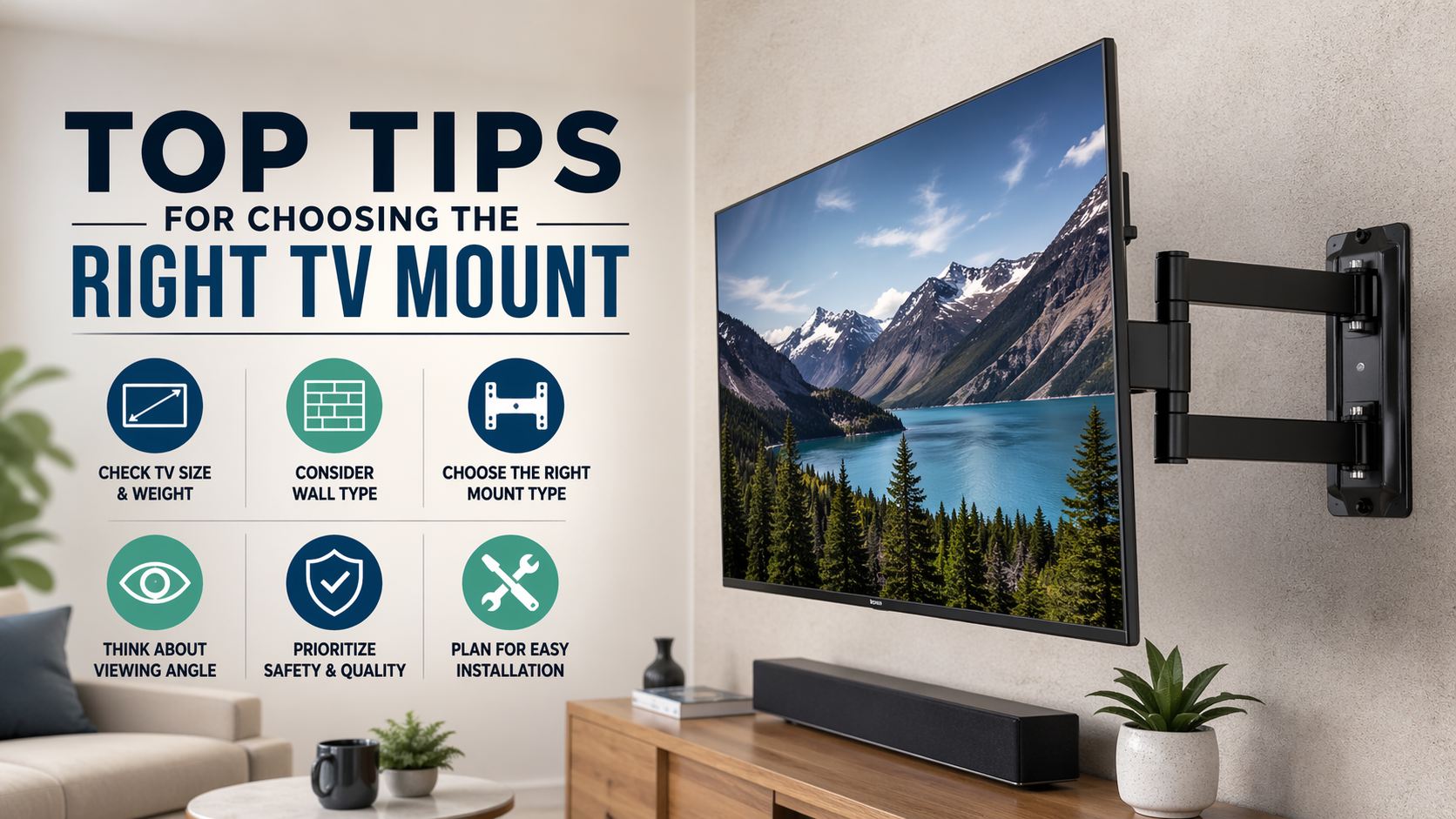
A wall-mounted television can instantly transform the look and functionality of any room. Not only does it save valuable floor space, but it also creates a cleaner, more modern appearance. However, choosing the right TV mount is just as important as selecting the television itself. With numerous mounting options available, finding the perfect one can be challenging.
The right TV mount improves viewing comfort, protects your television, and enhances your overall entertainment experience. This guide covers the top tips for choosing the right TV mount so you can make an informed decision and enjoy your setup for years to come.
Understand the Different Types of TV Mounts
Before purchasing a TV mount, it’s important to understand the various options available.
Fixed TV Mounts
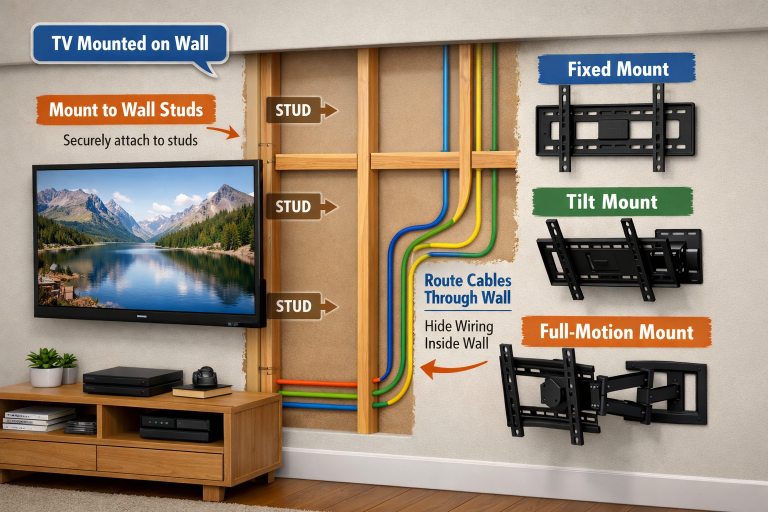
Fixed mounts hold the television flat against the wall and offer a sleek, low-profile appearance. They do not allow movement once installed.
Best for:
- Living rooms with a dedicated viewing area
- TVs mounted at eye level
- Minimalist home designs
Tilting TV Mounts
Tilting mounts allow the screen to move up or down slightly. This helps reduce glare and improves visibility when the TV is mounted higher than eye level.
Best for:
- TVs mounted above fireplaces
- Bright rooms with natural light
- Bedrooms and family rooms
Full-Motion TV Mounts
Also known as articulating mounts, these provide maximum flexibility. They can tilt, swivel, extend, and rotate.
Best for:
- Large rooms
- Open-concept living spaces
- Multiple seating areas
- Corner installations
Ceiling TV Mounts
Ceiling mounts are ideal when wall mounting isn’t practical.
Best for:
- Commercial environments
- Gyms
- Restaurants
- Unique room layouts
Check Your TV Size and Weight
One of the most important steps when choosing a TV mount is ensuring it can support your television’s size and weight.
Before purchasing a mount:
- Measure your TV screen size
- Check the TV’s weight specifications
- Compare those measurements with the mount’s supported range
Using a mount that cannot handle your TV’s weight may result in damage to both the television and your wall.
Verify VESA Compatibility
VESA (Video Electronics Standards Association) refers to the mounting hole pattern located on the back of your television.
Common VESA patterns include:
- 200 x 200 mm
- 400 x 400 mm
- 600 x 400 mm
Check your television’s manual or specifications to find its VESA measurement and ensure the mount supports it.
Consider Your Viewing Position
Your seating arrangement plays a major role in determining which mount is best.
Ask yourself:
- Will viewers sit directly in front of the television?
- Will the TV be viewed from different parts of the room?
- Is the television mounted above eye level?
- Do you need flexibility for changing viewing angles?
If multiple viewing positions are involved, a full-motion mount may be the ideal solution.
Evaluate Your Wall Type
Not all walls provide the same level of support. Understanding your wall construction is essential for safe installation.
Drywall with Wooden Studs
This is the most common wall type in residential homes. TV mounts should be attached directly to wall studs whenever possible.
Brick or Concrete Walls
These walls offer excellent support but require specialized anchors and drilling equipment.
Metal Stud Walls
Metal studs may need additional reinforcement to safely support a television.
Always ensure your wall can handle both the mount and the television before installation.
Think About Cable Management
Nothing ruins a clean TV setup faster than visible cables hanging from the wall.
Many modern TV mounts include built-in cable management systems that help organize and conceal wires.
Benefits include:
- Cleaner appearance
- Better organization
- Improved safety
- Professional-looking installation
Planning cable management from the beginning can significantly improve the final result.
Account for Room Lighting
Room lighting can affect picture quality and viewing comfort.
If your room receives a lot of natural light or has bright overhead fixtures, consider a tilting or full-motion mount. These allow you to adjust the screen position and reduce glare throughout the day.
A flexible mount can make a noticeable difference in overall viewing quality.
Plan for Future TV Upgrades
Many homeowners upgrade their televisions every few years. Choosing a mount with a higher weight capacity and support for larger screen sizes can save money in the future.
A future-proof mount provides flexibility if you decide to purchase a larger TV later.
Prioritize Quality and Safety
A TV mount is responsible for holding one of the most expensive electronics in your home. Quality should never be overlooked.
Look for features such as:
- Heavy-duty steel construction
- Safety locking mechanisms
- UL certification
- Strong warranty coverage
- Positive customer reviews
Investing in a high-quality mount helps ensure long-term reliability and safety.
DIY Installation vs Professional Installation
While many TV mounts can be installed by homeowners, professional installation may be worth considering in some situations.
Professional installation is recommended if:
- The TV is very large
- The wall material is difficult to work with
- You want hidden wiring
- You are unfamiliar with mounting procedures
A professional can ensure proper placement, secure installation, and optimal viewing angles.
Common Mistakes to Avoid
When selecting a TV mount, avoid these common errors:
- Ignoring the TV’s weight requirements
- Forgetting to check VESA compatibility
- Mounting the TV too high
- Using incorrect hardware
- Choosing a mount with insufficient movement
- Overlooking cable management needs
Avoiding these mistakes can help create a safer and more enjoyable setup.
Benefits of Choosing the Right TV Mount
Selecting the proper TV mount offers several advantages:
- Better viewing comfort
- Reduced glare
- Improved room appearance
- Increased floor space
- Enhanced safety
- Greater flexibility
- Better protection for your television
A well-chosen mount can dramatically improve your home entertainment experience.
Conclusion
Choosing the right TV mount involves more than simply finding one that fits your television. Factors such as TV size, weight, VESA compatibility, viewing position, wall type, lighting conditions, and future upgrade plans all play important roles.
By carefully considering these factors, you can select a mount that provides safety, convenience, and the best possible viewing experience. Whether you choose a fixed, tilting, or full-motion mount, investing time in the selection process will ensure your television remains secure and enjoyable for years to come.
Frequently Asked Questions
What type of TV mount is best?
The best TV mount depends on your needs. Fixed mounts work well for straightforward viewing, while full-motion mounts offer maximum flexibility.
How do I know if a TV mount fits my TV?
Check your TV’s size, weight, and VESA pattern, then compare them to the mount’s specifications.
Can I mount a TV on drywall?
Yes, but the mount should be attached to wall studs behind the drywall for proper support.
Is a full-motion TV mount worth it?
Yes. Full-motion mounts are ideal for rooms with multiple seating areas and changing viewing positions.
How high should a TV be mounted?
The center of the screen should generally be at eye level when seated for the most comfortable viewing experience.