
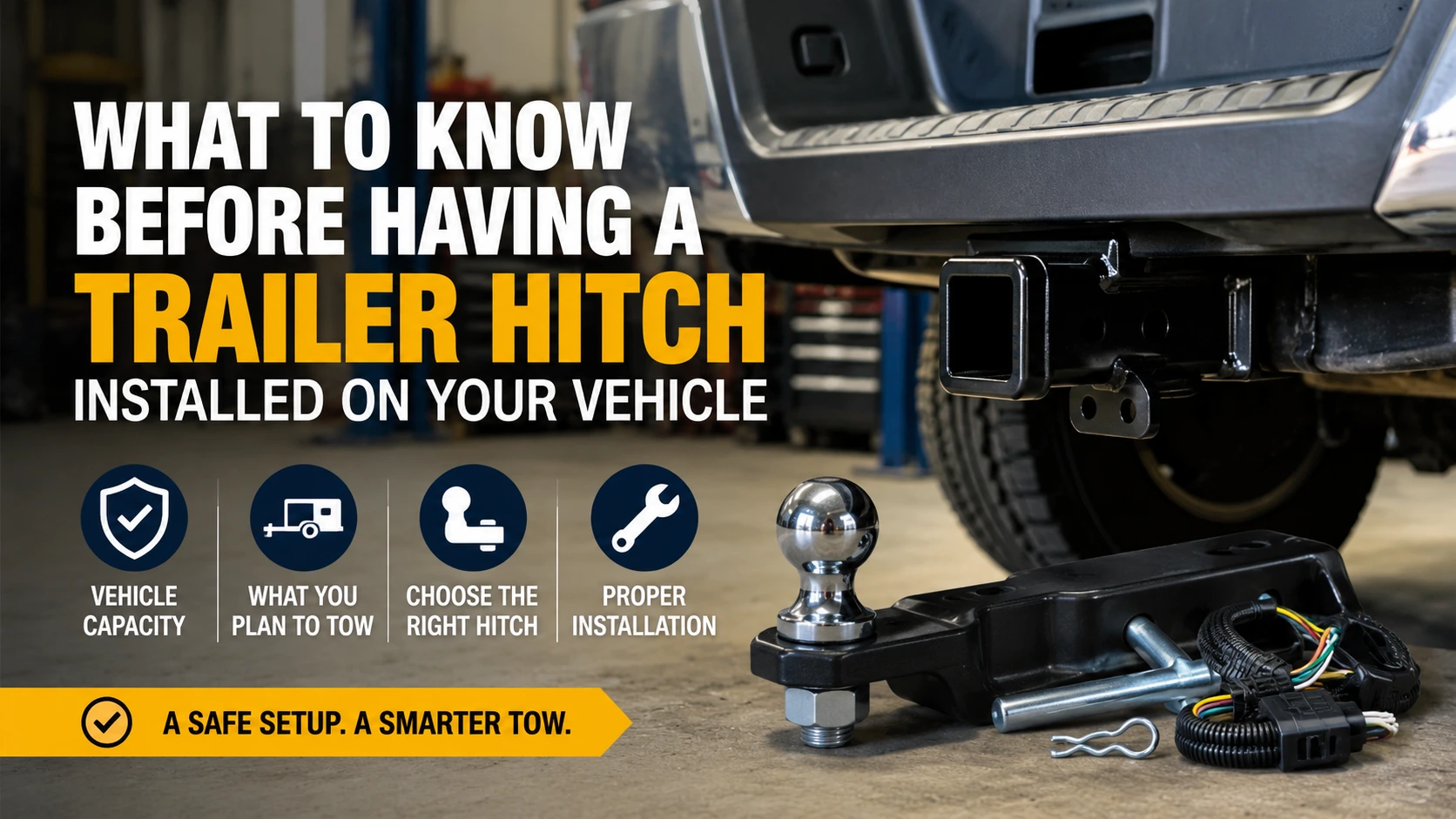
Adding a trailer hitch can make a pickup truck or SUV considerably more useful. It can support everything from work trailers and landscaping equipment to boats, campers, and recreational gear. However, choosing a hitch involves more than finding one that physically bolts onto the vehicle.
A safe and practical towing setup depends on the vehicle’s capabilities, the load being towed, compatible equipment, and correct installation. Considering these factors before purchasing a hitch can help drivers avoid equipment that is poorly suited to how they actually use their vehicle.
Start With the Vehicle, Not the Hitch
Before comparing trailer hitches, check what the vehicle manufacturer allows the vehicle to tow. Two trucks or SUVs that appear similar can have different towing capacities depending on the engine, drivetrain, axle ratio, suspension, factory towing package, and other equipment.
The owner’s manual is an important starting point. It can provide information about maximum trailer weight, tongue weight, and other towing limitations. These limits should guide hitch selection rather than the hitch’s maximum rating alone.
For example, installing a receiver hitch rated for a heavier trailer does not increase the vehicle’s towing capacity. The complete system is still limited by its lowest-rated component.
Fitment also matters. A hitch designed for a particular vehicle should account for its frame, mounting points, bumper configuration, spare tire location, and exhaust system. Aftermarket modifications and other truck accessories may also affect available space.
Define What You Actually Plan to Tow
The right hitch for an occasional utility trailer may not be the best choice for a vehicle that regularly pulls heavier work equipment. Before installation, consider both present and likely future uses.
Think about the type of trailer, expected loaded weight, tongue weight, towing frequency, and typical driving conditions. A contractor towing equipment several days a week has different requirements from someone pulling a small recreational trailer a few weekends each summer.
Drivers should also consider where towing will take place. Regular highway travel, rural roads, construction sites, boat launches, and campgrounds can place different demands on a towing setup.
In Ontario communities such as Cambridge, Kitchener, Waterloo, and Guelph, a vehicle might serve several purposes throughout the year. A truck used for work during the week could also tow recreational equipment on weekends. Choosing equipment around realistic use rather than a single trip can make the setup more practical over time.
Choose a Receiver Hitch as Part of a Complete System
A receiver hitch is only one component of the connection between a vehicle and trailer. Hitch receivers are available in different sizes and weight classifications, and the appropriate choice depends on both vehicle compatibility and towing requirements.
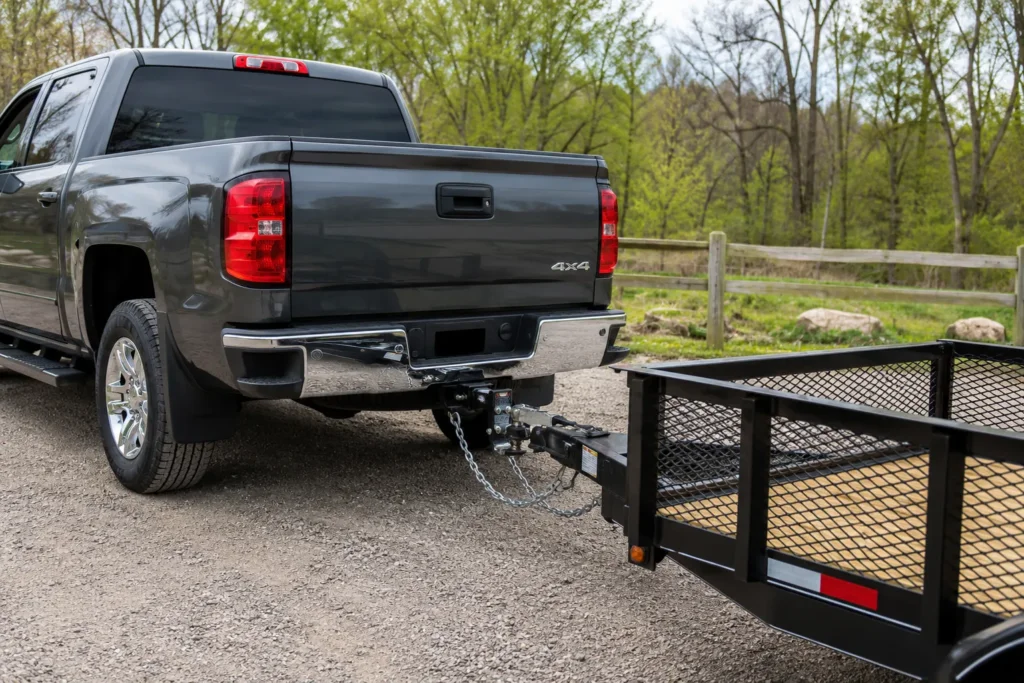
The ball mount, hitch ball, wiring, safety chains, and other required equipment must also suit the application. Depending on the trailer and vehicle, additional towing equipment may be necessary.
This is why hitch selection should be approached as a system rather than as an isolated accessory purchase. Components need compatible dimensions and appropriate ratings, and the trailer should sit correctly once connected.
Ground clearance is another practical consideration. Hitch components should not create unnecessary clearance problems during normal vehicle use. At the same time, the trailer connection needs to maintain an appropriate position when the vehicle and loaded trailer are coupled.
Owners who expect their towing needs to change should consider that before installation. Planning for reasonable future uses can reduce the likelihood of replacing equipment later, provided every component remains within the vehicle manufacturer’s specifications.
Installation Quality Affects Fit and Usability
Even a correctly selected hitch needs proper installation. The installer should confirm that the hitch is designed for the specific vehicle and that mounting locations, hardware, clearances, and related towing equipment are appropriate.
This is especially important on vehicles with aftermarket bumpers, modified suspension, unusual exhaust configurations, or other accessories that could affect hitch fitment. Wiring requirements also need attention because trailer lighting and electrical connections are part of a functional towing system.
Professional installation can be useful when owners are uncertain about compatibility or when the towing application involves several components. For example, Tri-City Custom Upfitters provides professional trailer hitch installation for vehicle owners in the Cambridge, Kitchener, Waterloo, and Guelph region, where fitment can be considered alongside the vehicle and its intended towing application.
Regardless of who performs the work, installation should follow the hitch and vehicle manufacturers’ requirements. Proper torque, suitable hardware, adequate clearance, and correctly routed electrical connections all contribute to a reliable finished setup.
Think Beyond the Day of Installation
A trailer hitch becomes part of the vehicle, so long-term usability deserves consideration before installation. Drivers should think about how the hitch affects access to the spare tire, tailgate use, ground clearance, parking, and compatibility with other accessories.
The towing equipment should also be inspected periodically. Exposure to road salt, moisture, dirt, and regular towing can affect components over time, particularly through Ontario winters. Checking mounting hardware, electrical connections, the receiver area, safety-chain attachment points, and signs of corrosion can help identify developing problems.
Removable components should receive attention as well. Ball mounts and other equipment should be kept in serviceable condition and used only within their specified ratings.
A well-planned trailer hitch installation begins with understanding the entire towing job rather than simply selecting a hitch that fits the vehicle. Vehicle limits, trailer weight, compatible components, correct fitment, and installation quality all influence how safely and conveniently the setup performs.
Taking time to assess those details before installation can produce a towing system that works for everyday jobs and recreational trips while remaining appropriate for the vehicle over the long term.