
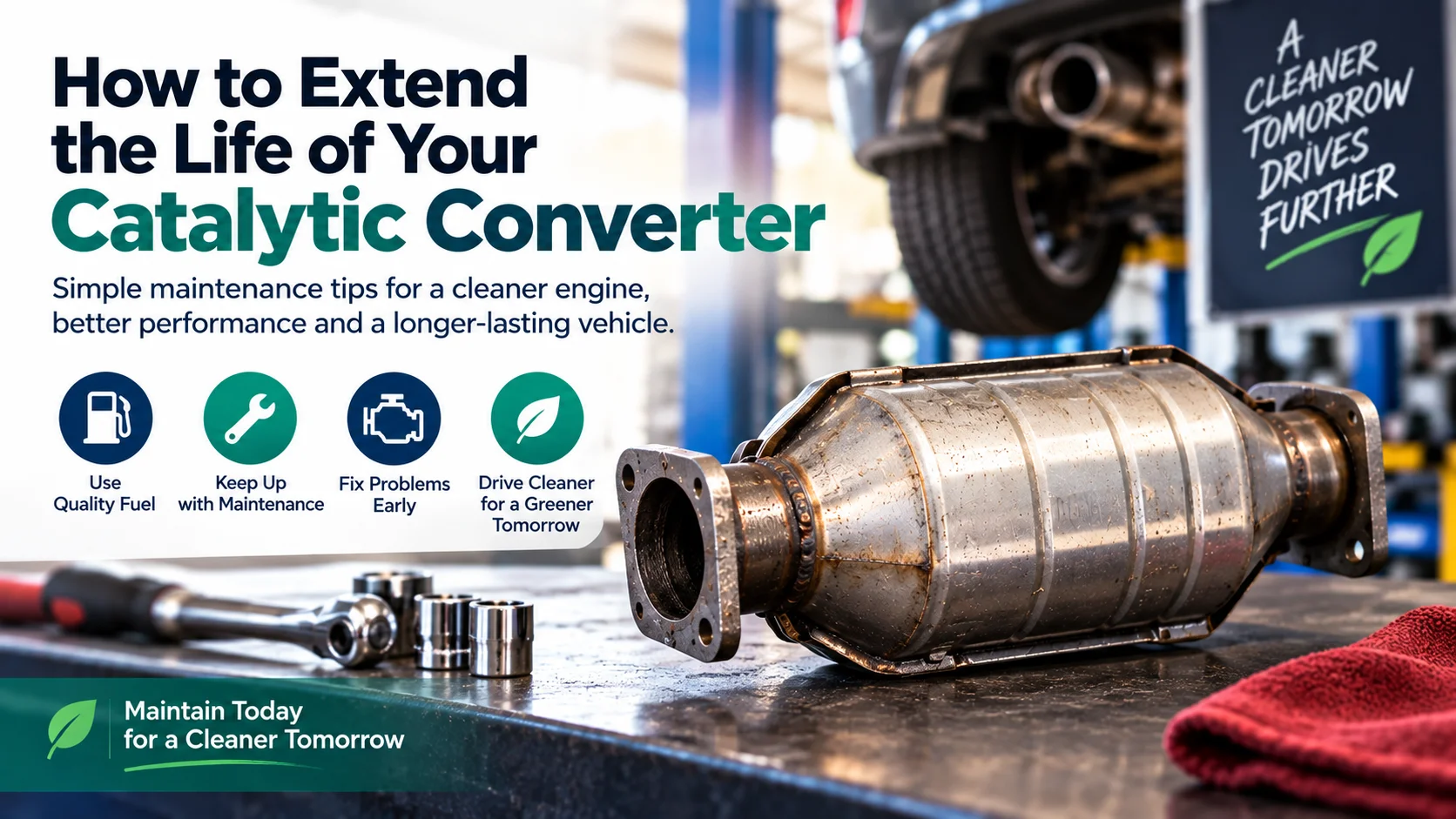
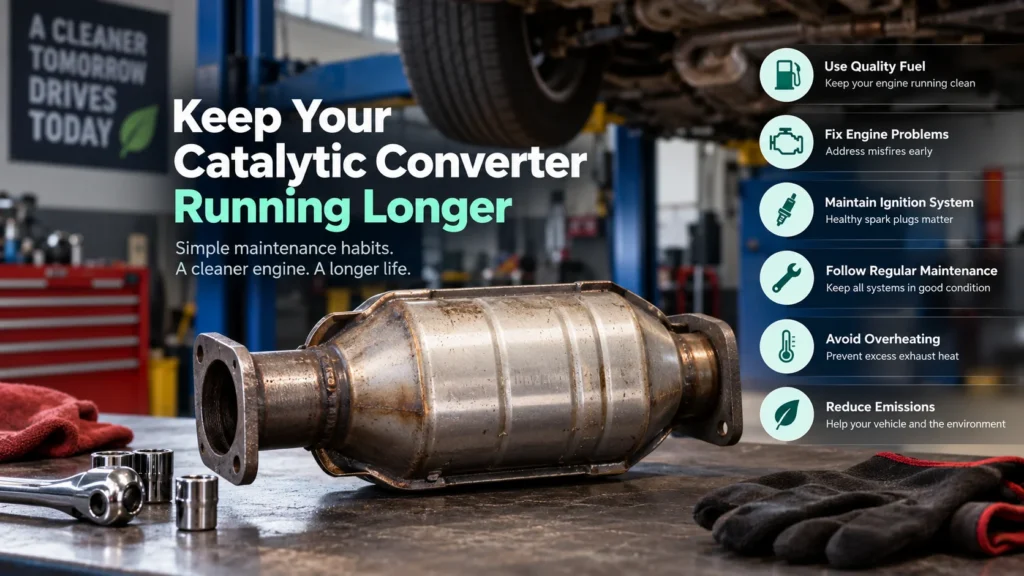
A catalytic converter is an important part of a vehicle’s exhaust and emissions-control system. Although it is designed to last for many years, its service life can be shortened by engine misfires, excessive fuel entering the exhaust, poor maintenance, overheating, oil or coolant contamination, and other mechanical problems.
The good news is that many catalytic converter problems can be prevented by keeping the engine and fuel system in good working condition and addressing warning signs early. Proper maintenance can help you avoid premature catalytic converter failure and potentially expensive exhaust system repairs.
What Does a Catalytic Converter Do?
A catalytic converter helps reduce harmful pollutants in a vehicle’s exhaust before those gases are released into the atmosphere. Because it operates at very high temperatures and is exposed to exhaust gases continuously, problems elsewhere in the engine can eventually damage the converter.
For this reason, protecting the catalytic converter is not simply about maintaining the exhaust system. It also means keeping the engine, ignition system, fuel system, and emissions-control components operating correctly.
How Long Does a Catalytic Converter Last?
There is no single mileage or time period that applies to every catalytic converter. Its service life depends on the vehicle, driving conditions, maintenance history, engine condition, and the quality of the replacement part if the original converter has already been replaced.
A converter that is exposed to repeated engine misfires or excessive exhaust temperatures can fail much earlier than one installed on a properly maintained vehicle. That is why fixing the underlying engine problem is often just as important as replacing a damaged converter.
What Can Cause a Catalytic Converter to Fail?
A catalytic converter can be damaged by several different problems. Some of the most common causes include:
- Engine misfires: A misfiring engine can allow unburned fuel to enter the exhaust, increasing the converter’s temperature and potentially damaging its internal material.
- Fuel-system problems: An incorrect air-fuel mixture can increase the amount of fuel entering the exhaust system.
- Ignition problems: Worn or faulty spark plugs, ignition components, or related problems can cause incomplete combustion and misfires.
- Oil or coolant contamination: Internal engine problems that allow oil or coolant to enter the combustion process can contaminate the exhaust system.
- Excessive heat: Abnormally high exhaust temperatures can damage the catalyst and its internal structure.
- Physical damage: A catalytic converter located underneath the vehicle can be damaged by road debris, impacts, or other physical forces.
What Are the Signs of a Catalytic Converter Problem?
A damaged catalytic converter can produce several warning signs. However, these symptoms can also be caused by other engine or exhaust problems, so they should not automatically be treated as proof that the converter itself has failed.
- A rattling sound coming from the exhaust area.
- A check-engine light appearing on the dashboard.
- Reduced engine performance or difficulty accelerating.
- Unusual exhaust odors.
- Unexpected changes in fuel economy.
- Excessive heat around the exhaust system.
A rattling noise, for example, may indicate that the internal ceramic substrate has broken apart, but a professional inspection is still recommended before replacing the converter. Similarly, a check-engine light can be triggered by a variety of engine and emissions-related faults.
How to Extend the Life of Your Catalytic Converter
The best way to protect a catalytic converter is to prevent the engine problems that can damage it. Regular maintenance and prompt repairs can make a significant difference in the long-term condition of the exhaust and emissions system.
1. Keep the Ignition System in Good Condition
Spark plugs and other ignition components should be inspected and replaced according to the vehicle manufacturer’s maintenance recommendations. A faulty ignition system can cause incomplete combustion or engine misfires, which may expose the catalytic converter to excessive amounts of unburned fuel.
2. Fix Engine Misfires Promptly
Do not ignore a persistent misfire simply because the vehicle still appears to run. An engine that is misfiring can create conditions that place additional stress on the catalytic converter. If the check-engine light is flashing or the engine is running very poorly, have the vehicle inspected as soon as practical.
3. Use the Correct Fuel
Use fuel that meets the specifications recommended by your vehicle manufacturer. Buying fuel from reputable suppliers and using the correct fuel grade can help the engine and emissions system operate as intended.
4. Maintain the Fuel System
Problems with fuel delivery can affect the air-fuel mixture and engine performance. Follow the manufacturer’s maintenance schedule and have fuel-system problems diagnosed rather than continuing to drive with symptoms such as rough running, poor performance, or persistent warning lights.
5. Address Oil or Coolant Consumption
If the engine is consuming excessive oil or losing coolant, the underlying cause should be investigated. Internal engine problems can allow these fluids to reach the combustion and exhaust systems and may contribute to catalytic converter contamination or failure.
6. Avoid Repeated Unsuccessful Starting Attempts
Repeated attempts to start an engine that will not run properly can potentially allow unburned fuel to enter the exhaust system. If a vehicle repeatedly fails to start, it is better to diagnose the cause rather than continuing to crank the engine unnecessarily.
7. Follow the Manufacturer’s Maintenance Schedule
Routine maintenance can help identify problems before they become serious. Pay attention to recommended inspections and replacements for spark plugs, filters, fluids, sensors, and other components that affect engine performance and emissions.
8. Protect the Exhaust System From Physical Damage
The catalytic converter is located underneath or near the exhaust system on many vehicles. Avoid unnecessary impacts with rocks, curbs, deep potholes, or other obstacles that could damage the exhaust components.
How to Correctly Assess the Condition of a Catalytic Converter
If you suspect that your catalytic converter is failing, avoid replacing it based solely on one symptom. A professional diagnosis can help determine whether the problem is actually the converter or another component causing similar symptoms.
A technician may examine diagnostic trouble codes, engine performance, exhaust temperatures, oxygen-sensor readings, exhaust flow, and the physical condition of the converter as part of the diagnostic process.
A rattling converter, persistent warning light, poor engine performance, or unusual exhaust behavior should be investigated rather than ignored. Finding the underlying cause is especially important because installing a new converter without fixing the original engine problem can lead to another premature failure.
Can a Catalytic Converter Be Repaired?
Whether a catalytic converter can be repaired depends on the nature of the problem. In many cases, a converter with damaged or contaminated internal material cannot simply be restored to its original condition and may need to be replaced.
However, the reason for the failure should be diagnosed first. If an engine misfire, fuel-system problem, oil leak, coolant leak, or another mechanical fault caused the converter to fail, that underlying problem should be corrected before installing a replacement.
What Should You Do If the Catalytic Converter Fails?
If the catalytic converter is confirmed to be defective, have the vehicle repaired using a suitable replacement component that is compatible with the vehicle and applicable emissions requirements.
For vehicles subject to U.S. emissions requirements, removing or bypassing a catalytic converter is not simply an alternative repair. The U.S. Environmental Protection Agency states that removing or rendering an emissions-control device ineffective can constitute tampering under federal law. Replacement parts should therefore be appropriate for the vehicle and compliant with applicable requirements. :contentReference[oaicite:1]{index=1}
For this reason, vehicle owners should work with a qualified repair professional and check the requirements that apply to their vehicle and location before choosing a replacement component.
What Can You Do With an Old Catalytic Converter?
If replacement of the catalytic converter is necessary, don’t automatically throw the old component into the trash. Catalytic converters contain valuable materials that can be recovered through specialized recycling processes.
Instead, owners can explore reputable catalytic converter recycling or resale services. One option is Autocatalyst, where vehicle owners can look for potential buyers for used catalytic converters and related parts.
On the platform https://autocatalystmarket.com/us/en/products/rover you can explore the available marketplace options for catalytic converters.
Common Mistakes That Can Shorten Catalytic Converter Life
Some catalytic converter failures can be linked to problems that were left unresolved for too long. Avoid these common mistakes:
- Ignoring a persistent check-engine light.
- Continuing to drive with a serious engine misfire.
- Ignoring excessive oil or coolant consumption.
- Replacing the converter without fixing the underlying cause of failure.
- Using an unsuitable replacement component.
- Attempting to bypass or remove emissions-control equipment.
- Ignoring unusual exhaust noises or performance problems.
Frequently Asked Questions
How can I make my catalytic converter last longer?
Maintain the engine according to the manufacturer’s recommendations, repair misfires promptly, use the correct fuel, address oil or coolant problems, and have unusual exhaust or engine symptoms diagnosed early.
Can bad spark plugs damage a catalytic converter?
Faulty spark plugs can contribute to engine misfires. If unburned fuel repeatedly reaches the exhaust system as a result of misfires, the catalytic converter can be exposed to excessive heat and may be damaged.
Does a check-engine light always mean the catalytic converter is bad?
No. A check-engine light can be triggered by many different engine, fuel, ignition, sensor, and emissions-system problems. Proper diagnosis is necessary before determining whether the catalytic converter needs to be replaced.
What causes a catalytic converter to rattle?
A rattling sound can occur when the internal material of a catalytic converter has become damaged or broken. However, other exhaust components can also make rattling noises, so the source should be inspected before replacing the converter.
Should I remove a failed catalytic converter?
A failed catalytic converter should be properly diagnosed and replaced with an appropriate emissions-compliant component rather than simply removed or bypassed. In the United States, federal emissions rules prohibit certain forms of tampering with vehicle emissions-control systems. :contentReference[oaicite:2]{index=2}
Can I sell an old catalytic converter?
In many cases, an old catalytic converter may have value because of its recyclable materials. Owners can investigate reputable catalytic converter recycling or resale marketplaces and follow any applicable identification, ownership, and local legal requirements.
Final Thoughts
A catalytic converter can often provide many years of service when the vehicle’s engine and emissions systems are properly maintained. The most effective approach is not to focus on the converter alone, but to prevent the engine and fuel-system problems that can damage it.
Keep up with routine maintenance, investigate warning lights and misfires promptly, use the correct fuel, and address oil or coolant problems before they become more serious. If the converter eventually fails, have the underlying cause diagnosed and use a suitable replacement that meets the applicable requirements.
And if replacement leaves you with an old catalytic converter, consider responsible recycling or resale rather than simply throwing it away. This can help recover valuable materials while keeping the old component out of the waste stream.