
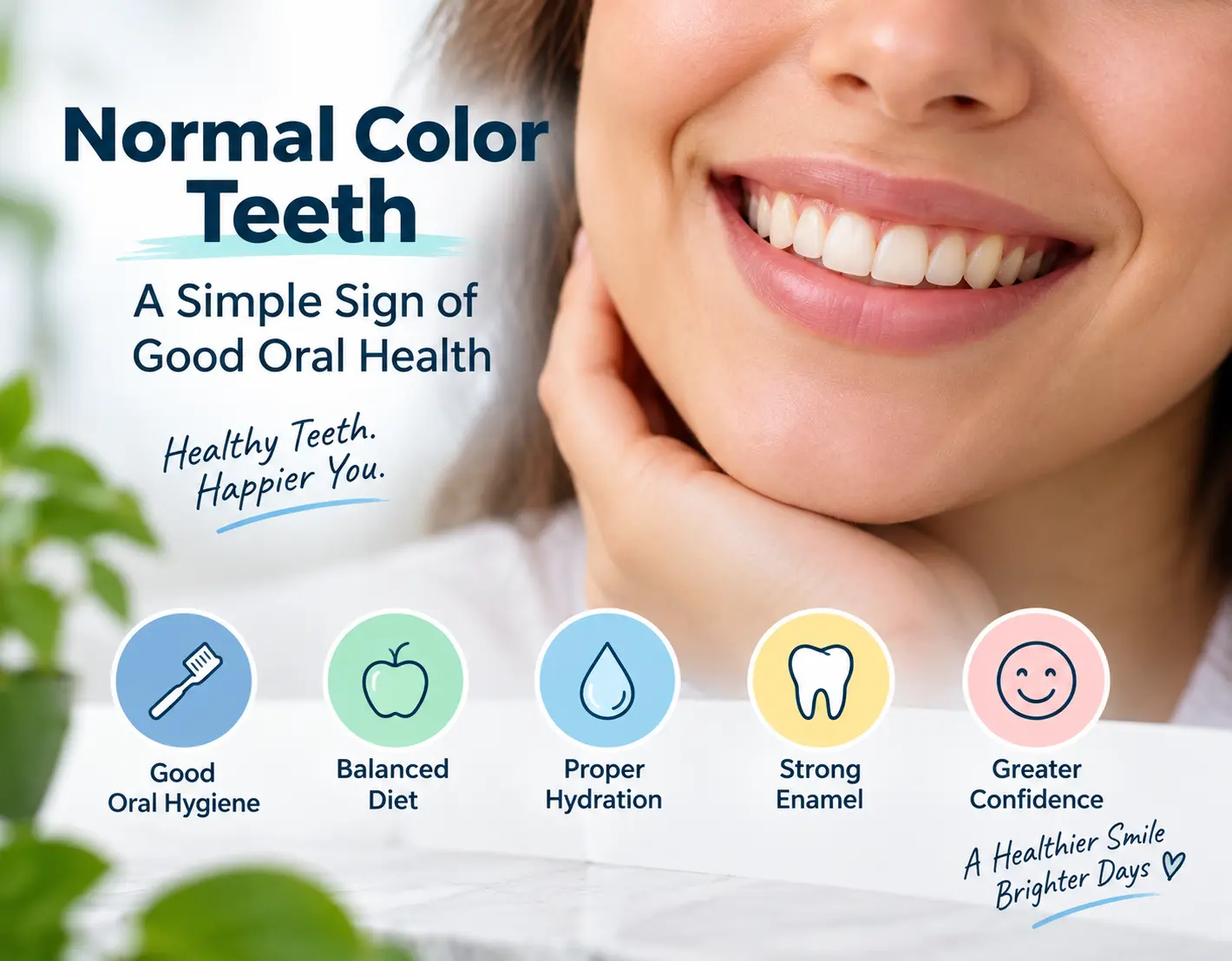

Have you ever wondered what the color of your teeth can tell you about your oral health? While healthy teeth do not have to be perfectly white, a natural and consistent tooth color can be one sign that your teeth and gums are being properly cared for.
Tooth color can naturally vary from person to person. Some people have naturally brighter teeth, while others may have a slightly yellowish or off-white shade. What matters is understanding your normal tooth color and paying attention to noticeable changes such as dark spots, unusual discoloration, or staining.
Good oral hygiene, a balanced diet, adequate hydration, and regular dental visits all play an important role in maintaining healthy teeth. In this guide, we’ll explore why normal color teeth are associated with good oral health and what you can do to keep your smile healthy and strong.
What Is a Normal Tooth Color?
There is no single shade that can be considered the perfect or normal tooth color for everyone. Healthy natural teeth can range from bright white to cream, ivory, or slightly yellowish shades. The color is influenced by factors such as genetics, age, enamel thickness, and the natural color of the dentin underneath the enamel.
Instead of focusing only on how white your teeth look, it is more useful to pay attention to changes in their appearance. New discoloration, persistent stains, dark areas, or changes accompanied by pain or sensitivity may deserve attention from a dental professional.
Normal Color Teeth Can Reflect Good Oral Hygiene
Maintaining a consistent, natural tooth color is often supported by good oral hygiene habits. Brushing twice a day, cleaning between your teeth, and visiting your dentist regularly can help remove plaque and reduce the buildup that contributes to stains and dental problems.
Good dental hygiene is also important for protecting your gums and teeth from common problems. The right daily habits can help reduce the risk of gum disease and tooth decay.
Regular dental check-ups are another important part of maintaining oral health. Your dentist can examine your teeth and gums, identify potential problems early, and recommend professional cleaning or treatment when necessary.
It Can Indicate Minimal Staining and Tooth Decay
Tooth discoloration can occur for many reasons, including food, beverages, tobacco use, aging, certain medications, and changes within the tooth itself. Coffee, tea, cola, and other strongly colored foods and drinks can contribute to surface staining over time.
Good oral hygiene can help control plaque and surface buildup, but brushing alone cannot remove every type of discoloration. Professional dental cleaning may be recommended when hardened deposits or persistent stains develop.
It is also important to understand that tooth color alone cannot determine whether you have a cavity. Tooth decay may sometimes appear as white, brown, or dark areas, while other cavities may not be obvious without a dental examination. If you notice a new or unusual change in a tooth, speak with your dentist.
Healthy Teeth Are Supported by a Balanced Diet and Good Hydration
Your diet has a major role in maintaining strong teeth and healthy gums. A varied diet that includes nutrient-rich foods can provide the vitamins and minerals your body needs to support oral health.
Calcium-rich foods such as dairy products and certain leafy vegetables can contribute to strong teeth and bones. Fruits and vegetables can also be part of a balanced eating pattern that supports overall health.
Water is another simple but important part of oral care. Drinking water can help rinse away food particles and support normal saliva production. Fluoridated water, where available, can also provide fluoride, a mineral that helps strengthen tooth enamel and protect against decay.
Normal Tooth Color Can Be Associated With Healthy Enamel
Tooth enamel is the hard outer layer that protects your teeth. Strong enamel helps protect the underlying parts of the tooth from acids, bacteria, and everyday wear.
Enamel can naturally become thinner as people age, which may make the naturally yellowish dentin underneath more visible. Acidic foods and drinks, poor oral hygiene, and other factors can also contribute to enamel erosion.
Protecting your enamel means practicing good oral hygiene, limiting frequent exposure to sugary and acidic foods and drinks, and following your dentist’s recommendations. If a tooth becomes severely damaged or is lost, a dental implant may be one option for replacing the missing tooth.
However, preserving your natural teeth whenever possible remains an important goal. Brushing regularly, cleaning between your teeth, eating a balanced diet, and keeping up with dental appointments can all help protect your smile.
A Healthy-Looking Smile Can Support Self-Confidence
Your smile is an important part of how you communicate with other people. When you feel comfortable with the appearance of your teeth, you may feel more confident when smiling, speaking, and interacting with others.
However, having perfectly white teeth is not necessary for having a healthy smile. Natural tooth color varies considerably, and cosmetic whiteness is not the same thing as oral health.
The most important goal is to maintain healthy teeth and gums rather than trying to achieve an unnaturally white appearance. A consistent natural color combined with good oral hygiene can contribute to a clean and healthy-looking smile.
How to Maintain Normal Color Teeth and Good Oral Health
If you want to maintain your natural tooth color and protect your oral health, focus on consistent everyday habits rather than quick cosmetic fixes.
- Brush your teeth twice a day with fluoride toothpaste.
- Clean between your teeth regularly using floss or another suitable interdental cleaner.
- Drink water regularly, especially after eating when brushing is not possible.
- Limit frequent consumption of sugary foods and drinks.
- Be mindful of foods and beverages that can cause surface staining.
- Avoid tobacco products, which can contribute to tooth discoloration and other oral health problems.
- Visit your dentist regularly for examinations and professional cleaning when recommended.
- Pay attention to sudden or unusual changes in tooth color.
When Should You See a Dentist About Tooth Color?
Not every change in tooth color means there is a serious problem. Natural aging and everyday foods and drinks can cause gradual changes in appearance. However, a sudden or unusual change should not be ignored.
Consider contacting a dentist if you notice a dark spot, significant discoloration, a single tooth changing color, or discoloration accompanied by pain, sensitivity, swelling, or other symptoms. A dental professional can determine whether the change is related to surface staining, enamel changes, decay, trauma, or another condition.
Frequently Asked Questions About Normal Color Teeth
What is the normal color of healthy teeth?
Healthy teeth can naturally have different shades, including white, cream, ivory, or slightly yellowish tones. There is no single tooth color that is considered normal for everyone because genetics, age, enamel thickness, and dentin color can affect appearance.
Are yellow teeth unhealthy?
Not necessarily. A slightly yellowish appearance can be completely natural because dentin underneath the enamel is naturally yellowish. However, new or significant yellow discoloration can sometimes be related to staining, plaque buildup, enamel changes, or other dental concerns.
Does having white teeth mean your teeth are healthy?
Not always. Tooth whiteness is primarily an aesthetic characteristic and does not by itself prove that your teeth and gums are healthy. Healthy teeth can have a natural cream or slightly yellowish color, while very white teeth can still have cavities, gum disease, or other oral health problems.
Why do teeth become darker over time?
Teeth can become darker as a result of aging, changes in enamel thickness, food and beverage stains, tobacco use, certain medications, or other factors. If a tooth suddenly becomes significantly darker, especially if it is accompanied by pain, it is a good idea to have it evaluated by a dentist.
Can brushing help maintain the natural color of teeth?
Yes. Brushing twice daily with fluoride toothpaste helps remove plaque and food particles that can contribute to surface staining. However, brushing cannot remove every type of discoloration, and some stains may require professional dental care.
Can drinking water help keep teeth healthy?
Yes. Water can help rinse away food particles and support saliva production. If your drinking water contains fluoride at an appropriate level, it can also help strengthen tooth enamel and reduce the risk of tooth decay.
When should tooth discoloration be checked by a dentist?
You should consider seeing a dentist when discoloration is sudden, unusual, persistent, affects only one tooth, or occurs alongside symptoms such as pain, sensitivity, swelling, or discomfort. A professional examination can help identify the cause.
Maintain Your Natural Smile With Good Oral Care
Having normal color teeth does not mean your teeth need to be perfectly white. Natural tooth color varies from person to person, and healthy teeth can have several different shades.
What matters most is maintaining good oral hygiene, protecting your enamel, eating a balanced diet, staying hydrated, and visiting your dentist regularly. Paying attention to changes in tooth color can also help you recognize when professional advice may be needed.
A healthy smile is about much more than appearance. By taking care of your teeth and gums every day, you can support your long-term oral health and feel more confident about your natural smile.
For more informative articles, please visit the rest of our blog.