
Many action scenes in movies show a hero crashing through a window while glass shatters dramatically around them. In real life, however, modern safety glass is designed to behave very differently. When properly manufactured and installed, tempered glass is engineered to provide greater protection than ordinary annealed glass in many applications.
Tempered windows are widely used in homes, offices, schools, commercial buildings, doors, bathrooms, patio areas, and other locations where broken glass could create a significant safety hazard. Their strength and breakage characteristics make them an important option when safety is a priority.
However, tempered glass is not completely indestructible. It still requires proper installation, routine cleaning, and regular inspection for damage. Understanding how tempered windows work and how to care for them can help you maintain a safer and more durable home or commercial property.
What Are Tempered Windows?
Tempered windows are windows made with tempered glass, a type of safety glass that has been specially heat-treated to improve its strength and change the way it breaks.
The manufacturing process involves heating glass to a high temperature and then rapidly cooling its surfaces. This process creates internal stresses within the glass that make it stronger than standard annealed glass of the same thickness.
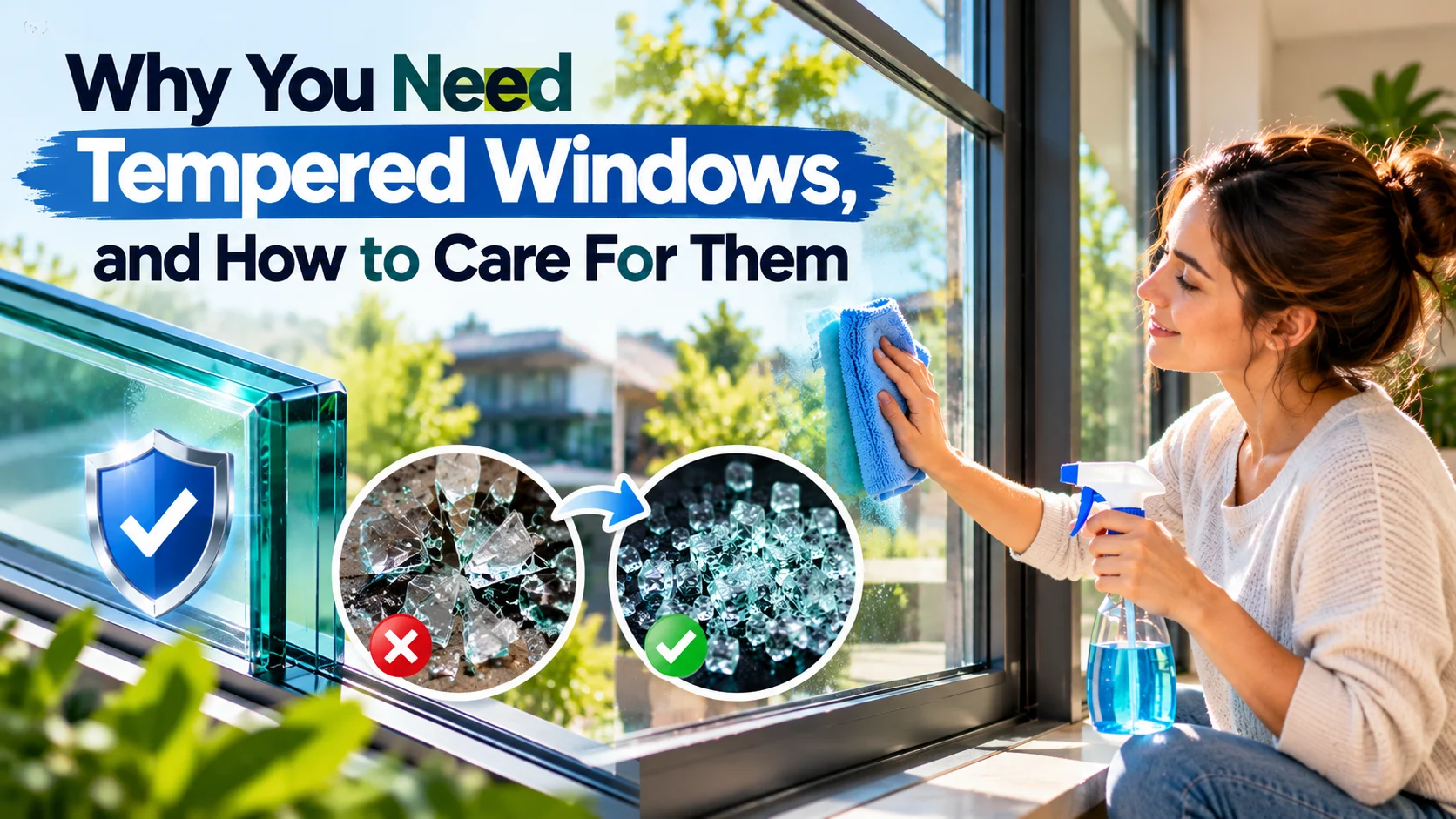
If the glass eventually breaks, tempered glass generally breaks into many smaller, relatively blunt pieces rather than producing the large, sharp shards associated with ordinary glass. This characteristic can reduce the likelihood of severe cuts, although broken tempered glass can still cause injuries and should always be cleaned up carefully.
The term “safety glass” can refer to different types of specially manufactured glass, so tempered glass should not automatically be considered identical to every other type of safety glazing. Laminated glass, for example, uses a different construction and has different breakage characteristics.
Why Are Tempered Windows Important?
Windows are an important part of a building, but they can also become a safety concern when they are installed in areas where people may fall against them, walk into them, or come into close contact with them.
Tempered glass is particularly useful in locations where human contact with glazing is more likely. Depending on local building codes and the specific installation, safety glazing may be required in certain areas of a property.
1. They Are Stronger Than Regular Glass
One of the primary reasons homeowners and builders choose tempered glass is its increased strength compared with ordinary annealed glass.
This added strength can make tempered windows a practical choice for areas exposed to everyday impacts, temperature changes, and general household activity. However, strength does not mean that tempered glass cannot break. A sufficiently strong impact or damage to the glass or its edges can still cause failure.
2. They Are Designed to Break More Safely
The most important safety advantage of tempered glass is what happens when it breaks. Instead of typically producing long, sharp shards, properly tempered glass breaks into numerous smaller pieces.
This breakage pattern can reduce some of the cutting hazards associated with broken ordinary glass. Nevertheless, you should never deliberately test or strike tempered glass, and broken pieces should be removed carefully.
3. They Are Useful in High-Traffic Areas
Tempered glass can be particularly useful around areas where people frequently move close to windows or glass doors. Examples can include patio doors, shower enclosures, interior glass doors, and certain low-level or large glazed areas.
These locations can present a greater risk because a person could accidentally collide with the glass. Choosing appropriate safety glazing can help reduce the potential consequences of such an accident.
4. They Can Handle Temperature Changes Better
Tempered glass generally has greater resistance to thermal stress than ordinary annealed glass. This makes it useful in applications where glass may experience temperature differences.
However, tempered glass is not immune to thermal breakage. Existing damage, manufacturing defects, installation problems, or unusual temperature conditions can still contribute to glass failure.
The Safety Aspect of Tempered Safety Glass
If you have ever dropped a drinking glass, you know how difficult it can be to find and remove every small piece of broken glass. Windows and glass doors can create a much greater concern because people may be standing or moving directly beside them when they break.
Consider patio doors and large windows, for example. These installations can extend over a substantial area and may be located in busy parts of a home. If someone accidentally falls against ordinary glass, the resulting breakage could create dangerous sharp shards.
Safety glazing is designed to reduce some of these risks. Tempered glass is therefore commonly selected for applications where reducing the injury potential of broken glass is important.
It is important to remember that tempered glass does not make a window completely safe. A person can still be injured by broken glass, impact, falling fragments, or the force of a collision. The correct type of safety glazing, frame, hardware, and installation method should always be selected for the specific application.
Where Are Tempered Windows Commonly Used?
Tempered glass is used in many residential and commercial applications. Depending on local regulations and the design of the building, common applications can include:
- Patio doors and sliding glass doors
- Shower and bathroom enclosures
- Glass doors
- Large windows
- Interior partitions
- Office and commercial glazing
- School and institutional buildings
- Some stairway and railing applications
- Glass furniture and certain interior fixtures
- Areas where safety glazing is required by building regulations
Not every window needs to be tempered. The appropriate glass type depends on the location, size, design, surrounding structure, local building requirements, and intended use.
Tempered Glass vs. Regular Glass
Understanding the difference between tempered and ordinary annealed glass can help when choosing windows for a home improvement or construction project.
| Feature | Tempered Glass | Regular Annealed Glass |
|---|---|---|
| Strength | Generally stronger | Lower resistance to impact and thermal stress |
| Breakage | Typically breaks into smaller pieces | Can produce larger, sharp shards |
| Safety applications | Commonly used where safety glazing is required | May not be suitable for certain hazardous locations |
| Cutting after manufacture | Cannot normally be cut or drilled after tempering | Can generally be cut before installation |
| Cost | Usually costs more than ordinary glass | Generally less expensive |
The right choice should always be based on the requirements of the installation rather than price alone.
How to Tell If a Window Is Tempered
If you are unsure whether an existing window is made from tempered glass, check the corners or edges for a permanent safety-glass marking or manufacturer identification. Depending on the product and location, markings may indicate that the glass has been tempered and may include information about the manufacturer or applicable safety standards.
Do not assume that glass is tempered simply because it appears thick or strong. If the type of glass is important for a renovation or safety project, ask a qualified glazing professional to identify it.
How to Care for Tempered Windows
Proper maintenance can help keep your tempered windows clean, attractive, and in good condition. Fortunately, caring for tempered glass is generally straightforward.
1. Clean the Glass Regularly
Dust, fingerprints, water spots, and other deposits can accumulate on windows over time. Regular cleaning helps maintain visibility and the appearance of the glass.
Use a soft, non-abrasive cloth, microfiber towel, or suitable soft sponge. Avoid materials that could scratch the glass or damage its surface.
2. Use a Mild Cleaning Solution
A mild detergent mixed with water is generally sufficient for routine window cleaning. A properly diluted vinegar solution can also be useful for some household cleaning applications.
Avoid using harsh chemicals unless the glass manufacturer specifically states that they are appropriate. Some cleaning products can damage surrounding seals, coatings, frames, or hardware even if they do not visibly affect the glass itself.
3. Avoid Abrasive Tools
Do not use steel wool, rough scouring pads, abrasive powders, or other materials that can scratch the glass.
Scratches and damage can compromise the appearance and potentially affect the performance of glazing. When removing stubborn deposits, use a cleaning method recommended by the glass manufacturer.
4. Inspect the Edges and Corners
The edges and corners of glass deserve particular attention because damage in these areas can be important. Look for chips, cracks, scratches, or other visible damage during routine cleaning.
If you notice damage, do not ignore it simply because the window is still functioning. Contact a qualified glass professional to determine whether repair or replacement is appropriate.
Can Tempered Glass Crack or Break?
Yes. Tempered glass is stronger than ordinary glass, but it is not unbreakable.
A strong impact, damage to an edge, manufacturing imperfections, installation stress, or certain environmental conditions can cause tempered glass to fail. One unusual characteristic of tempered glass is that it can sometimes appear perfectly normal before suddenly breaking into many small pieces.
For this reason, avoid striking tempered windows and do not place unnecessary pressure on their edges or corners.
What Should You Do If Tempered Glass Is Damaged?
If you discover a crack, chip, deep scratch, or other damage, keep people away from the affected area until the glass can be assessed.
Do not attempt to repair a severely damaged tempered window with household glue, tape, or other temporary methods. Tempered glass cannot simply be cut or reshaped after it has been tempered, so damaged panels often need to be replaced rather than repaired.
If you spot damage, it might be time to arrange for glass repairs to your tempered windows.
Professional Tempered Window Installation
Installing tempered glass correctly is just as important as selecting the right glass. Poor installation can place unnecessary stress on a glass panel and may increase the risk of damage.
For this reason, tempered windows should be installed by an experienced and appropriately qualified professional. A glazing professional can take accurate measurements, select suitable glass and hardware, and install the panel according to the requirements of the specific application.
Professional installation is particularly important for large windows, doors, shower enclosures, commercial glazing, and installations subject to specific building-code requirements.
Why DIY Installation Can Be Risky
Tempered glass is manufactured to a specific size before the tempering process. Unlike ordinary glass, it generally cannot be cut, drilled, or significantly modified after tempering without causing it to break.
This means measurements need to be accurate before the glass is manufactured. Incorrect measurements can result in wasted material, installation problems, or the need to order a replacement panel.
Professional installation also helps ensure that the glass is properly supported and that frames, seals, fasteners, and other components are suitable for the application.
How Much Do Tempered Windows Cost?
Tempered windows generally cost more than comparable ordinary glass because the glass undergoes an additional manufacturing process and may require specialized handling and installation.
The final cost can depend on several factors, including:
- Window dimensions
- Glass thickness
- Type and quality of glass
- Frame material
- Window design
- Number of windows
- Custom shapes or sizes
- Installation requirements
- Location and labor costs
Although tempered glass may have a higher initial price, its safety characteristics can make it a valuable choice where safety glazing is appropriate.
Tempered Windows and Building Safety Requirements
Safety-glazing requirements vary depending on the country, state, municipality, building type, and location of the glass. Certain areas of a building may require safety glazing because of their size, height above the floor, proximity to doors, or likelihood of human impact.
For example, glazing installed near doors, in bathrooms, or in certain low-level locations may be subject to specific requirements.
Because regulations can vary, homeowners should check the applicable local building requirements or consult a qualified professional before replacing or installing windows.
What About Tempered Glass and Window Energy Efficiency?
Tempered glass and energy-efficient windows are not exactly the same thing. Tempering primarily changes the strength and breakage characteristics of the glass.
A window’s energy performance depends on several other factors, including the glass configuration, number of panes, coatings, gas fills, frame material, spacers, and overall window design.
If energy efficiency is your priority, ask your window professional about the complete window system rather than choosing glass based only on whether it is tempered.
How to Extend the Life of Your Tempered Windows
Simple maintenance habits can help you get the most from your windows for many years.
- Clean the glass regularly with non-abrasive materials.
- Use mild cleaning products whenever possible.
- Do not strike or place unnecessary pressure on the glass.
- Inspect corners and edges for chips or damage.
- Check frames, seals, and hardware periodically.
- Address damaged glass promptly.
- Do not attempt to cut or drill tempered glass.
- Use qualified professionals for replacement and installation.
- Follow the manufacturer’s cleaning and maintenance instructions.
Tempered Glass: Keeping You and Your Family Safe
Windows are an important part of any home, but choosing the appropriate type of glass can make a significant difference when safety is a concern. Tempered windows offer greater strength than ordinary annealed glass and are designed to break into smaller pieces when they fail.
They are particularly useful in locations where people may come into close contact with glazing, although they should never be considered completely shatterproof or injury-proof.
Proper installation, routine cleaning, careful inspection, and prompt attention to damage are all important parts of responsible window maintenance. If you are planning a window replacement or new installation, speak with a qualified glazing professional about the appropriate glass for each location.
For more help and advice on how to make your home safer, read the latest home improvement and safety articles on our website.