Guinea pigs are cute and cuddly creatures that make wonderful pets. They are herbivores and require a diet that is high in fiber, vitamin C, and low in fat. As a result, it is important for guinea pig owners to be knowledgeable about the foods that their pets can and cannot eat. One such food that often comes up in this discussion is okra.

Okra is a green vegetable that is commonly used in cooking and is known for its slimy texture. It is a good source of fiber, vitamin C, and other nutrients. However, when it comes to feeding okra to guinea pigs, there is some debate about whether it is safe for them to eat. In this article, we will explore the question of whether guinea pigs can eat okra and provide you with the information you need to make an informed decision about feeding this vegetable to your furry friend.
Nutritional Profile of Okra

Okra is a nutritious vegetable that is rich in vitamins, minerals, and fiber. In this section, we will take a closer look at the nutritional profile of okra and how it can benefit guinea pigs.
Vitamins and Minerals in Okra
Okra is a good source of several essential vitamins and minerals that are important for guinea pigs. One cup of sliced okra (100 grams) contains:
- Vitamin C: 23 mg
- Vitamin K: 53 mcg
- Folate: 46 mcg
- Calcium: 82 mg
- Potassium: 299 mg
- Magnesium: 57 mg
These vitamins and minerals play a vital role in maintaining guinea pigs’ overall health and well-being. Vitamin C, for example, is essential for the proper functioning of the immune system, while calcium and magnesium are crucial for healthy bones and teeth.
Fiber Content
Fiber is an essential nutrient that is important for guinea pigs’ digestive health. Okra is a good source of dietary fiber, with one cup of sliced okra containing 3.2 grams of fiber.
Fiber helps to regulate guinea pigs’ digestive system, preventing constipation and other digestive problems. It also helps to keep guinea pigs feeling full and satisfied, reducing the risk of overeating and obesity.
Okra Seeds and Guinea Pigs
While okra seeds are edible, they can be a choking hazard for guinea pigs. It is best to remove the seeds before feeding okra to your guinea pig to prevent any potential health risks.
In conclusion, okra is a nutritious vegetable that can provide several health benefits to guinea pigs. It is rich in essential vitamins and minerals, high in fiber, and can help to support guinea pigs’ digestive health. However, it is important to remove the seeds before feeding okra to your guinea pig to avoid any potential health risks.
Health Benefits of Okra for Guinea Pigs

Okra is a nutritious vegetable that can be a healthy addition to your guinea pig’s diet. Here are some of the health benefits of feeding okra to your furry friend:
Digestive Health
Okra contains a high amount of fiber, which is essential for maintaining good digestive health in guinea pigs. Fiber helps to regulate bowel movements and prevent constipation, which can be a common problem in these animals. Additionally, the mucilage in okra can help to soothe the digestive tract and reduce inflammation.
Immune System Support
Okra is a good source of vitamin C, which is an important nutrient for supporting the immune system in guinea pigs. Vitamin C helps to boost the production of white blood cells, which are responsible for fighting off infections and diseases. By including okra in your guinea pig’s diet, you can help to keep them healthy and prevent illness.
Weight Management
Guinea pigs are prone to obesity, which can lead to a range of health problems. Okra is a low-calorie vegetable that can help to keep your pet’s weight under control. Additionally, the fiber in okra can help to keep your guinea pig feeling full and satisfied, which can prevent overeating.
In summary, feeding okra to your guinea pig can provide a range of health benefits, including improved digestive health, immune system support, and weight management. As with any new food, it’s important to introduce okra gradually and in small amounts to avoid digestive upset.
Feeding Guidelines for Guinea Pigs
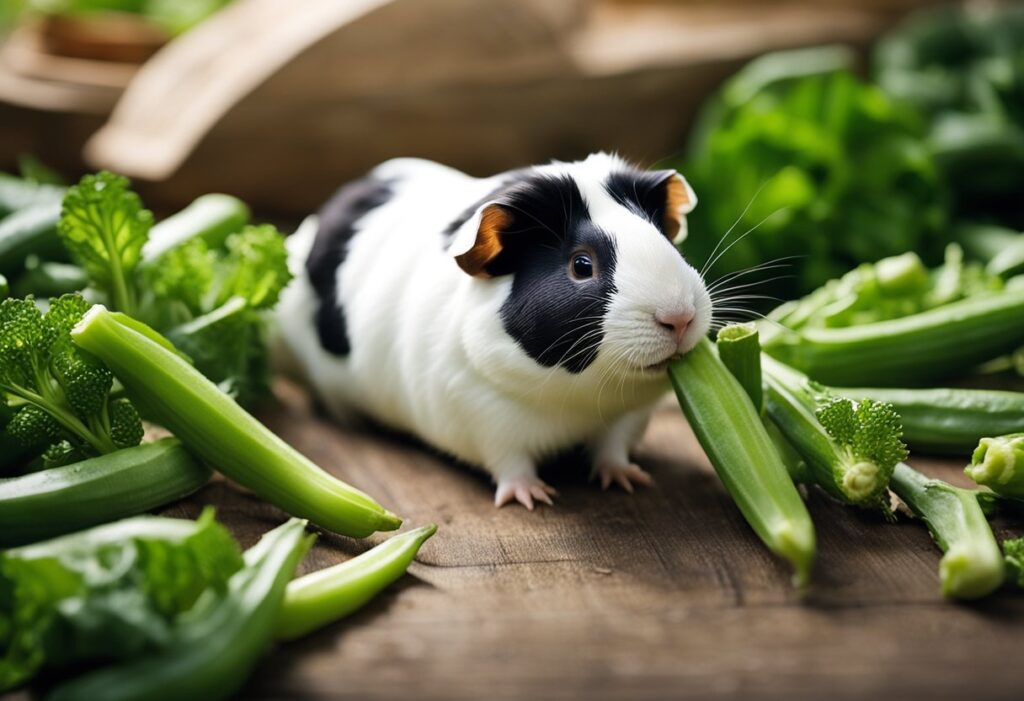
When it comes to feeding guinea pigs, it is important to provide them with a balanced diet that includes a variety of fresh fruits and vegetables. However, not all fruits and vegetables are safe for guinea pigs to eat, and it is important to know which foods are safe and how much to feed them.
Recommended Serving Size
When feeding okra to guinea pigs, it is important to provide the right serving size. A good rule of thumb is to provide a small piece of okra, about the size of your thumb, once or twice a week. This will help ensure that your guinea pig is getting the nutrients it needs without overfeeding.
Frequency of Feeding Okra
Okra is a great source of fiber, vitamin C, and other important nutrients for guinea pigs. However, it should not be the only vegetable in their diet. It is important to provide a variety of fresh fruits and vegetables to ensure that your guinea pig is getting a balanced diet.
We recommend feeding okra to your guinea pig once or twice a week, along with other fresh fruits and vegetables. This will help ensure that your guinea pig is getting all the nutrients it needs to stay healthy and happy.
In summary, okra can be a great addition to your guinea pig’s diet, but it should be fed in moderation and as part of a balanced diet. Always monitor your guinea pig’s health and behavior when introducing new foods to their diet.
Potential Risks and Considerations

When considering feeding okra to guinea pigs, there are several potential risks and considerations that should be taken into account to ensure the safety and well-being of your furry friend.
Oxalic Acid Content
Okra contains a moderate amount of oxalic acid, which can contribute to the formation of kidney stones in guinea pigs if consumed in large quantities. While small amounts of okra are unlikely to cause any harm, it is important to monitor your guinea pig’s overall oxalic acid intake and limit their consumption of high-oxalate foods.
Pesticides and Chemicals
Like many fruits and vegetables, okra may be treated with pesticides and other chemicals during the growing process. These substances can be harmful to guinea pigs if ingested, so it is important to thoroughly wash and rinse any okra before feeding it to your pet. Whenever possible, opt for organic or pesticide-free okra to reduce the risk of exposure to harmful chemicals.
Choking Hazards
Okra can be a choking hazard for guinea pigs, especially if it is not cut into small, bite-sized pieces. To reduce the risk of choking, be sure to cut the okra into small pieces and monitor your guinea pig while they are eating to ensure they are chewing their food properly.
In summary, while okra can be a healthy and nutritious addition to your guinea pig’s diet, it is important to be aware of the potential risks and considerations associated with feeding it to your pet. By monitoring their oxalic acid intake, choosing organic or pesticide-free okra, and cutting it into small pieces to reduce the risk of choking, you can safely incorporate this vegetable into your guinea pig’s diet.
Preparing Okra for Guinea Pigs

When it comes to feeding our guinea pigs, it’s important to ensure that the food we give them is safe and healthy. Okra is a nutritious vegetable that can be a great addition to your guinea pig’s diet, but it’s important to prepare it properly before serving it to them.
Washing and Cleaning
Before feeding okra to your guinea pig, it’s important to wash it thoroughly to remove any dirt or pesticides that may be on the surface. We recommend using a vegetable brush to scrub the okra under running water. Once it’s clean, you can cut off the stem and the tip of the okra, as these parts can be tough and difficult for your guinea pig to chew.
Raw vs Cooked Okra
Guinea pigs can eat both raw and cooked okra, but it’s important to note that raw okra can be tough and difficult to chew. If you choose to feed your guinea pig raw okra, we recommend slicing it thinly to make it easier for them to eat. Cooked okra can be a great option as well, as it’s softer and easier to chew. You can steam or boil the okra until it’s tender, and then let it cool before serving it to your guinea pig.
Serving Suggestions
Okra can be served to your guinea pig as a standalone snack or mixed in with their regular food. We recommend starting with small amounts to see how your guinea pig reacts to it, and gradually increasing the amount if they enjoy it. As with any new food, it’s important to monitor your guinea pig for any signs of digestive upset or allergic reactions.
Overall, okra can be a healthy and tasty addition to your guinea pig’s diet when prepared properly. By following these simple steps, you can ensure that your guinea pig is getting the nutrients they need while enjoying a variety of delicious foods.
Alternative Vegetables for Guinea Pigs
As we all know, vegetables are an important part of a guinea pig’s diet. While okra is safe for guinea pigs to eat in moderation, it’s always a good idea to provide variety in their diet. Here are some alternative vegetables that you can offer your guinea pig:
Leafy Greens
Leafy greens are an excellent source of vitamin C, which is essential to a guinea pig’s health. Some options include:
- Romaine lettuce
- Spinach
- Kale
- Arugula
Make sure to wash the greens thoroughly before offering them to your guinea pig.
Bell Peppers
Bell peppers are another great source of vitamin C. They come in a variety of colors, so you can offer your guinea pig a variety of options. Just make sure to remove the seeds and stem before offering them to your guinea pig.
Carrots
Carrots are a good source of vitamin A, which is important for a guinea pig’s vision. You can offer your guinea pig baby carrots or sliced carrots. Just make sure to limit the amount you give them, as carrots are high in sugar.
Cucumber
Cucumber is a refreshing and hydrating vegetable that guinea pigs enjoy. It’s also low in calories, making it a great option for overweight guinea pigs.
Broccoli
Broccoli is a good source of vitamin C and fiber. It’s important to note that broccoli should be given in moderation, as it can cause gas and bloating if given in large quantities.
Remember to introduce new vegetables slowly and in small quantities to prevent digestive upset. With a varied diet, your guinea pig will stay healthy and happy.
Frequently Asked Questions
What vegetables are safe for guinea pigs to consume?
Guinea pigs need a variety of fresh vegetables in their daily diet. Some safe options include kale, spinach, carrots, bell peppers, cucumbers, and celery. It’s important to introduce new vegetables slowly and in small quantities to avoid upsetting their digestive system.
Are there any risks associated with feeding guinea pigs okra?
Okra is safe for guinea pigs to consume in moderation. However, it should not be a staple in their diet as it is high in oxalates, which can lead to bladder stones. It’s best to feed okra as an occasional treat.
Which fruits should be avoided in a guinea pig’s diet?
While fruits can be a healthy addition to a guinea pig’s diet, some should be avoided due to their high sugar content. Fruits to avoid include grapes, cherries, and bananas.
How can I identify a guinea pig’s favorite vegetables?
Guinea pigs have individual preferences when it comes to vegetables. You can identify their favorites by offering a variety of options and observing which ones they eat first and finish quickly. It’s important to offer a balanced diet, so even if a certain vegetable is their favorite, it should be given in moderation.
Why are potatoes not suitable for guinea pigs to eat?
Potatoes are not recommended for guinea pigs as they are high in starch and low in nutrients. They can also cause digestive issues and lead to obesity. It’s best to avoid feeding potatoes to your guinea pig.
Can guinea pigs have a variety of squash in their diet?
Yes, guinea pigs can have a variety of squash in their diet. Some safe options include zucchini, butternut squash, and acorn squash. Squash is a good source of fiber and vitamin C, but should be given in moderation as it is high in sugar.