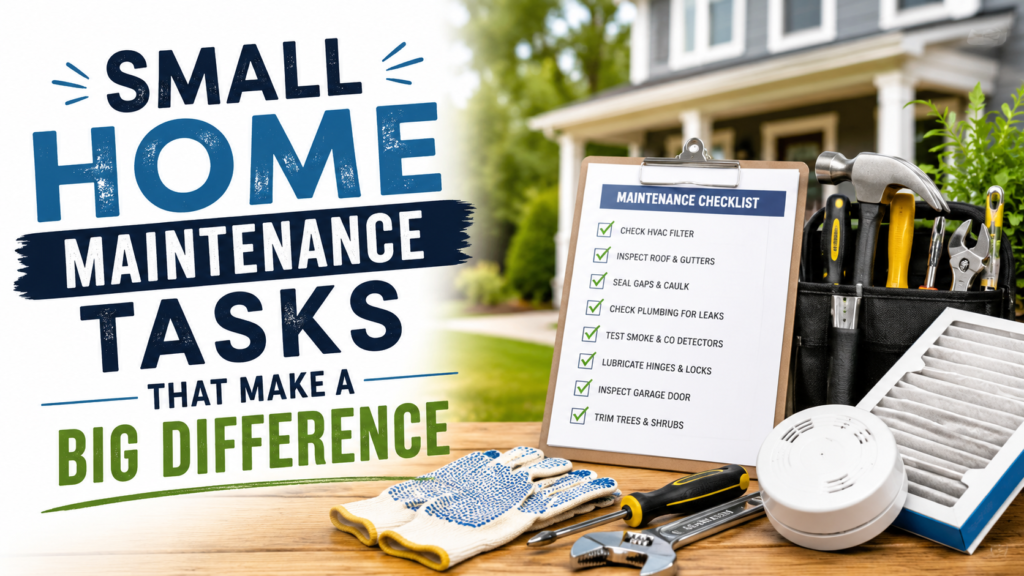
Owning a home brings a quiet kind of pride, but it also comes with a steady list of small responsibilities that tend to pile up when nobody is looking. Most homeowners think about maintenance only when something breaks, and by that point, the repair is usually larger and more expensive than it needed to be. The reality is that homes rarely fall apart in dramatic ways. They wear down slowly through ignored hinges, clogged filters, slow drips, and unsealed gaps that quietly invite trouble in. Tackling these little jobs throughout the year keeps the bigger problems from ever forming. A well-cared-for home feels different, too. Things open smoothly, rooms stay comfortable, and the small irritations that build over time simply disappear.
Keeping Moving Parts in Working Order
Every house has dozens of moving components, and nearly all of them benefit from a few minutes of attention every now and then. Hinges on interior doors squeak when the lubricant inside them dries out, while window tracks collect dust and grit that make sliders stick. The garage door is one of the busiest moving parts in the entire home, opening and closing thousands of times each year under significant weight and tension. Most homeowners hire professional garage door maintenance services to handle the springs, rollers, cables, and opener alignment that keep the system running safely. Skipping these checkups is what leads to broken torsion springs, snapped cables, and openers that quit working in the middle of a snowy morning. A trained technician can spot worn parts long before they fail and adjust the balance so the motor is not straining every time it lifts.
Caring for Your HVAC System
Heating and cooling equipment works hard year-round, and the smallest task on the list is also the most overlooked. Filters trap dust, pet dander, and airborne particles that would otherwise circulate through every room, and a clogged filter forces the blower to work harder while delivering less air. Swapping out a filter takes a couple of minutes, costs very little, and immediately improves the way the system performs. Vents and registers also deserve a quick wipe down every few weeks because dust collects on the louvers and floats right back into the air the moment the system kicks on. Outdoor condenser units need clearance, too, so trimming back shrubs and clearing fallen leaves from the surrounding area helps the system breathe.
Watching for Water Where It Should Not Be
Water is patient, and it always finds the weakest point in a home. A slow drip under the kitchen sink might seem harmless for weeks, but the cabinet base will eventually swell, warp, and grow mold long before the leak becomes obvious. Walking through the house once a month with a flashlight and checking under every sink takes only a few minutes. The same goes for the area around toilets, washing machine hoses, and the water heater. Rubber washing machine hoses in particular have a habit of failing without warning, and replacing them with braided stainless steel versions removes one of the most common sources of catastrophic indoor flooding. Outside, gutters that overflow during heavy rain send water straight down the foundation wall, so clearing them before each rainy season pays off in basements that stay dry.

Sealing Up the Small Gaps
Air leaks are sneaky because they cost money quietly every single day. Worn weatherstripping around exterior doors lets conditioned air slip out and outdoor air slide in, and the same goes for the seals around older windows. Running a hand along the edges on a windy day reveals exactly where the gaps are. Caulking around tubs, showers, and kitchen backsplashes also breaks down with age, and once it cracks, water begins seeping into walls and subfloors. Peeling off the old bead, cleaning the surface, and applying a fresh line of caulk takes an hour at most. The same principle applies to gaps around exterior pipes and cable entries, since those small openings are exactly how rodents and insects find their way inside.
Testing the Safety Devices
The little plastic disks on the ceiling get ignored until they start chirping at three in the morning, but smoke and carbon monoxide detectors are not the kind of thing to leave on autopilot. Pressing the test button once a month confirms the alarm itself still works, and changing the batteries twice a year ensures they are ready when needed. Detectors also have an expiration date stamped on the back, and units older than ten years should be replaced regardless of whether they still beep when tested.
Looking Up at the Roof and Around the Yard
The exterior of a home tells a story long before problems make their way inside. Walking the perimeter every few months gives a chance to spot loose siding, peeling paint, and cracks in concrete that need patching before water and frost expand them further. Binoculars work well for scanning the roof from the ground, since missing shingles, lifted flashing, and debris collecting in valleys all signal trouble worth addressing. Tree branches that hang over the roof should be trimmed back, both to stop them from scraping shingles in the wind and to keep squirrels from using them as a bridge into the attic.
Refreshing the Small Details
Touch-up paint on door frames, fresh caulk in the bathroom, polished hardware on cabinets, and clean window screens all sound like cosmetic chores, but they protect the surfaces underneath while keeping the home feeling cared for. Door handles and locks benefit from a drop of graphite powder once a year, and stiff deadbolts loosen up immediately afterward. Cabinet hinges that develop a sag can usually be tightened with a screwdriver in under a minute. None of these jobs require special skills, expensive tools, or an entire weekend, but the combined effect of staying ahead of them is a home that ages gracefully instead of falling behind one small problem at a time.