Introduction
Businesses today rely on technology for almost every part of their operations. Communication, project management, customer support, and daily workflows all depend on systems working properly. When networks fail or outdated tools slow employees down, productivity quickly drops and small disruptions can grow into larger operational problems.
Many companies still treat IT as a reactive expense instead of a long-term business asset. They wait for systems to break before addressing issues, which often leads to downtime, unexpected repair costs, and frustrated employees. Over time, this approach makes growth harder to manage and creates unnecessary stress across the organization.
Modern businesses need a more strategic mindset. Technology should support efficiency, scalability, and long-term goals rather than constantly creating interruptions. Companies that invest in proactive IT planning are often better positioned to adapt to changing demands and maintain steady growth.
The Financial Impact of Reactive IT
Reactive IT support creates uncertainty that affects both operations and budgeting. In a break-fix model, businesses only call for support after something stops working. While this may seem manageable in the short term, the long-term costs can become significant.
Unexpected outages interrupt employee workflows and delay important tasks. Teams lose time waiting for systems to recover, customers experience slower service, and deadlines become more difficult to meet. Even short periods of downtime can create a chain reaction that affects multiple departments.
The financial impact goes beyond repair bills. Productivity losses, missed opportunities, and operational delays all contribute to higher overall costs. Businesses often underestimate how much recurring technical issues quietly reduce efficiency over time.
Outdated infrastructure also creates ongoing challenges. Older systems usually require more maintenance, run slower, and struggle to support modern workloads. Employees may spend valuable time dealing with software crashes, lagging systems, or manual workarounds instead of focusing on meaningful work.
Organizations that continue relying on reactive support frequently find themselves stuck in a cycle of recurring disruptions. Instead of planning ahead, leadership teams spend time responding to emergencies that could have been prevented with proper monitoring and maintenance.
What a Business-First IT Strategy Looks Like
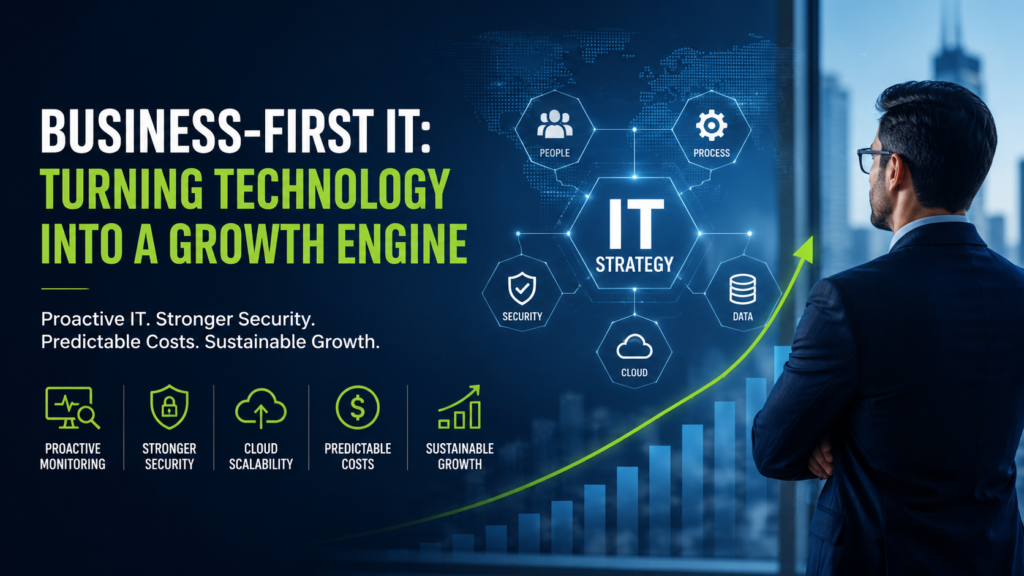
A business-first IT strategy focuses on aligning technology with operational goals. Instead of treating IT as a separate technical function, businesses integrate it into their overall growth strategy.
This approach prioritizes reliability, efficiency, and scalability. Technology decisions are based on how they improve operations, support employees, and help the company grow over time.
Rather than waiting for systems to fail, proactive IT environments focus on prevention. Continuous monitoring, maintenance, and strategic planning help reduce downtime and improve long-term performance.
Businesses working with trusted PCPlus Networks often move away from unpredictable break-fix support and toward scalable technology solutions designed to support operational growth. This allows leadership teams to focus more on business priorities instead of constantly dealing with technical disruptions.
Strategic IT Partner vs. Traditional IT Vendor
There is a major difference between a standard IT vendor and a strategic technology partner. Traditional vendors usually operate on a reactive model where support begins only after a problem occurs. Their role is focused mainly on troubleshooting and repairs.
A strategic IT partner takes a broader approach. Instead of simply fixing issues, they work to improve the overall technology environment and reduce recurring problems before they impact the business.
| Feature | Traditional IT Vendor | Strategic IT Partner |
| Support Style | Reactive troubleshooting | Proactive monitoring and planning |
| Pricing Structure | Variable repair costs | Predictable monthly pricing |
| Focus | Fixing technical issues | Supporting operational goals |
| Long-Term Planning | Minimal involvement | Strategic growth support |
| Risk Management | Business handles disruptions | Provider helps reduce operational risk |
This partnership model creates stronger alignment between business objectives and technology performance. Instead of constantly reacting to issues, companies can focus on stability and long-term planning.
Core Technology Foundations for Growth
Businesses need a reliable infrastructure to support expansion and operational efficiency. Without a stable foundation, growth often creates additional pressure on already strained systems.
Cloud Integration and Scalability
Cloud platforms provide businesses with flexibility and easier access to critical resources. Employees can securely work from different locations while maintaining access to the systems and data they need.
Cloud environments also make it easier to scale operations. Companies can expand storage, improve collaboration, and support remote teams without investing heavily in physical hardware.
However, successful cloud adoption requires planning. Businesses that migrate too quickly without a clear strategy may end up with unnecessary costs or disorganized systems that create confusion for employees.
Cybersecurity and Data Protection
Cybersecurity has become a core business priority rather than just an IT responsibility. Data breaches, ransomware attacks, and phishing attempts can disrupt operations and damage customer trust.
A proactive security strategy includes monitoring systems, protecting endpoints, controlling user access, and educating employees about security risks. These measures help reduce vulnerabilities before they become serious problems.
Employee training is especially important because many security incidents begin with simple human mistakes. Teaching employees how to recognize suspicious activity helps strengthen the entire organization’s security posture.
Business Continuity and Reliability
Unexpected outages and disruptions can happen at any time. Hardware failures, cyberattacks, and natural disasters all have the potential to interrupt operations.
Business continuity planning helps organizations recover quickly and maintain productivity during disruptions. Reliable backup systems and disaster recovery processes reduce downtime and help protect important data.
Businesses with strong continuity planning are often more resilient because they can continue serving customers and supporting employees even during unexpected events.
Why Predictable IT Costs Matter
One of the biggest advantages of proactive IT management is predictable budgeting. Surprise repair invoices and emergency hardware replacements make financial planning difficult for growing businesses.
Flat-rate support models provide more stability because businesses know what their monthly technology expenses will be. This allows leadership teams to plan future investments more confidently without worrying about sudden technical costs disrupting budgets.
Predictable pricing also encourages businesses to seek support earlier. Employees are less hesitant to report issues when they know every support request will not create an additional charge. Small problems can then be resolved before they grow into larger operational disruptions.
Over time, this approach reduces stress for both leadership and employees while improving overall operational efficiency.
Conclusion
Technology should support business growth rather than constantly interrupting it. Companies that continue relying on reactive support models often face recurring downtime, rising operational costs, and unnecessary productivity challenges.
A business-first IT strategy changes that approach by focusing on long-term efficiency, stability, and scalability. Proactive monitoring, stronger cybersecurity, cloud integration, and predictable support structures all contribute to a healthier operational environment.
Businesses that align their technology with their goals are often better prepared to grow, adapt, and compete in changing markets. Instead of treating IT as a constant source of frustration, they turn it into a reliable system that supports productivity and long-term success.