Want a classroom that actually helps kids learn?
Classroom furniture, layout & design is far more important than most realise. Done well = students focus, engage and thrive. Done poorly = fighting an uphill battle daily.
Here’s the truth:
Designing an awesome learning space doesn’t happen by mistake. You have to create it with intention by choosing the right desks, the right seating and the right design elements. And most of it doesn’t have to be expensive either. Particularly when you invest in caring for what’s already in the room.
Let’s break it down…
Inside this guide:
- Why Classroom Design Has a Bigger Impact Than You Think
- The Real Cost of Mismatched Furniture
- Smart Ways to Upgrade Without Starting Over
- Designing for Every Type of Learner
- Lighting, Sound, and the Senses
Why Classroom Design Has a Bigger Impact Than You Think
Classroom design is more than aesthetics. It immediately impacts how students learn, concentrate and achieve.
There was a famous study out of the University of Salford that showed classroom design accounts for 25% of student success or failure. That’s huge.
Think about it like this:
25% of a child’s academic success is determined by their classroom. Lighting, temperature, setup and desk size matter. Two of the largest things students interact with are their desks and chairs.
That’s why purchasing quality furniture, repairing what you can and having replacement desk parts on hand isn’t just upkeep. It’s part of your teaching strategy. Quality school desks and replacement desk parts mean classrooms stay functional, comfortable, and equipped with everything they need for every student to do great work.
More on that in a minute.
The Real Cost of Mismatched Furniture
Here is something most people overlook…
Students are not all small human cylinders. School furniture often is. The consequences for posture, comfort, and concentration are telling.
One study reported that 98.5% of students used seats that didn’t fit their bodies and 100% used desks that were too tall or too short. Sit on that.
When desks and chairs don’t fit:
- Students slouch and lose focus
- Back pain becomes common, even in young children
- Concentration drops
- Behavioural issues go up
Oh, and the longer it drags on, the worse it gets. Kids who are uncomfortable hour after hour start to connect the feeling of discomfort with school itself. Attention span plummets. Drive plummets. Test scores plummet.
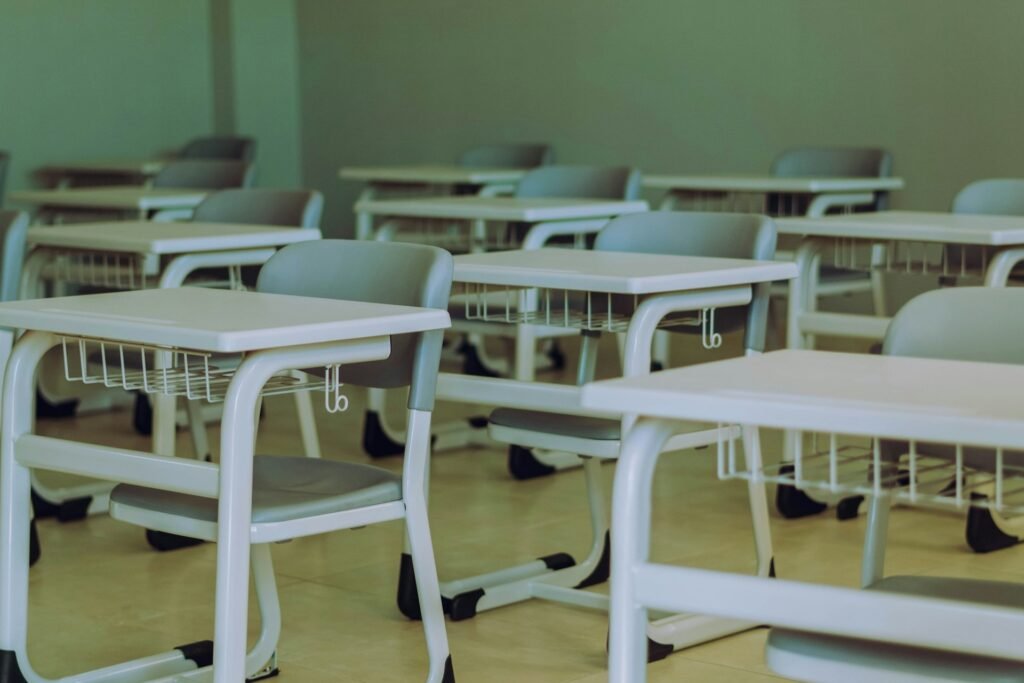
Most of it is preventable. Purchasing new desks is not always the solution. Often replacing worn or broken components will rejuvenate existing furniture.
That can include:
- New desk tops to replace scratched or warped surfaces
- Adjustable legs to fit different student heights
- Replacement glides and feet to stop wobbling and noise
- Fresh hardware like bolts, brackets, and pencil trays
- Updated book boxes and storage compartments
Keep these stocked and you can fix a broken desk as soon as the issue arises. No weeks of waiting on a new desk. No empty chairs while you wait.
Smart Ways to Upgrade Without Starting Over
School budgets are usually not very large. The key is to leverage what you already have.
Fix Before You Replace
Don’t despair when your desk breaks. Many problems can be solved by replacing a couple of worn parts. Inspect the legs, desktop, and connecting hardware. Nine out of ten times, a simple fix will resurrect your desk for much cheaper than new.
Standardise Replacement Parts
When a school has matching desks in different classrooms, keep parts in inventory. Glides, screws, hinges, desktops… whatever breaks most often. Standardization equals quicker repairs and less expense in the long run.
Mix Old and New
You don’t have to replace an entire room’s worth of furniture all at once. Add some wiggle room chairs or standing desks with your current furniture mix. Students can enjoy choice without classrooms needing to be completely remodeled.
Buy in Bulk
If you do need parts, purchase them in large quantities. Schools who wait until their desk literally falls apart before ordering one piece will spend more on shipping costs and labor than the piece is worth. Keeping a small stockpile of common parts will save you many headaches throughout the year.
Designing for Every Type of Learner
Every student learns differently. Some need quiet. Some need movement. Some need to collaborate.
An ideal learning environment will provide each of them what they need. The rows of desks factory model just won’t do.
Here is what research keeps showing…
In one higher-education study, nearly 80% of students said flexible seating had a beneficial impact on their learning. That means they had increased attention, felt less fidgety and experienced less back pain.
So how do you design for every learner?
Think in zones:
- Quiet zones for individual work and reading
- Collaboration zones with grouped desks for teamwork
- Movement zones with standing desks or wobble stools
- Focus zones with traditional seating for direct instruction
Every zone requires different furniture. They all continue functioning only when furniture is maintained.
That’s why repairability is important. If your zonal tool like a wobble stool breaks down base or won’t adjust, you instantly lose your zone.
Lighting, Sound, and the Senses
Furniture is just the start. The senses matter too.
Poor lighting causes eye strain for youngsters. Hard surfaces and empty walls amplify sound. Poor ventilation causes a loss of concentration.
Here are some quick wins for almost any classroom:
- Natural light: Open up your blinds and let some in. Natural lighting correlates to improved mood and concentration.
- Reduce echo: Place rugs, cushions or acoustic panels to absorb sound.
- Visual calm: Don’t overcrowd walls. Bright colours can overstimulate children and distract them from the lesson.
- Air quality: Keep a window open if possible. Fresh air allows everyone to think straight.
All of these little things combine to create a room you feel good spending time in. And want your students to return to.
Bringing It All Together
Designing a learning environment to empower each student doesn’t require costly remodeling. It requires thoughtful decision-making.
To recap:
- Furniture has a huge impact on how students focus and learn
- Mismatched desks cause real problems and they are fixable
- Keeping replacement parts on hand saves money and downtime
- Flexible seating supports different learning styles
- Lighting, sound, and air all matter too
Classrooms don’t have to be outfitted with all new furniture to be the best learning environments. Classrooms become the best when they’re planned with every student in mind. Start small. Repair what is broken. Add versatility where you can.
The results will speak for themselves.