
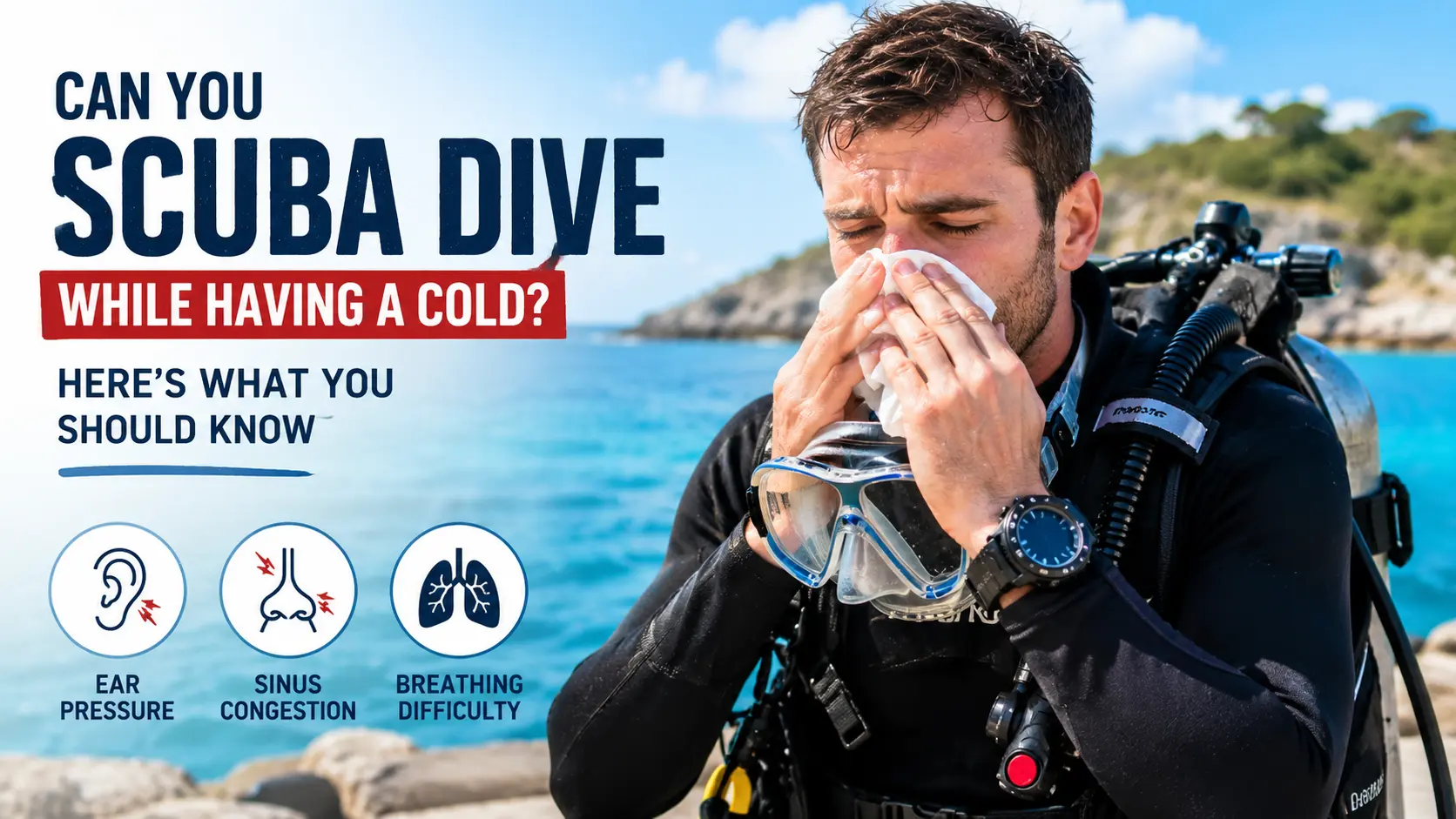
Scuba diving places unique demands on the body, particularly on the ears, sinuses, and respiratory system. When you have a cold, these areas are often affected by congestion and inflammation, which can interfere with your ability to equalize pressure underwater.
This article will help you understand how a common cold affects diving can help you make informed decisions about whether it is safe to enter the water or if it is better to wait until you have fully recovered.
Understanding How a Cold Affects Diving
A cold commonly causes nasal congestion, sinus inflammation, sore throat, coughing, and increased mucus production. While these symptoms may seem manageable on land, they can become more significant underwater where pressure changes constantly affect the ears and sinuses. Even mild congestion can restrict airflow and interfere with the body’s normal response to changing pressure during a dive.
Scuba diving requires clear airways and proper pressure equalization throughout the descent and ascent. When these natural functions are disrupted, divers may experience discomfort, difficulty clearing their ears, or an increased risk of pressure-related injuries. Understanding how a cold affects the body is an important first step in deciding whether it is appropriate to dive.
Is It Safe to Scuba Dive With a Cold?
Having a cold can make scuba diving significantly more challenging because congestion interferes with the body’s ability to adapt to pressure changes. While symptoms vary between individuals, even mild congestion may increase discomfort and the likelihood of pressure-related problems. Conditions that seem minor on the surface can become much more noticeable as depth increases.
Whether it is safe to dive depends on the severity of symptoms, the ability to equalize normally, and overall physical condition. Many divers choose to postpone dives until they have fully recovered, allowing the ears, sinuses, and respiratory system to function normally again. Waiting a few extra days is often a safer choice than risking complications that could interrupt an entire diving trip.
Risks of Diving While Having a Cold
A cold affects more than just comfort while scuba diving. Congestion, inflammation, fatigue, and even certain cold medications can interfere with the body’s ability to respond safely to changing underwater conditions. These factors may increase the likelihood of discomfort, reduce overall awareness, and make routine diving procedures more difficult to perform.
The severity of these risks depends on the individual’s symptoms and the type of dive being planned. Understanding the potential complications allows divers to make informed decisions about postponing a dive until they have fully recovered.
Difficulty Equalizing While Diving
Equalization allows pressure inside the ears and sinuses to match the surrounding water pressure. When the nasal passages or Eustachian tubes become blocked due to a cold, this process becomes much more difficult. Even minor congestion can prevent air from moving freely, making pressure changes increasingly uncomfortable during descent.
Failure to equalize properly may result in ear pain, sinus discomfort, or pressure-related injuries. For this reason, congestion is one of the most common reasons divers postpone planned dives, as forcing equalization may increase the risk of injury rather than resolving the problem.
Ear Barotrauma
Blocked Eustachian tubes can prevent pressure from balancing inside the middle ear. As pressure differences increase during descent, divers may experience pain, temporary hearing changes, or more serious ear injuries if they continue diving. In more severe cases, excessive pressure may damage the eardrum or surrounding tissues.
Recovery from ear barotrauma can take time and may temporarily prevent further diving until the injury has healed. Stopping the descent when equalization becomes difficult is generally considered much safer than attempting to push through the discomfort.
Sinus Pressure Problems
Inflamed sinuses may trap air during a dive. As depth changes, pressure inside these spaces may create discomfort or sharp pain, making the dive both unpleasant and potentially unsafe. The discomfort may become more noticeable during both descent and ascent as trapped air expands or compresses.
In some situations, blocked sinuses can also make it difficult to equalize surrounding air spaces, increasing overall discomfort throughout the dive. Allowing sinus inflammation to fully resolve before returning to the water helps reduce the likelihood of these pressure-related problems.
Reduced Breathing Comfort
Although regulators provide breathing gas efficiently, congestion caused by a cold may still make breathing feel more difficult. Coughing, excessive mucus, or irritated airways can reduce overall comfort and distract divers underwater.
In addition to physical discomfort, persistent coughing or frequent clearing of the throat can interrupt concentration throughout the dive. Maintaining relaxed, steady breathing is an important part of scuba diving, and respiratory irritation may make it harder to remain comfortable during longer dives or while swimming against mild currents.
Reduced Physical and Mental Performance
A cold may reduce overall physical performance by causing fatigue, dehydration, headaches, and reduced concentration. These symptoms can affect decision-making, awareness, and reaction time underwater, all of which are important for safe diving.
Can Decongestants Make Diving Safer?
Some divers consider using decongestants before diving to temporarily relieve congestion. While these medications may improve airflow for a limited time, they do not eliminate the underlying illness.
There is also the possibility that medication wears off during the dive, causing congestion to return while underwater. Because responses to medication vary between individuals, divers should exercise caution and seek appropriate medical advice when necessary.
Some divers may feel tempted to continue with a planned dive after taking medication because symptoms seem temporarily improved. However, medication should not be viewed as a substitute for full recovery.
When Is It Safe to Dive Again?
Returning to diving is generally safer once cold symptoms have completely resolved and normal equalization can be performed without discomfort. Divers should be able to breathe comfortably through the nose and experience no pain when clearing their ears.
Many would perform a simple self-check before returning to the water. Being able to breathe freely through both nostrils, equalize comfortably without pain, and complete normal daily activities without lingering symptoms are often good signs that the body has recovered sufficiently for diving.
Preparing to Return to Diving
After recovering from a cold, it is important to confirm that your body has fully returned to normal before entering the water. You should consider overall energy levels, breathing comfort, hydration, and the ability to equalize without difficulty. This is especially important for people that are planning to participate in popular underwater activities, including dive courses in Komodo Island, where it requires good physical conditions for both safety and the learning process.
Preparing for future dives also means reducing the chances of becoming ill again. Staying well hydrated, getting enough rest, maintaining a balanced diet, and keeping warm between dives can help support overall health during a dive trip. Combined with adequate recovery time between dives, these habits may help divers return to the water more comfortably while lowering the risk of interruptions caused by illness.
Preparing for Your Next Dive Trip
Preparing for a dive trip involves more than checking equipment and confirming reservations. Your physical condition can have a direct impact on both safety and enjoyment, particularly if you develop a cold shortly before departure. Allowing enough time to recover before diving can help reduce the risk of equalization problems and avoid interruptions to planned activities.
This is especially relevant for destinations where multiple dives are scheduled over several days. Travelers planning to do some diving in Komodo Island for example, often spend consecutive days exploring different dive sites, making it worthwhile to postpone diving briefly if symptoms persist.
Conclusion
Having a cold can significantly affect the body’s ability to adapt to pressure changes during scuba diving. Congestion, blocked sinuses, and reduced equalization increase the risk of discomfort and potential pressure-related injuries.
Waiting until symptoms have completely resolved allows divers to return to the water with greater confidence and comfort. Prioritizing health before diving supports both safety and a more enjoyable underwater experience, whether exploring familiar dive sites or visiting destinations known for their exceptional marine environments.