Pathology is one of those medical fields most people know exists but couldn’t really pin down. The work happens behind the scenes, the pathologists rarely see patients directly, and the term itself gets thrown around loosely in everything from medical dramas to true crime shows. The reality is more specific and more interesting than the popular image.
Pathology is the study of disease. Pathologists look at tissues, cells, fluids, and organs to figure out what’s wrong with a patient, how bad it is, and what should happen next. The diagnoses they produce drive treatment decisions across almost every other specialty in medicine. A surgeon doesn’t operate on a tumor without a pathology report. An oncologist doesn’t start chemo without one. A primary care doc doesn’t manage chronic disease without lab results that came from a pathology workflow somewhere.
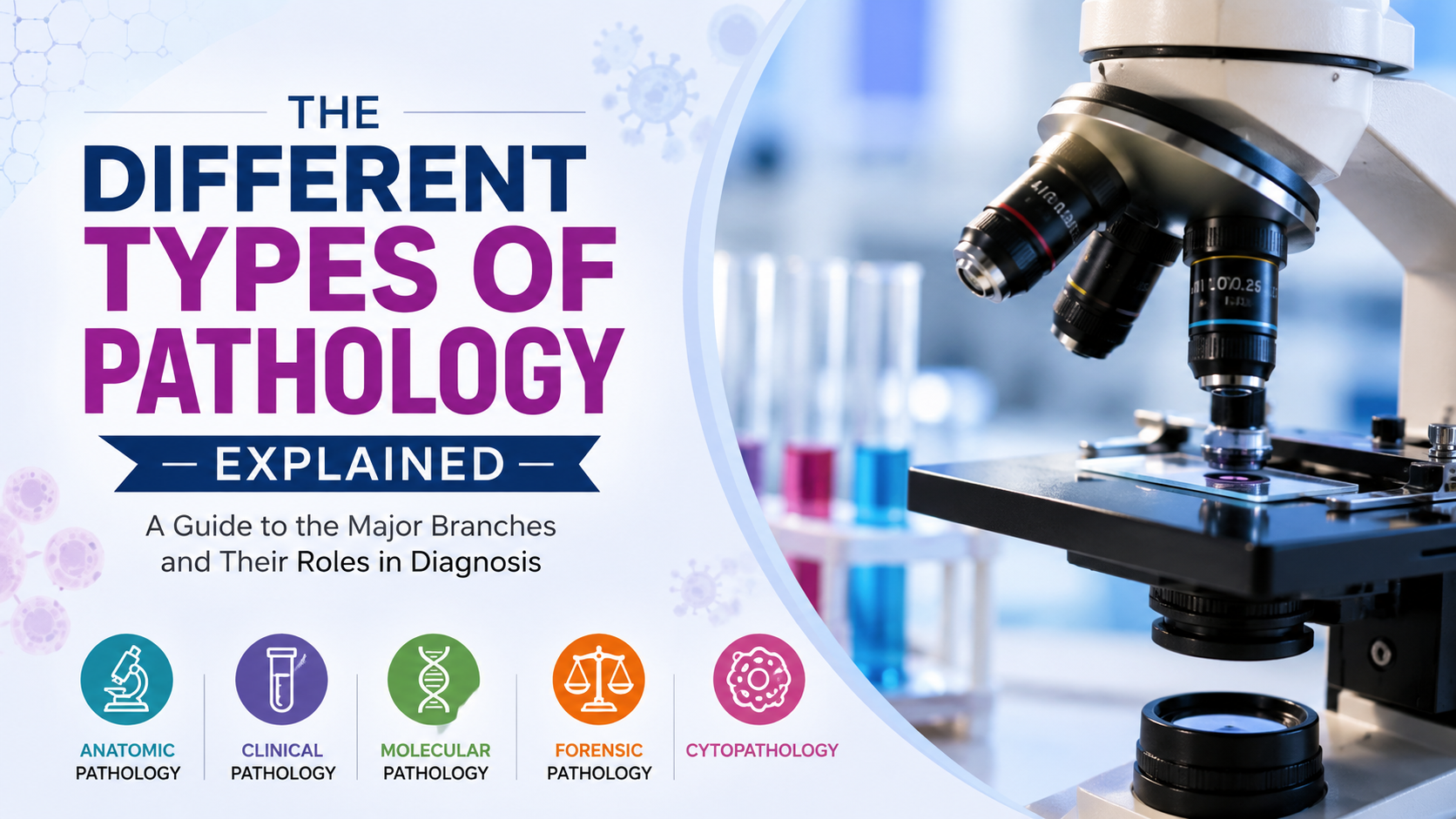
But pathology isn’t a single discipline. It branches into a handful of subspecialties, each with its own tools, workflows, and clinical role. Here’s what they are and how they fit together.
Anatomic Pathology
Anatomic pathology covers the diagnosis of disease through looking at tissues and organs. When someone has a biopsy, a surgical resection, or a cytology sample taken, an anatomic pathologist is the one who reads what’s there.
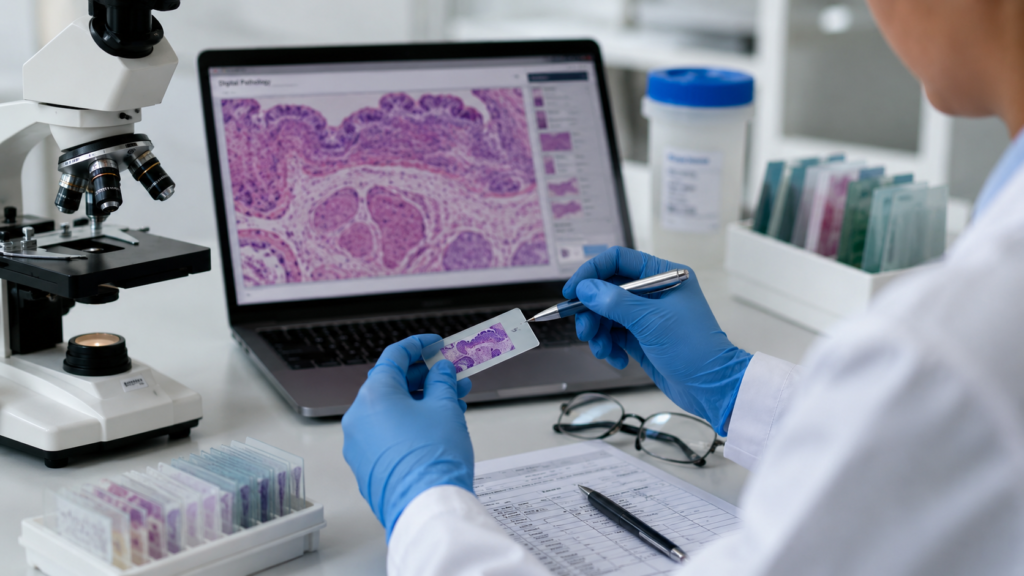
The work means processing tissue samples, cutting thin sections, staining them, and reviewing them under a microscope or on a digital screen. Pathologists look for the patterns that separate cancer from inflammation, infection from autoimmune disease, benign from malignant. They grade tumors, stage disease, and write the reports that guide treatment.
Anatomic pathology is the broadest of the categories and holds several subspecialties of its own. Surgical pathology, dermatopathology, hematopathology, neuropathology, gynecologic pathology, GI pathology, and pediatric pathology are all areas where pathologists build deep expertise in specific organ systems or disease categories. A breast pathologist sees breast cases all day. A GI pathologist sees biopsies of the digestive tract. The specialization matters because diagnoses get sharper when the person reading the case has seen thousands of similar ones.
Clinical Pathology
Clinical pathology, sometimes called laboratory medicine, covers the testing of blood, urine, and other body fluids. This is where the more familiar tests live. CBCs, chemistry panels, glucose levels, cholesterol, thyroid hormones, drug screens. The samples are usually fluid, the testing is mostly automated, and the results come out as numbers or categories.
Clinical pathologists run the labs that do these tests, set the protocols, validate the instruments, and interpret the complicated results. The actual testing gets done by medical technologists running automated analyzers, but the pathologist owns the quality of what comes out and reads the cases where the numbers don’t tell a clean story on their own.
Clinical pathology breaks down further into chemistry, hematology, microbiology, immunology, transfusion medicine, and toxicology. Each is a specialty in its own right. A microbiologist works with cultures, sensitivity testing, and ID work. A transfusion medicine specialist runs the blood bank and handles the complex matching that goes into safe transfusion. The volume in clinical pathology is huge, often thousands of tests a day in a single hospital lab.
Molecular Pathology
Molecular pathology is the newer category that has grown fast over the past twenty years. It covers testing at the DNA, RNA, and protein level, hunting for genetic mutations, gene expression patterns, and biomarkers that change diagnosis and treatment.
This is where precision medicine actually lives. A lung cancer patient gets tested for specific mutations that decide which targeted therapy will work. A breast cancer patient gets HER2 and hormone receptor testing that drives the treatment plan. A patient with a hereditary disease gets genetic testing to confirm the diagnosis and guide screening for family members.
Molecular pathology overlaps with both anatomic and clinical pathology depending on what’s being tested and how. The work uses techniques like PCR, next-generation sequencing, fluorescence in situ hybridization, and immunohistochemistry. The reports often point to treatment decisions that wouldn’t have been possible to make even a few years ago.
Forensic Pathology
Forensic pathology is the specialty most people have seen on TV, even if the reality is nothing like the dramatized version. Forensic pathologists work to figure out cause and manner of death, usually in cases that involve trauma, suspected crime, sudden death, or unclear circumstances.
The work means autopsies, looking at evidence, coordinating with law enforcement, and often testifying in court. Forensic pathologists work in medical examiner’s offices or coroner’s offices, and the cases they take run from clear natural deaths that need documentation to complex homicide investigations.
The specialty takes training in both pathology and the legal system, and it’s a smaller field than the clinical specialties. The shortage of forensic pathologists has become a real problem in many parts of the country, with some jurisdictions struggling to keep up with their caseload.
Cytopathology
Cytopathology zeroes in on individual cells rather than tissue samples. The most common example is the Pap test for cervical cancer screening, where cells are collected, prepared on slides, and reviewed for abnormalities. Other cytology samples come from fine needle aspirations of lumps, fluid collections, respiratory samples, and urine.
The work takes a sharp eye for the cellular features that separate normal from atypical, benign from malignant, infection from inflammation. Cytotechnologists do much of the initial screening, with cytopathologists looking at flagged cases and making the final calls. Cytology plays a big role in cancer screening, early detection, and the workup of lumps and lesions before more invasive procedures.
Hematopathology
Hematopathology sits at the crossroads of anatomic and clinical pathology, focusing on diseases of the blood, bone marrow, and lymphatic system. That covers leukemias, lymphomas, myelomas, and other hematologic conditions.
The work means looking at peripheral blood smears, bone marrow aspirates and biopsies, lymph node biopsies, and flow cytometry data. Diagnosis often takes pulling findings from multiple tests together, including morphology, immunohistochemistry, flow cytometry, cytogenetics, and molecular studies. Hematopathology cases tend to be complex, and the diagnoses drive treatment decisions in oncology and hematology that have major consequences for patients.
Dermatopathology
Dermatopathology covers the diagnosis of skin disease through microscopic review of skin biopsies. The specialty is a little unusual because it sits between two parent fields, pathology and dermatology, and practitioners can come from either side.
Skin biopsies are one of the highest-volume case types in many pathology labs. Dermatologists biopsy suspicious lesions all day, and the pathologist’s read decides whether something is benign, malignant, infectious, or inflammatory. The work takes a feel for patterns across a huge range of skin conditions, from common findings like basal cell carcinoma to rare inflammatory disorders that show up only once in a while.
Neuropathology
Neuropathology focuses on diseases of the brain, spinal cord, and peripheral nervous system. The work covers tumors, infections, degenerative diseases, and trauma. Neuropathologists often work closely with neurosurgeons and neurologists, and the cases tend to be technically demanding and clinically heavy.
Brain tumor diagnosis has gotten more complex with the rise of molecular classification, where the genetic features of a tumor matter as much as the look under the microscope. A modern brain tumor report pulls morphology, immunohistochemistry, and molecular findings together into a diagnosis that drives treatment and prognosis.
How the Pieces Fit Together
A real patient case often touches several pathology subspecialties at once. A woman with a breast lump gets a biopsy that goes to a breast pathologist for diagnosis. If it’s cancer, the same case gets molecular testing for hormone receptors and HER2 status. Her bloodwork runs through clinical pathology. If she needs a transfusion during surgery, transfusion medicine handles that. If the cancer is unusual or aggressive, hematopathology might get pulled in for staging in the bone marrow.
The patient never sees most of these specialists, but their work shapes the care she gets. The radiologist who does her imaging, the surgeon who removes the tumor, the oncologist who plans her treatment, and the primary care doc who coordinates her ongoing care are all making decisions based on pathology reports.
Why It Matters
The field keeps changing as new pathology lab software, new techniques, and new disease categories come up. The subspecialties keep getting more specialized, and the integration between them keeps getting tighter. The next generation of pathology will likely look different again, with more molecular work, more AI assistance, and tighter connections to the rest of healthcare. But the core of what pathology does, figuring out what’s wrong with a patient and helping the rest of medicine respond, will stay where it has always been at the center of clinical decision-making.