
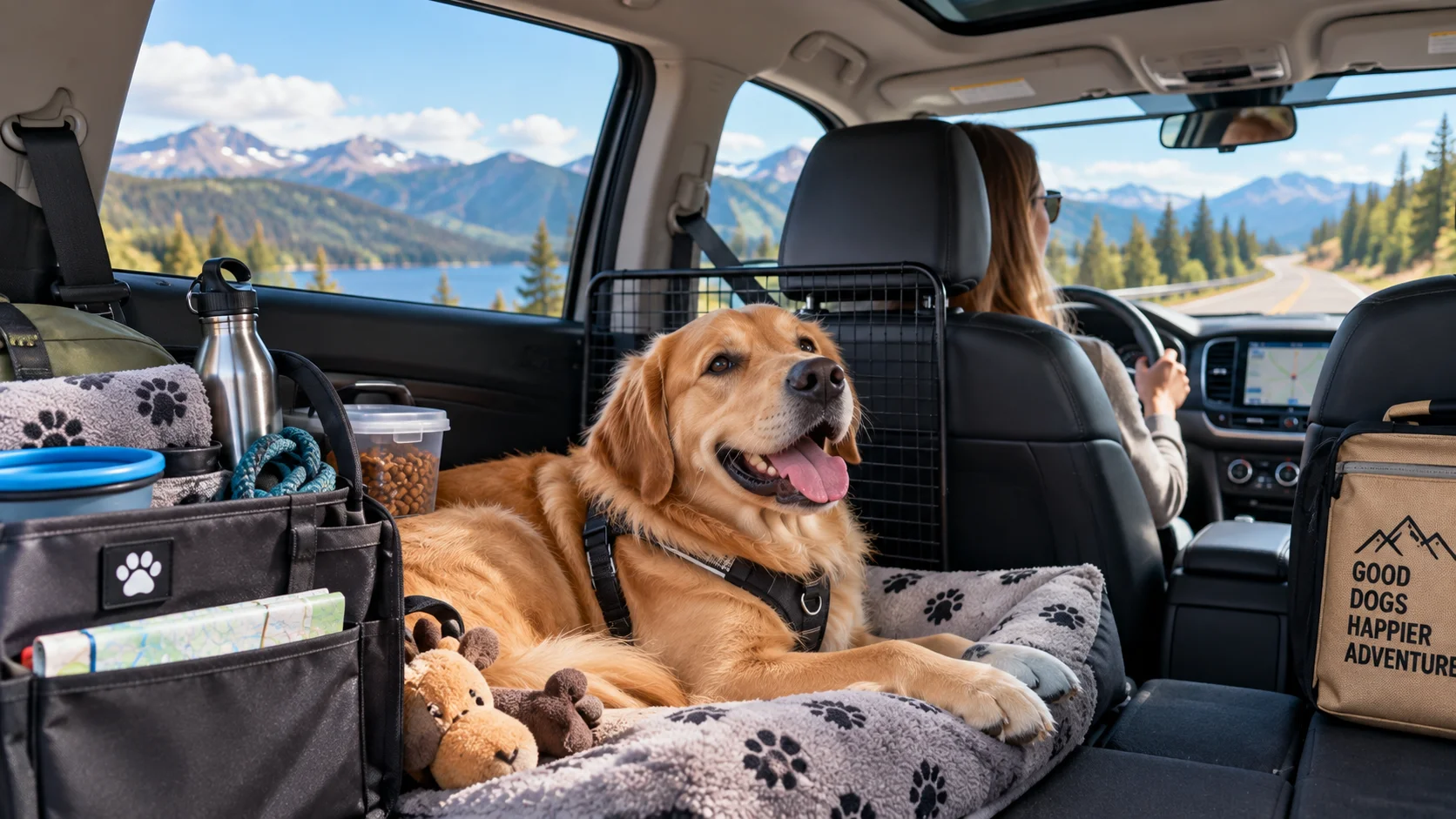
I’ve lost count of how many weekends I’ve driven out of Denver with my Labrador Retriever stretched across the back of my 2021 Subaru Outback. As a freelance photographer, my work often takes me to trailheads, alpine lakes, and quiet mountain overlooks — the kind of places that are only reachable by a two- to four-hour drive and a dog who’s willing to ride along.
Over the years, I’ve learned that the biggest challenge of these trips usually isn’t the destination. It’s what happens inside the car before I even get there. My dog weighs about 65 pounds, and he takes up real space. Without some kind of plan, that space tends to spread — gear gets pushed aside, he wanders between the cargo area and the back seat, and by the second hour of driving, the whole car feels a little chaotic.
This is the story of how I gradually figured out a system that works and why a simple tool — a dog car barrier — ended up being one of the more useful additions to my road-trip routine.
Give Your Dog a Defined Space
One of the first things I noticed on longer drives was that my dog didn’t really have a “spot.” Without a clear boundary, he’d move freely between the cargo area and the back seat, especially when he got restless or wanted to be closer to me.
That kind of movement isn’t necessarily a problem on a short trip to the store. But on a three-hour drive through the mountains, it starts to matter. A dog shifting positions can knock over gear, block the rearview mirror, or just make the whole vehicle feel less organized than it needs to be.
Giving a dog a defined area — usually the cargo space behind the back seats — is a simple way to create some order. It gives the dog a consistent place to settle into, and it gives me one less variable to think about during the trip.
Why a Dog Car Barrier Can Be Useful
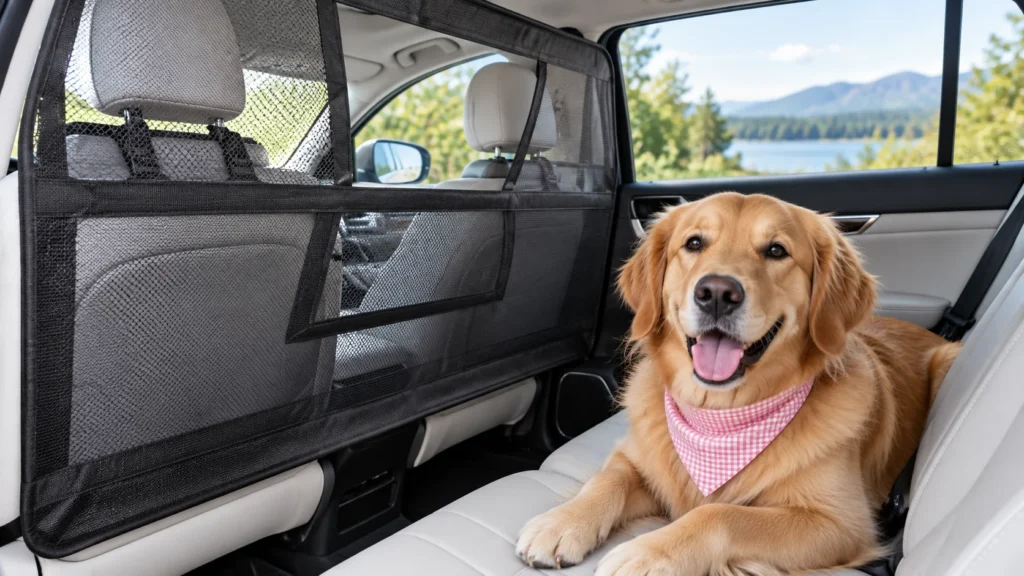
This is where a dog car barrier comes in. At a basic level, a barrier is just a physical divider that separates the cargo area from the front cabin, or sometimes from the back seat itself.
The practical benefits are fairly straightforward:
- It keeps the dog out of the front cabin, which can reduce distractions while driving.
- It helps create a more consistent space for the dog trip after trip, rather than starting from scratch each time.
- It keeps luggage and pet gear more separated, which makes packing and unpacking easier.
- It makes it possible to build a repeatable setup — something I’ve come to appreciate, since I don’t want to reinvent my car organization every time I head out.
It’s worth being clear that a barrier is an organizational tool, not a safety guarantee. It doesn’t replace good judgment about how a dog rides in a vehicle, and it isn’t a substitute for supervision or common sense on the road. What it does offer is a simple way to keep the layout of the car more predictable.
For dog owners exploring this category, brands like Joytutus offer vehicle and pet-travel accessories designed around this kind of separation, which is worth knowing about before comparing specific products.
Choose the Right Size for Your Vehicle
Not every barrier fits every car the same way, and this is where a lot of the practical decision-making happens. The dimensions of the cargo area, the shape of the seats, and the overall size of the vehicle all affect whether a barrier will sit properly and actually create a usable space.
My Outback has a mid-size cargo area — not as compact as a sedan trunk, but nowhere near the size of a full-size SUV. When I started looking into barriers, I paid attention to how the available options were sized relative to my vehicle, rather than assuming a one-size-fits-all product would work.
This is one area where the dog car barrier from Joytutus is worth mentioning as an example. Some products are offered in three sizes with universal fitment, which is useful for owners trying to match a barrier to a specific vehicle rather than guessing. Checking the measurements of your own car’s cargo area against the barrier’s dimensions before buying is generally a sensible step, regardless of which brand you’re considering.
Consider Your Dog’s Personality
Every dog rides differently, and this matters just as much as vehicle size when it comes to setting up the car.
Some dogs settle in almost immediately and sleep through most of the drive. Others stay alert, watching out the windows the entire time. And some dogs — like my Lab in his younger years — like to move around, shift positions, and occasionally try to see what’s happening up front.
A calm dog might do fine with a simple, minimal barrier setup. A more active dog may need a bit more usable space in the cargo area, or a barrier positioned in a way that still allows some visibility into the front of the car, which can help reduce restlessness.
None of this requires professional training knowledge — it’s really just a matter of paying attention to how your own dog behaves on drives and adjusting the setup accordingly. What works well for one dog might need a few tweaks for another.
Keep the Rest of the Car Organized
A defined space for the dog is only part of the equation. The rest of the car benefits from having its own system too, especially on multi-day trips.
My basic approach includes a few consistent categories:
- Food and water: kept in a sealed container near my dog’s area, along with collapsible bowls.
- Leash and harness: stored somewhere easy to reach, usually in a door pocket, so they’re not buried under other gear when it’s time to stop.
- Towels: for muddy paws, wet fur after a lake swim, or general cleanup.
- Waste bags: kept in the same spot every trip so they’re never forgotten.
- Camping equipment: tents, sleeping bags, and cooking gear, generally packed on one side of the cargo area.
- Luggage: clothing and personal items packed separately from the dog’s supplies.
- Emergency or travel supplies: a basic first-aid kit, extra water, and a flashlight.
None of this requires elaborate organization systems — mostly just consistency. Using the same general layout each trip means less time spent searching for things at a trailhead or campsite, and more time actually enjoying the destination.
A Simple Setup for a Weekend Road Trip
To make this more concrete, here’s roughly how I set up my Outback for a typical two- to three-day trip.
My dog’s area sits in the back seat space, defined by the barrier positioned just behind the front seats. His bed, a folded towel, and his water bowl stay in that section, along with a bag of food portioned out for the trip.
Camping gear goes along one side of the cargo area — tent, sleeping bag, and a small cooking setup — while my personal bag and camera equipment go on the other side, kept separate from anything dog-related.
The barrier keeps this arrangement fairly stable throughout the drive. Even with some movement from my dog, the front cabin stays clear, and the gear in the back doesn’t end up disturbed by a restless dog climbing over it.
It’s not a complicated system, but having it be consistent — rather than rearranging everything from scratch each time — is what actually makes the difference on a multi-day trip.
What to Look for in a Dog Car Barrier
For anyone considering a barrier for their own setup, a few practical factors tend to matter more than anything else.
Dimensions and compatibility come first. A barrier needs to actually fit the vehicle it’s going into, both in terms of width and height, and it should work with the shape of the cargo area rather than fighting against it.
Visibility and accessibility also matter, especially for dogs who like to see what’s going on. This is where a feature like a zippered mesh window becomes useful — it allows some visual and airflow connection between the dog’s space and the rest of the car, without removing the separation the barrier provides. For dogs who get anxious when fully cut off from their owner’s view, this kind of detail can make a real difference in how settled they stay during the drive.
Ease of integration rounds out the list. A barrier that works well alongside the rest of your car organization — rather than requiring you to rebuild your whole setup around it — tends to be the most practical long-term choice.
Building a Better Dog-Friendly Road Trip Setup
None of this is about finding one perfect product or a single fix. It’s more about building a layout that works consistently, trip after trip, so that traveling with a dog feels manageable rather than chaotic.
A defined space for the dog, a barrier that fits the vehicle, and a simple system for the rest of the gear go a long way toward making road trips easier. Brands like Joytutus, which focus on vehicle and pet-travel accessories, are one resource for owners looking to build out this kind of setup, but the underlying approach matters more than any single product.
For me, the real shift happened when I stopped treating each trip as a fresh challenge and started thinking about my car as a space with a predictable layout — one section for the dog, one for gear, and a barrier keeping the two apart. It’s a small change, but after a few years of weekend trips into the Colorado mountains, it’s made a noticeable difference in how smooth those drives feel, from the driveway all the way to the trailhead.