
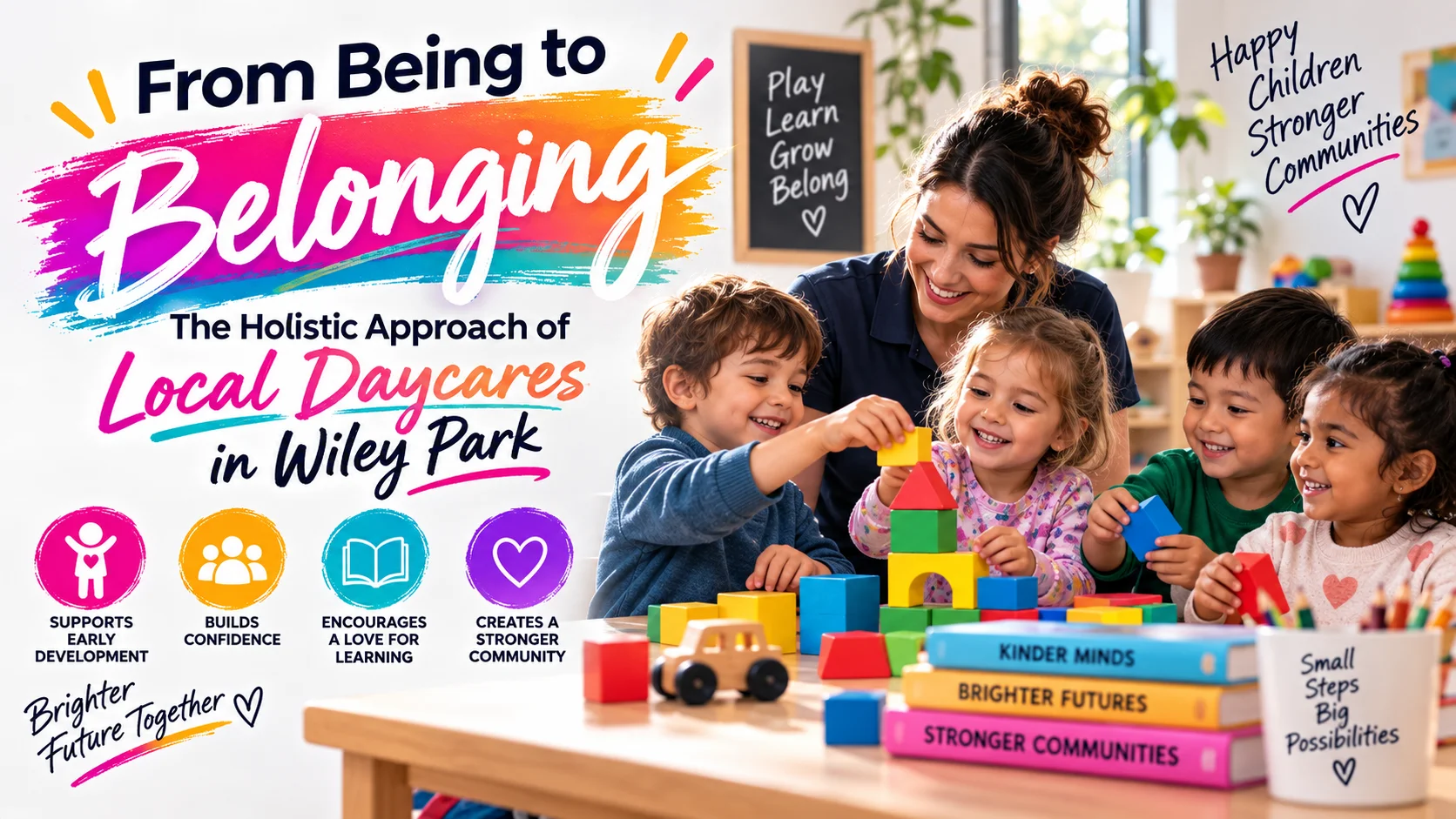
Choosing the right childcare environment is an important decision for families who want their children to feel safe, supported, confident, and ready to learn. In communities such as Wiley Park, local daycares can provide more than supervision during the day. A thoughtfully designed Wiley Park daycare can support children’s social, emotional, physical, and cognitive development while helping them build meaningful relationships with educators and other children.
A holistic approach to early childhood education recognises that children develop in different ways and at different rates. Instead of focusing only on academic skills, quality daycare programs can encourage curiosity, independence, communication, creativity, wellbeing, and a sense of belonging. These experiences help children move through three interconnected stages: being, becoming, and belonging.
What Does a Holistic Approach to Daycare Mean?
Holistic early childhood education looks at the whole child rather than concentrating on one area of development. Young children learn through play, relationships, exploration, movement, communication, and everyday experiences. For this reason, a well-planned daycare environment can provide opportunities for children to develop multiple skills at the same time.
For example, a simple group activity can encourage children to communicate with others, solve problems, take turns, express emotions, and develop confidence. Outdoor play can support physical development while also encouraging exploration and cooperation. Creative activities can strengthen imagination and allow children to communicate ideas in different ways.
This whole-child approach is particularly valuable during the early years, when children are developing foundational abilities that influence their future learning and relationships.
Building the Foundation: The Importance of Being
The idea of “being” focuses on children’s experiences in the present. Early childhood is not simply preparation for school or adulthood. Children need opportunities to feel secure, respected, listened to, and valued for who they are.
Local daycares can support this stage by creating predictable routines, responsive relationships, and welcoming environments. Educators can encourage children to express their interests, make age-appropriate choices, and participate in activities that reflect their individual personalities and abilities.
When children feel comfortable in their surroundings, they can gradually develop confidence and a stronger sense of identity. Everyday experiences such as choosing an activity, talking with an educator, completing a puzzle, or helping tidy up can contribute to a child’s developing independence and self-awareness.
The Transformative Journey of Becoming
“Becoming” describes the way children continually grow, learn, develop new abilities, and build their understanding of the world. Quality early childhood programs recognise that development is an ongoing process rather than a fixed checklist.
Learning experiences can introduce children to language, early mathematics, science, creativity, movement, problem-solving, and social interaction. Importantly, these areas do not need to be taught separately. Play-based experiences can combine several learning opportunities naturally.
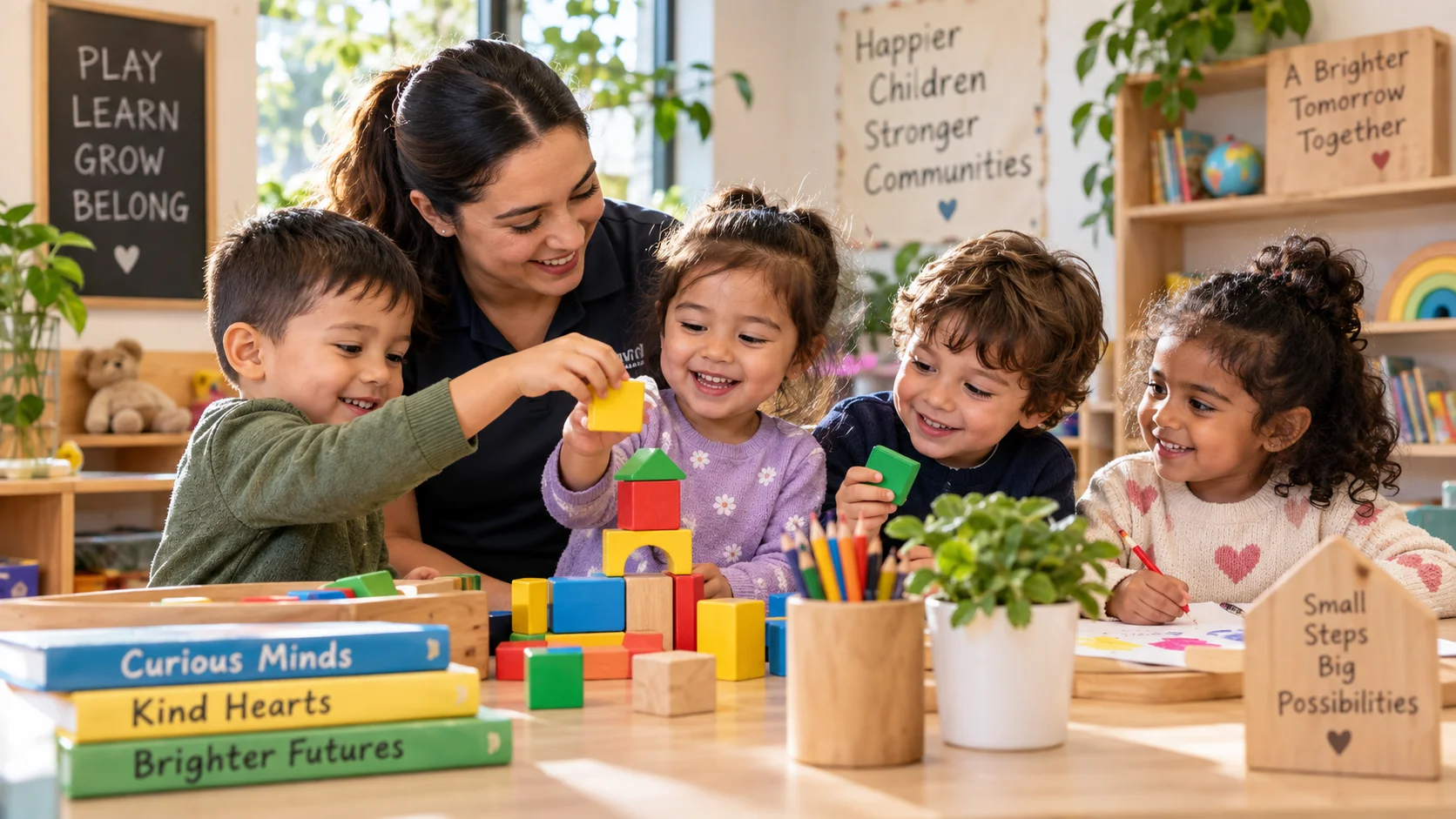
For example, building with blocks may involve counting, comparing sizes, communicating with friends, planning a structure, solving problems, and developing fine motor skills. Similarly, storytelling can support vocabulary, imagination, listening, memory, and emotional understanding.
Parents looking at daycare options in Wiley Park can therefore consider how a centre’s learning program supports children’s development across different areas rather than focusing exclusively on academic preparation.
Fostering Community and Inclusion Through Belonging
Belonging is another important part of early childhood development. Children benefit from knowing that they are accepted members of a community and that their relationships with family, educators, and peers matter.
A strong sense of belonging can be encouraged through group activities, shared routines, collaborative play, conversations, and opportunities for children to contribute to their learning environment. Educators can also help children learn how to communicate respectfully, manage disagreements, recognise emotions, and develop empathy.
Inclusive childcare environments also recognise and respect differences between families and children. Culture, language, interests, abilities, family experiences, and individual identities can all contribute to the richness of a learning community.
Learning Through Play and Everyday Experiences
Play is a central part of early childhood learning. Children can explore ideas, test possibilities, practise communication, and develop problem-solving skills through meaningful play experiences.
Instead of treating play and learning as separate activities, effective daycare programs can use children’s natural curiosity as a starting point for learning. Educators may observe what children are interested in and then introduce materials, questions, stories, or activities that extend that interest.
This approach allows children to participate actively in their learning. It can also make new concepts easier to understand because children encounter them through experiences that are meaningful and relevant to them.
Holistic Learning Environments Beyond the Classroom
A quality daycare environment is not limited to a traditional classroom. Different spaces can provide different opportunities for development, including outdoor areas, creative spaces, reading areas, sensory experiences, construction activities, and quiet spaces.
Outdoor experiences, for example, can encourage movement, coordination, exploration, and awareness of the natural environment. Creative activities can provide opportunities for drawing, music, movement, storytelling, and imaginative expression. Quiet areas can give children a place to relax and regulate their emotions when they need a break from group activities.
Providing a variety of experiences helps accommodate different learning preferences and developmental needs while giving children opportunities to discover what interests them.
Supporting Social and Emotional Development
Social and emotional development is an important part of a child’s early years. Daycare provides children with regular opportunities to interact with people outside their immediate family and practise social skills in a supportive environment.
Children can learn to share resources, take turns, listen to others, express their feelings, cooperate during activities, and respond to different perspectives. Educators can guide children through these experiences by modelling respectful communication and helping them understand and manage everyday emotions.
These skills are valuable because early childhood learning is not only about what children know. It is also about how they communicate, interact, respond to challenges, and participate in a community.
Encouraging Independence and Confidence
Children gradually develop independence when they are given appropriate opportunities to make choices and take responsibility for simple tasks. A supportive daycare environment can encourage this development without expecting children to do everything on their own.
Simple experiences such as selecting an activity, putting away toys, helping with routines, attempting a new task, or communicating a preference can help children develop confidence. Educators can provide guidance when necessary while allowing children enough space to try, make mistakes, and try again.
Parental Engagement: Creating a Stronger Learning Connection
Children’s development does not happen in isolation. Strong communication between families and educators can help create greater consistency between a child’s home and daycare experiences.
Parents can learn about their child’s interests, daily experiences, emerging skills, and areas where additional support may be helpful. Educators, in turn, can gain useful insights from families about children’s routines, preferences, interests, and experiences outside the centre.
This two-way communication can create a more connected approach to early learning and help children feel supported across the different environments in which they spend their time.
What Parents Should Look for in a Wiley Park Daycare
Families comparing daycare options can look beyond location and availability when deciding which environment may suit their child. Several factors can provide useful insight into the quality and suitability of a centre.
- A welcoming environment: Children should feel comfortable, respected, and supported.
- Qualified and responsive educators: Educators should engage with children and respond appropriately to their interests and needs.
- A balanced learning program: Look for opportunities that support social, emotional, physical, language, cognitive, and creative development.
- Safe and suitable spaces: Indoor and outdoor environments should be designed with children’s wellbeing and development in mind.
- Meaningful play opportunities: Children should have time to explore, create, experiment, and interact with others.
- Family communication: Open communication can help parents understand their child’s experiences and progress.
- Inclusive practices: The centre should respect children’s individual backgrounds, abilities, interests, and family experiences.
Continuous Improvement in Early Childhood Education
Early childhood education continues to evolve as educators gain a deeper understanding of how young children learn and develop. Quality childcare providers can respond to this changing landscape by reflecting on their programs, observing children’s needs, communicating with families, and improving learning experiences.
Continuous improvement can involve reviewing learning environments, strengthening educator practices, introducing new experiences, and finding better ways to communicate with families. The goal is to create an environment that remains responsive to the children who attend rather than relying on a one-size-fits-all approach.
Why the Being, Becoming and Belonging Approach Matters
The concepts of being, becoming, and belonging provide a useful way to understand the broader purpose of early childhood education. Children need opportunities to enjoy and understand their present experiences, develop new skills and abilities, and build meaningful connections with the people and environments around them.
When these elements are brought together, daycare becomes more than a place where children spend time while their parents are working. It can become a supportive environment where children explore their interests, build relationships, develop confidence, and prepare for future learning.
Final Thoughts
A holistic approach to early childhood education recognises that every child is developing in their own way. Local daycares in Wiley Park can support this journey by creating environments that value children’s wellbeing, relationships, curiosity, independence, and individual interests.
For families choosing a Wiley Park daycare, the most important consideration is finding an environment where children can feel secure, develop meaningful relationships, explore through play, and participate in a well-rounded learning program. When being, becoming, and belonging are considered together, early childhood experiences can provide a strong foundation for continued learning and development.
Frequently Asked Questions About Daycares in Wiley Park
What should parents look for in a Wiley Park daycare?
Parents can consider the learning program, educator-child interactions, safety practices, indoor and outdoor environments, play opportunities, communication with families, inclusiveness, routines, and how well the centre responds to individual children’s needs.
How does daycare support a child’s development?
Daycare can support children’s social, emotional, physical, language, cognitive, and creative development through play, relationships, everyday routines, guided learning experiences, and opportunities to explore their interests.
Why is play important in early childhood education?
Play gives children opportunities to explore ideas, practise communication, solve problems, develop physical skills, express creativity, and interact with other children. It can make learning active and meaningful.
What does belonging mean in early childhood education?
Belonging refers to a child’s sense of being accepted, valued, and connected to their family, educators, peers, and wider community. Positive relationships and inclusive learning environments can help strengthen this sense of connection.
How can parents support their child’s daycare experience?
Parents can maintain open communication with educators, share information about their child’s interests and routines, ask about their experiences, encourage independence at home, and provide opportunities for children to talk about what they have learned and enjoyed.
Is a holistic daycare approach focused only on academic learning?
No. A holistic approach considers the whole child and can include social, emotional, physical, cognitive, language, creative, and communication development alongside early learning experiences.
Key Takeaway
The right early childhood environment can give children opportunities to be themselves, become confident learners, and develop a genuine sense of belonging. By combining play, relationships, exploration, inclusion, family engagement, and developmentally appropriate learning experiences, daycares can help children build skills and confidence that support their ongoing educational journey.