
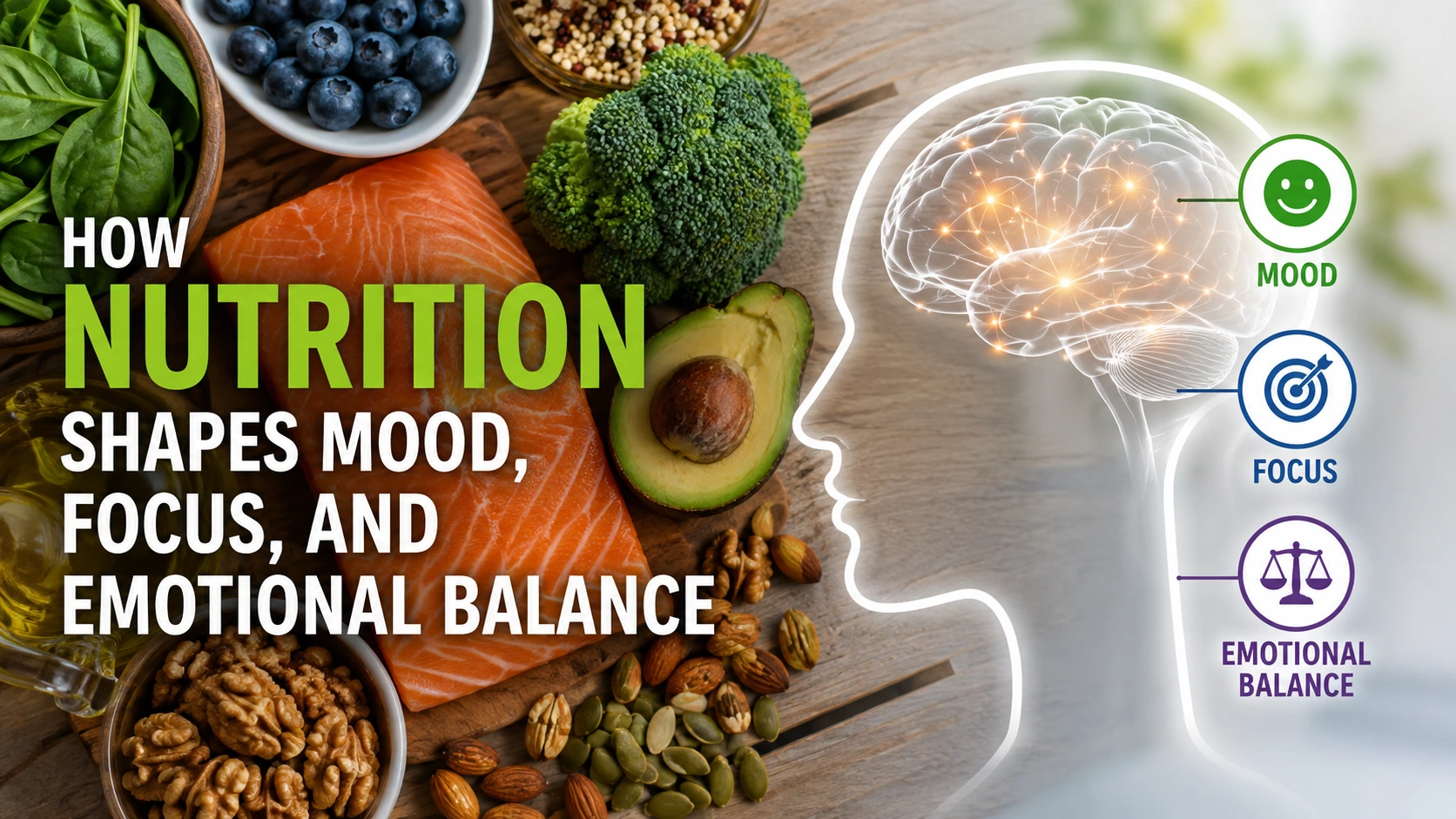
Have you ever experienced feeling lethargic and irritable all day after eating something heavy and oily?
It’s no coincidence. What lands on your plate travels straight to what goes on inside your head. Brain power at work and your capacity to keep calm and collected aren’t magic — they’re directly linked to what you eat.
Here’s the kicker:
Nutrition is one of the most overlooked levers for mental wellbeing. And it’s:
- Free to start improving
- Easy to build into daily life
- Backed by decades of research
Let’s dig in.
Inside this guide:
- Why Nutrition Shapes Mental Health
- The Gut-Brain Connection
- Foods That Fuel Focus and Mood
- Foods That Wreck Mood
- Nutrition’s Role In OCD Treatment
- Simple Daily Habits That Work
Why Nutrition Shapes Mental Health
The brain is always hungry. It consumes about 20% of the body’s daily energy expenditure and every bite you eat either helps or impedes its functioning.
Bad diets aren’t only bad for your waistline. They’re bad for concentration, mood, sleep quality, anxiety, and OCD. A 2024 BMJ study found that people who consume high amounts of ultra-processed foods have a 48% higher chance of anxiety and a 22% higher chance of depression. Those are some significant statistics.
Depression isn’t the only mental health issue either. Every meal affects blood sugar, hormones, and neurotransmitters. Mess that up enough/frequently enough and mental clarity suffers.
If you’re looking into an OCD treatment program, diet may be one component worth adding to the overall strategy. Many treatment centers like New Roads Behavioral Health take a holistic approach and address diet in addition to therapy and medication. It just makes sense that a healthier brain will react better to treatment. Plus, studies are beginning to find correlations between certain nutrients and obsessive and compulsive behaviors.
Bottom line:
You can’t out-therapy a poor diet. Food matters, and it matters a lot.
The Gut-Brain Connection
Ever heard the phrase “trust your gut”?
It really is a science fact. Your gut and brain are constantly communicating via the vagus nerve and a cocktail of chemicals. Your body makes around 90% of its serotonin (“feel good” neurotransmitter) in your gut.
That means that what a person eats determines what mood chemicals are available to the brain.
Here’s why this matters:
An inflamed gut full of ultra processed rubbish sends stress signals to the brain. Feed it whole fibre packed goodness and it releases signals that relax the nervous system and improve concentration.
Simple, right?
Research connecting poor gut health has consistently found increased levels of depression, anxiety, and obsessive compulsive symptoms. The message is simple enough — heal the gut, heal the brain.
Foods That Fuel Focus and Mood
Certain foods pack a much larger mental health wallop. And no, this isn’t about preaching diets or eliminating food groups.
These are the heavy hitters:
- Fatty fish — salmon, sardines, and mackerel are loaded with omega-3s
- Leafy greens — packed with folate, magnesium, and B vitamins
- Berries — antioxidants that fight brain inflammation
- Nuts and seeds — healthy fats plus zinc for cognitive support
- Fermented foods — yoghurt, kefir, kimchi, and sauerkraut for gut health
- Whole grains — steady energy without the blood sugar crash
Research keeps piling up. A 2024 study found that adults who eat four or more servings of fish a week have a 26% lower chance of depression than those who ate fish less than once weekly.
Small change. Big impact.
Omega-3 fatty acids deserve special mention. They are an essential component of brain cells and play a key role in neuronal communication. If fatty fish isn’t on the menu regularly, stock up on walnuts and flax seeds or take a high-quality supplement instead.
Foods That Wreck Mood
Not every food gets along with someone’s mind. Some foods can slowly harm mood and concentration without a person realizing it.
Top offenders:
- Ultra-processed snacks and fast food
- Excessive caffeine (beyond 2-3 cups a day)
- Sugary drinks and desserts
- Alcohol
- Refined carbs like white bread and pastries
You don’t need to eliminate them completely. But if mood swings and brain fog are happening frequently this is where you want to start. It’s amazing how quickly energy returns and mental fog clears by just cutting them back slightly.
Nutrition’s Role In OCD Treatment
OCD is actually more prevalent than most people believe. Around an estimated 1.2% of U.S. adults each year experience OCD, with lifetime prevalence rates at around 2.3%.
Medication and therapy remain the foundation of any good OCD treatment regimen. Diet, however, is becoming more respected among clinicians each year. Diet does not cause OCD. It will not cure OCD. But certain nutritional deficiencies have been shown to correlate with increased symptomology.
Here’s what nutrition brings to the table for OCD:
- Steady blood sugar — helps reduce anxiety spikes that trigger compulsions
- Omega-3s — support brain function and mood regulation
- B vitamins — involved in serotonin production
- Reduced processed food intake — lowers overall inflammation in the body
None of this should substitute medical care or attention from a professional. Consider nutrition an adjunct tool that can be used along with evidence-based treatment for OCD like CBT and ERP therapy.
Simple Daily Habits That Work
Fancy diet plans fail. Simple habits stick.
If overhauling meals feels overwhelming, start small. Really small.
Try these:
- Eat a protein-rich breakfast within an hour of waking
- Add one serving of leafy greens to lunch or dinner
- Swap one processed snack for nuts or berries
- Drink water regularly throughout the day
- Aim for at least two fish meals per week
- Get 7-9 hours of sleep (it’s a nutrition multiplier)
These are small adjustments. But compound over days and weeks they can dramatically alter brain function.
Frequency beats intensity. Eating a protein-rich breakfast on most days will lead to much better results than going crazy for a week with a detox diet.
The best part? Every one of these habits is completely free.
Bringing It All Together
Nutrition is not magic dust. However it’s one of the most underutilized methods for supporting mood, concentration and emotions.
To quickly recap:
- The brain uses 20% of daily energy — feed it well
- Ultra-processed foods spike anxiety and depression risk
- Omega-3s, leafy greens, and fermented foods are absolute game changers
- Nutrition supports (not replaces) therapy for conditions like OCD
- Small daily swaps beat big diet overhauls every single time
Food is medicine. It changes mood. It sharpens focus. Fuels the brain. Begin with one meal today. Notice the change in your mind in weeks to come.
The results honestly speak for themselves.