Proper night guard cleaning is essential for maintaining good oral health and extending the life of your dental device. A clean night guard prevents bacteria buildup, unpleasant odors, and potential infections. This comprehensive guide will walk you through simple daily routines, effective deep cleaning methods, and important maintenance tips to keep your night guard fresh, hygienic, and functioning at its best.
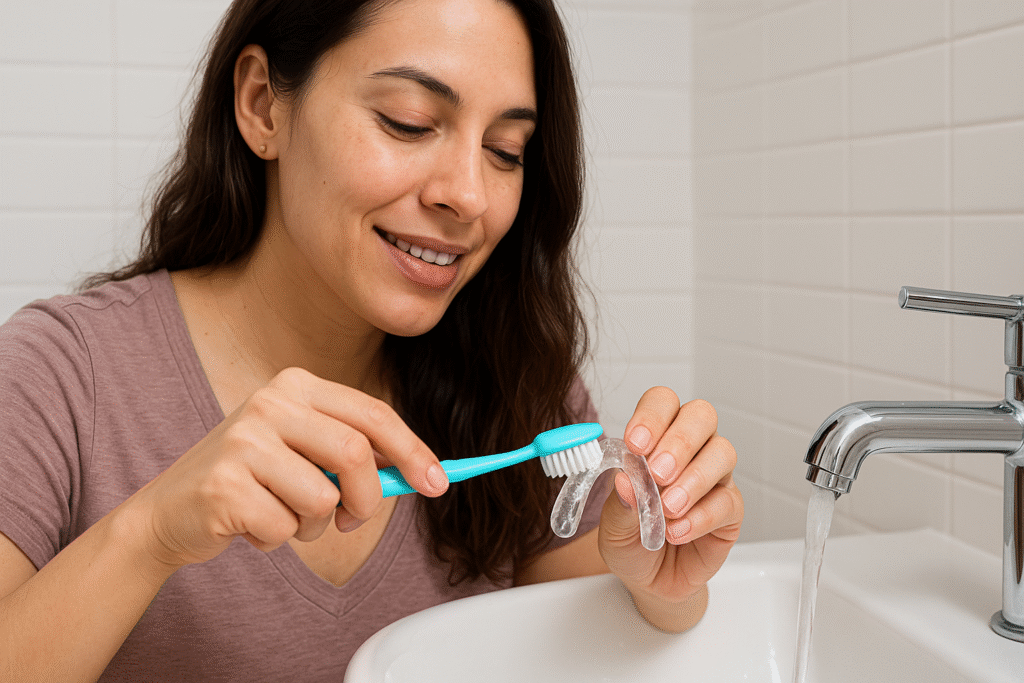
Why Cleaning Your Night Guard Is Essential
Your night guard spends hours in your mouth, collecting saliva, bacteria, and food particles. Without proper cleaning, it becomes a breeding ground for harmful microorganisms that can lead to several problems:
- Unpleasant odors and bad breath
- Potential oral infections and irritations
- Increased risk of tooth decay and gum disease
- Calcium deposits and discoloration
- Shortened lifespan of your night guard
Regular cleaning removes these harmful substances and helps maintain your night guard’s structure and clarity. A clean night guard is also more comfortable to wear and less likely to cause oral health problems.
Daily Cleaning Routine for Your Night Guard
Establishing a simple daily cleaning routine is the foundation of proper night guard maintenance. Follow these steps each morning after removing your night guard
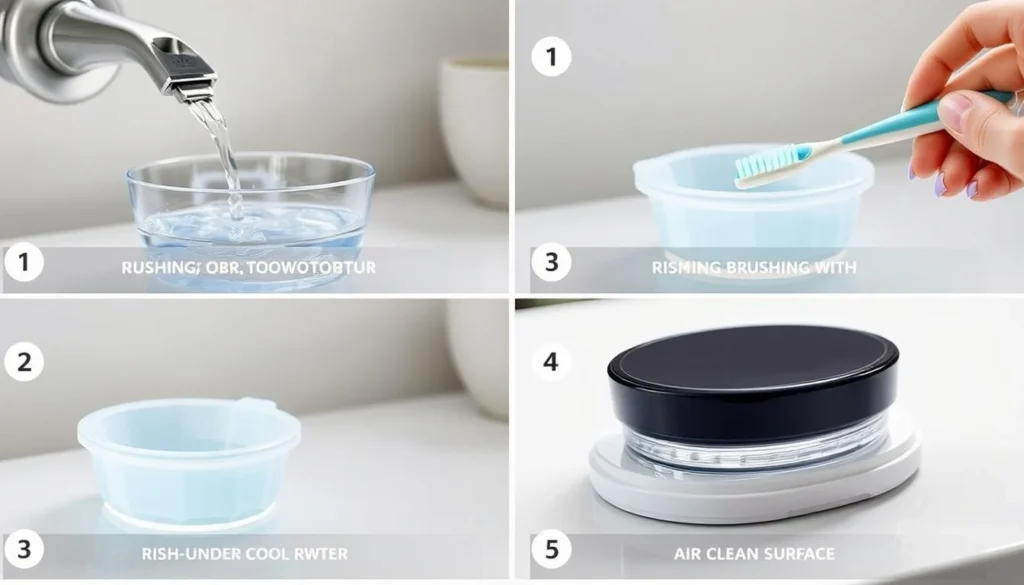
- Rinse immediately after use: As soon as you remove your night guard, rinse it thoroughly with cool or lukewarm water. This helps remove saliva and loose debris before they can dry and become harder to clean. Avoid hot water as it can warp the plastic material.
- Gentle brushing: Use a soft-bristled toothbrush to clean all surfaces of your night guard. You can use a small amount of mild, fragrance-free soap or non-abrasive toothpaste. For toothpaste, make sure it’s non-whitening to prevent scratching the night guard surface.
- Rinse thoroughly: After brushing, rinse your night guard again with cool water to remove any soap or toothpaste residue.
- Air dry completely: Shake off excess water and allow your night guard to air dry on a clean towel in a well-ventilated area. Never use a hairdryer or other heat source to speed up the drying process.
- Store properly: Once completely dry, store your night guard in a clean, ventilated case to protect it from dust and bacteria.
Quick Tip: Designate a specific soft toothbrush just for cleaning your night guard to avoid cross-contamination with the brush you use for your teeth.
Deep Cleaning Methods (Weekly/Monthly)
In addition to your daily cleaning routine, your night guard needs occasional deep cleaning to remove stubborn buildup and thoroughly disinfect it. Here are effective methods you can use weekly or monthly:
Method 1: Vinegar Solution
White vinegar is a natural disinfectant that helps remove mineral deposits and kill bacteria:
- Mix equal parts white vinegar and cool water in a clean container
- Soak your night guard for 15-30 minutes
- Remove and brush gently with a soft toothbrush
- Rinse thoroughly with cool water to remove any vinegar taste
- Allow to air dry completely before storing
Method 2: Hydrogen Peroxide
Hydrogen peroxide is effective for disinfecting and removing stains:
- Create a mixture using equal parts 3% hydrogen peroxide and water
- Soak your night guard for no more than 30 minutes
- Remove and brush gently if needed
- Rinse thoroughly with cool water
- Allow to air dry completely
Method 3: Denture Cleaner
Denture cleaning tablets provide a convenient and effective deep cleaning option:
- Fill a clean container with enough warm water to fully submerge your night guard
- Add one denture cleaning tablet and allow it to dissolve
- Place your night guard in the solution for the time recommended on the package (usually 15-30 minutes)
- Remove and rinse thoroughly with cool water
- Allow to air dry completely before storing
Important: Never use bleach, alcohol-based mouthwashes, or other harsh chemicals to clean your night guard. These substances can break down the material, causing deterioration that might create rough edges or weaken the guard’s protective capabilities.
Recommended Cleaning Products
Safe Products to Use
- Mild, fragrance-free soap: Gentle on the night guard material while effectively removing debris
- Non-abrasive toothpaste: Avoid whitening formulas that contain abrasive particles
- Denture cleaning tablets: Specifically designed for oral appliances
- White vinegar: Natural disinfectant that helps remove mineral deposits
- 3% hydrogen peroxide: Effective for disinfecting and removing stains
- Ultrasonic cleaners: Devices that use sound waves to deep clean dental appliances
Products to Avoid
- Whitening toothpastes: Contain abrasives that can scratch your night guard
- Alcohol-based mouthwashes: Can damage the material of your night guard
- Bleach: Too harsh and can break down the plastic
- Hot or boiling water: Can warp the shape of your night guard
- Dishwashers: The heat and harsh detergents can damage your night guard
- Abrasive brushes: Can scratch the surface, creating places for bacteria to hide
Common Night Guard Cleaning Mistakes to Avoid
Even with the best intentions, many people make these common mistakes when cleaning their night guards:
- Using hot water: Hot water can warp the plastic material, affecting the fit and protective qualities of your night guard.
- Cleaning infrequently: Allowing bacteria to build up between cleanings can lead to oral health issues and shorten the lifespan of your night guard.
- Using harsh chemicals: Strong cleaners can break down the material of your night guard, causing it to deteriorate faster.
- Improper storage: Leaving your night guard exposed to air, wrapped in tissue, or stored in a plastic bag can lead to bacterial growth or physical damage.
- Insufficient drying: Storing a damp night guard in a closed container creates the perfect environment for bacteria and mold growth.
Proper Storage Between Uses
How you store your night guard between uses significantly impacts its cleanliness and longevity:
- Use a proper ventilated case: Always store your night guard in a hard, ventilated case that allows airflow while protecting it from damage.
- Ensure complete drying: Make sure your night guard is completely dry before storing it to prevent moisture buildup and bacterial growth.
- Keep away from heat: Never leave your night guard in hot cars, near heating vents, or in direct sunlight, as heat can warp the plastic.
- Clean the case regularly: Wash your storage case with soap and water and allow it to air dry completely at least once a week.
- Store in a cool, dry place: Avoid bathroom counters where humidity from showers can affect your night guard.
Pro Tip: Label your night guard case if multiple family members use night guards to prevent accidental sharing, which can transfer bacteria between users.
When to Replace Your Night Guard
Even with excellent care, night guards don’t last forever. Here are signs that indicate it’s time for a replacement versus when cleaning can restore it:
Signs You Need a Replacement
- Visible cracks or holes: Damage that compromises the integrity of the night guard
- Significant warping or distortion: Changes in shape that affect the fit
- Persistent bad odor: Smells that remain despite thorough cleaning
- Severe discoloration: Staining that doesn’t improve with cleaning
- Rough edges or surfaces: Wear that can’t be smoothed out
- Loose fit: No longer fits snugly against your teeth
When Cleaning Can Help
- Minor discoloration: Light staining that responds to deep cleaning
- Calcium deposits: White spots that can be removed with vinegar solution
- Mild odor: Smells that disappear after proper cleaning
- Surface debris: Buildup that can be brushed away
- Cloudy appearance: Haziness that clears with thorough cleaning
Most dental night guards need replacement every 6 months to 2 years, depending on the type, quality, and how well they’re maintained. If you’re a heavy teeth grinder, you might need more frequent replacements.
Frequently Asked Questions
Can I use toothpaste to clean my night guard?
Yes, you can use non-abrasive, non-whitening toothpaste to clean your night guard. Apply a small amount to a soft-bristled toothbrush and gently brush all surfaces. Avoid whitening toothpastes or those with abrasive particles as they can scratch the surface of your night guard, creating places for bacteria to hide.
Is vinegar safe for cleaning night guards?
Yes, white vinegar is safe and effective for cleaning night guards. Create a solution of equal parts white vinegar and water, then soak your night guard for 15-30 minutes. The acidity helps dissolve calcium deposits and kill bacteria. Always rinse thoroughly afterward to remove any vinegar taste or smell.
How often should I clean my night guard?
You should rinse and brush your night guard daily after each use. For deep cleaning with solutions like vinegar, hydrogen peroxide, or denture cleaners, once a week is sufficient. Your storage case should also be cleaned weekly to prevent bacterial growth.
Why does my night guard smell bad even after cleaning?
Persistent odors might indicate bacteria trapped in scratches or porous areas of the guard. Try soaking in a vinegar solution for 30 minutes, then brushing and rinsing thoroughly. If odors persist, the guard might be too damaged or old and require replacement. Consult your dentist if the problem continues.
Can I use mouthwash to clean my night guard?
It’s best to avoid using mouthwash for regular cleaning, especially alcohol-based varieties that can damage the material. If you do use mouthwash, choose an alcohol-free version and limit soaking time to just a few minutes, followed by a thorough rinse with water.
Maintaining Your Night Guard for Long-Term Use
Proper cleaning and maintenance of your night guard is a small investment of time that yields significant benefits for your oral health and the longevity of your device. By following the daily cleaning routine, performing regular deep cleaning, and storing your night guard correctly, you can ensure it remains hygienic, effective, and comfortable for as long as possible.
Remember that consistency is key. Make night guard cleaning part of your daily oral hygiene routine, just like brushing and flossing. If you have specific questions about caring for your particular type of night guard, or if you notice signs of wear that might require replacement, don’t hesitate to consult with your dentist for personalized advice.
Need Professional Advice for Your Night Guard?
If you’re unsure about the condition of your night guard or have questions about proper maintenance for your specific type, schedule a consultation with your dentist for personalized recommendations.