

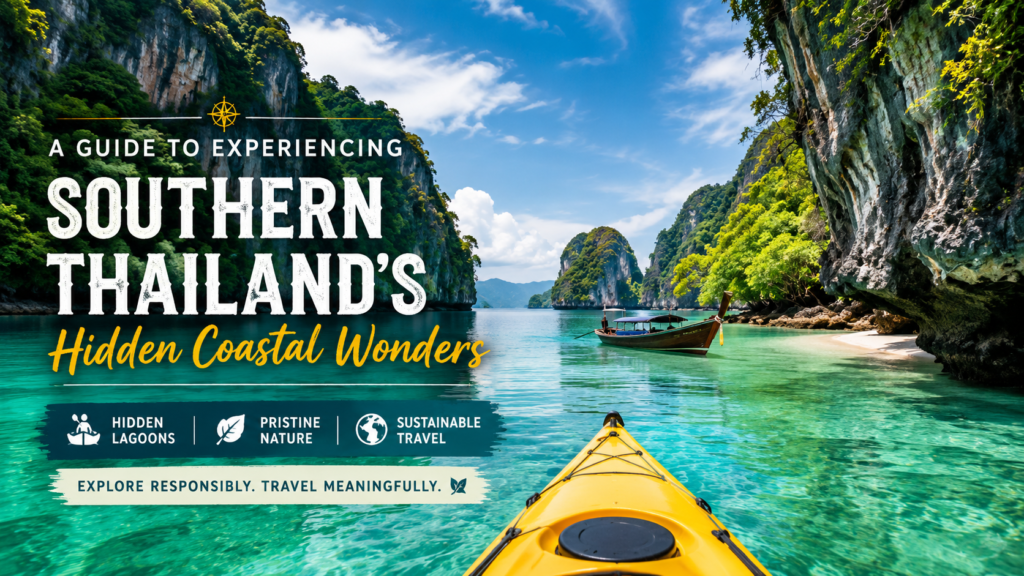
Southern Thailand has long captivated global travellers with its emerald waters and dramatic limestone karsts. However, the travel landscape has shifted significantly in recent years. Today’s sophisticated visitors are venturing beyond crowded resort centres to seek out authentic, low-impact encounters with nature. The focus is no longer just on seeing famous landmarks, but on experiencing the pristine environment in a way that preserves its natural beauty for future generations.
The Rise of Conscious Coastal Exploration
The premium travel market is undergoing a rapid evolution towards regenerative tourism. Recent travel industry data published in 2025 highlighted an 80 percent surge in search queries for conscious travelling, alongside a massive 250 percent increase in searches for eco-nature holidays. According to a Booking.com report from the same year, nearly 70 percent of global travellers now want to leave their holiday destinations in a better environmental condition than when they arrived. This shift in mindset is crucial given the vast economic scale of the industry. The Reef-World Foundation notes that sustainable practices are vital, as coastal and marine tourism generating an estimated US$1.5 trillion annually supports 52 million jobs worldwide. By prioritising eco-friendly excursions, travellers can actively fund marine conservation and local community prosperity, ensuring their spending has a positive local impact.
Discovering the Andaman Sea Responsibly
Historic closures of highly commercialised destinations like Maya Bay serve as a stark reminder of the severe environmental costs associated with mass tourism. Instead of contributing to the heavy motorboat traffic that disrupts marine ecosystems around landmarks like James Bond Island, visitors are increasingly drawn to quiet, secluded areas. Exploring the majestic Ao Phang Nga National Park, a critical sanctuary for the region’s biodiversity, requires a thoughtful approach. Selecting low-impact Phuket island tours allows travellers to swap noisy engines for silent sea canoes. This crowd-avoiding method grants access to hidden internal lagoons and pristine mangrove forests without causing noise pollution or disturbing the native wildlife. As a result, visitors enjoy a much more intimate connection with the natural landscape.
Navigating the Hidden Landscapes
The World Wide Fund for Nature has been partnering with local villages around Phang Nga Bay to coordinate sustainable coastal management. This collaboration helps protect marine habitats from commercial overfishing while ensuring that the delicate ecosystems surrounding islands like Koh Panak and Koh Hong remain intact. These areas are famous for their hongs, which are collapsed limestone cave systems that form spectacular open-air tidal lagoons. Accessing these hidden enclaves by small watercraft provides an unparalleled sense of isolation and wonder, offering a striking contrast to the busy commercial hubs just a few miles away. Economic forecasts now indicate that this type of eco-tourism is poised to dominate Thailand’s sustainable travel market, expected to capture over a third of the sector’s growth over the next decade.
Crafting a Perfectly Balanced Holiday
Structuring a trip to Southern Thailand requires careful planning, especially if you want to enjoy both the vibrant cultural hotspots and the quiet coastal reserves. If you are wondering how to build the ideal itinerary, you should explore strategies to balance Phuket nightlife and coastal serenity effectively. A well-rounded holiday ensures that you experience the best of both worlds without succumbing to travel fatigue.
To make the most of your eco-conscious getaway, consider the following approach:
- Choose a strategic base: Opt for accommodation in quieter northern stretches of Phuket’s west coast. This provides easy access to tranquil, boat-only alternatives like Laem Singh Beach while remaining close enough to evening entertainment.
- Prioritise early departures: Beat the crowds by booking morning excursions. Not only is the lighting better for photography, but marine wildlife is often more active before the midday heat sets in.
- Support verified eco-operators: Look for excursion providers that have strict waste reduction policies and actively employ guides from local coastal communities.
- Embrace the slow travel ethos: Rather than rushing to visit five islands in one afternoon, spend more time deeply exploring one or two locations to fully appreciate the natural biodiversity.
Experiencing Southern Thailand’s coastal wonders is about trading the fast-paced tourist trails for meaningful, immersive connections with nature. The World Travel and Tourism Council is actively spearheading nature-positive travel initiatives, noting that over half of global travel demand is driven by a desire to explore intact ecosystems. As Thailand’s national tourism strategy pivots to support sustainable green technologies, visitors have a unique opportunity to lead the change. By making thoughtful choices about where to stay and how to explore, you can help safeguard the Andaman Sea’s breathtaking habitats while enjoying a truly unforgettable holiday.