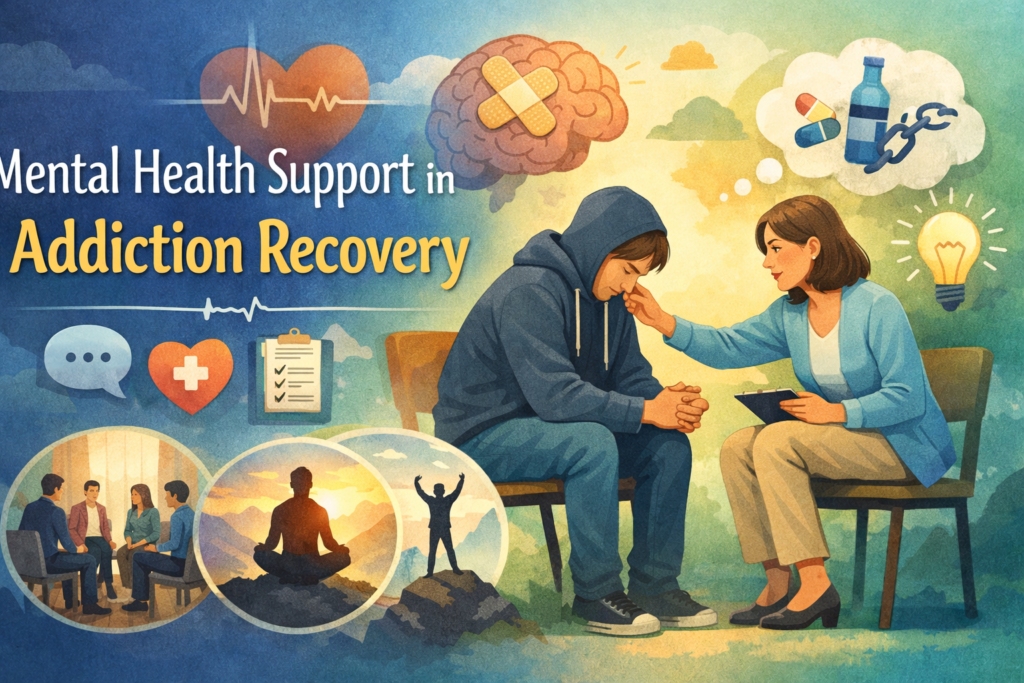
Addiction and mental health are intimately connected for the majority of people who struggle with alcoholism or drug dependence. For many, there is a mental health condition that is driving the addictive behaviour or which develops as a consequence of the dependency. The role of mental health support in the recovery process is significant. Failing to treat any underlying mental health conditions is a common reason for relapse after detox treatment.
The Connection Between Mental Health and Substance Use
The connection between mental health and substance use is well-documented.
There are a number of mental health disorders that cause or are correlated with the development of addictive behaviours. Using alcohol or drugs as a way to manage anxiety or to numb pain caused by unresolved trauma are two of the most significant.
This notion of dual diagnosis or co-occurring disorders is more common than most people realise. The majority of people who are being treated for addiction will have some underlying mental health disorder that needs to be considered at the same time. The connection has become better known over the past few decades and modern addiction treatment reflects that reality.
Treatment programmes have changed
Gone are the days where the treatment for addiction was focused almost entirely on the substance, get the person through detox and consider the job largely done. Addiction treatment has shifted considerably in recent years, with the understanding that treating any co-occurring mental health conditions is absolutely essential to long-term recovery.
Recovery centres who want to see their patients succeed will test for and address any underlying mental health disorders alongside a detox programme.
What this means for those seeking treatment for addiction is that if you are accessing detox services through a facility that also performs a psychological assessment and provides therapy, you have a significantly better chance of long-term recovery.
This type of therapy is not offered everywhere, so it is important to research your options.
Types of Treatment That Address Mental Health Conditions
One of the best-known and most commonly used approaches that addresses mental health conditions alongside addiction are cognitive behavioural therapy. CBT has been shown to be effective at addressing thought processes that fuel addictive behaviour.
Other approaches are also used, however, including dialectical behaviour therapy, trauma-focused therapy and EMDR among others. Studies show lower relapse rates with dual treatment
Research shows that patients who receive treatment for both their addiction and any underlying mental health condition alongside it tend to have better long-term outcomes. Addressing mental health concerns as part of a recovery plan will show lower relapse rates than treatment plans that focus purely on addiction. This is essential because relapse is common.
Relapse happens more often than not
For those in recovery, it is well-understood that relapsing can be part of the process. It does not mean that someone has “failed” but rather that they need to adjust their treatment plan and figure out what can be changed to make long-term recovery more achievable.
One of the most common triggers of relapse is emotional distress. This is one of many reasons why dealing with mental health issues need psychological support and therapy. This should take place as aftercare as well as during the initial treatment period.
Aftercare is where recovery often falls down
Relatively few addiction patients actually complete aftercare as part of their recovery plan even though it is seen as essential by experts in the field. This is one of the reasons why relapse rates are so high.
Once a patient leaves residential treatment and returns to their everyday lives, they may find themselves without much structure or support. This is often because there is no genuine support network in place or because existing relationships are damaged by addiction.
Mental health care support is lacking in many cases
This problem could be averted or at least lessened if patients had access to regular therapy sessions, psychiatric support, support groups and community-based mental health services.
However, the stigma around mental health in recovery needs to be eliminated. People who are recovering from addiction sometimes don’t want to address their mental health because of stigma or because they do not understand the link between mental health and addiction.
Understanding the Connection Between Mental Health and Addiction
The idea that you need to “fix” your mental health in order to recover from addiction might encourage people to put more effort into engaging with this side of their treatment plan. Long-term recovery from addiction involves so much more than just giving up alcohol or drugs. It means achieving stability in every other aspect of life too, including mental health.
A good recovery plan considers all these elements simultaneously and this type of treatment should be available to everyone who wants to recover from addiction.
Mental health support in the recovery process makes the difference between short- and long-term success when it comes to abstaining from addictive substances. It is not an optional addition to treatment but rather an essential part of the picture.