
Ask most people what happens after someone is arrested for driving under the influence, and they will describe a single scene: a courtroom, a defense attorney, and a judge. That image is not wrong, but it is incomplete in a way that shapes public expectations of the entire process. The common misconception is that DUI defense is a one-person job, a lone attorney arguing points of law in front of a bench. The reality is that by the time a case reaches a courtroom, a team of people who never appear before a judge has already done most of the work that determines how the case unfolds.
The Paperwork That Precedes the Argument
Before any legal argument can be made, someone has to gather the raw material it will be built from. That job typically falls to paralegals and legal assistants, whose names rarely appear in news coverage of a case but whose fingerprints are on nearly every document that matters. They request police reports, dashcam footage, dispatch logs, and booking records, often within days of an arrest, because evidence in these cases can be time-sensitive. A delay of even a few weeks can mean the difference between obtaining a clean copy of squad car video and receiving a notice that the footage was overwritten as part of routine storage cycling. The attorney directs the strategy, but the support staff executes the retrieval, and without that groundwork there is no case to argue.
The Investigator Nobody Pictures
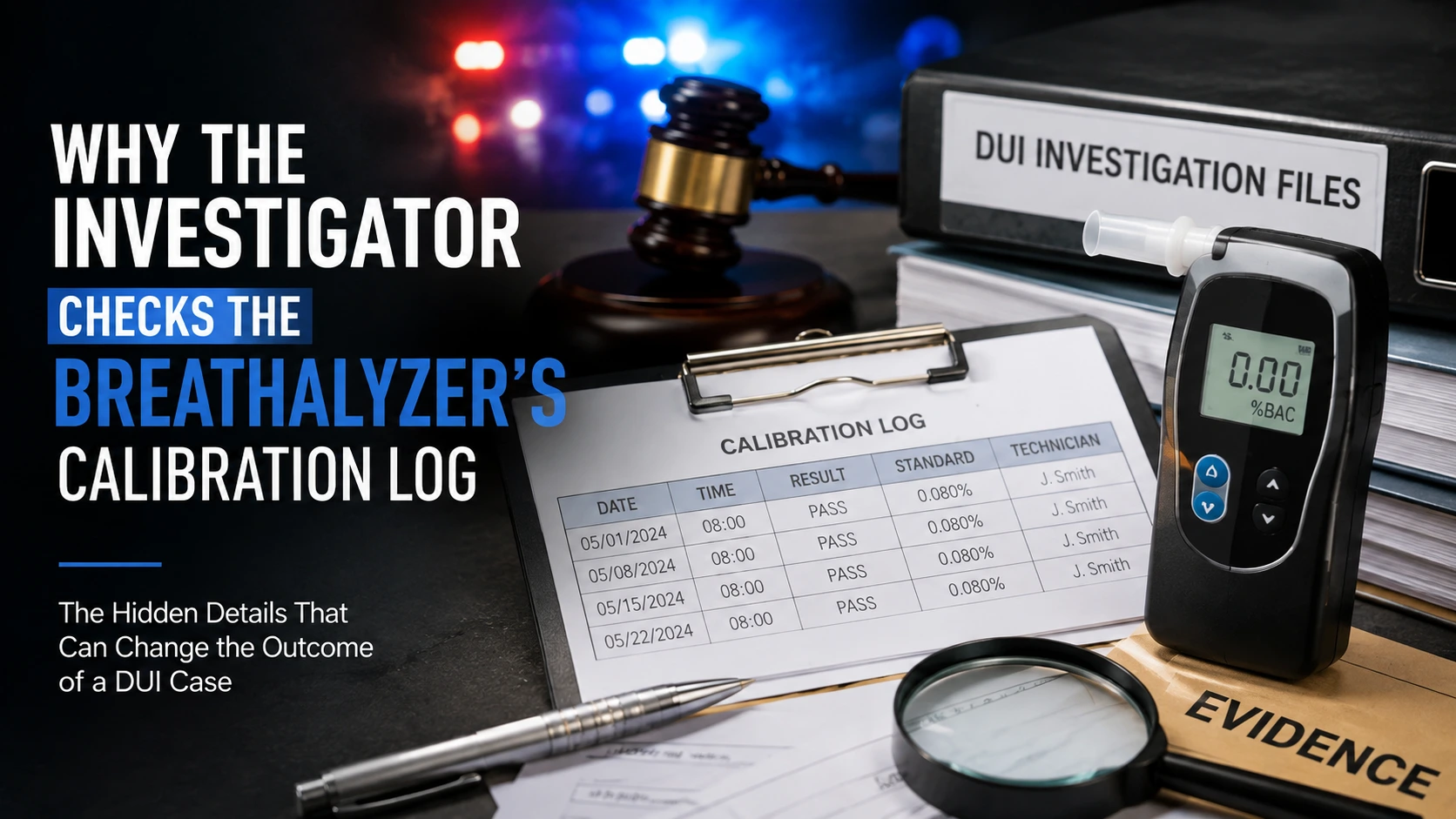
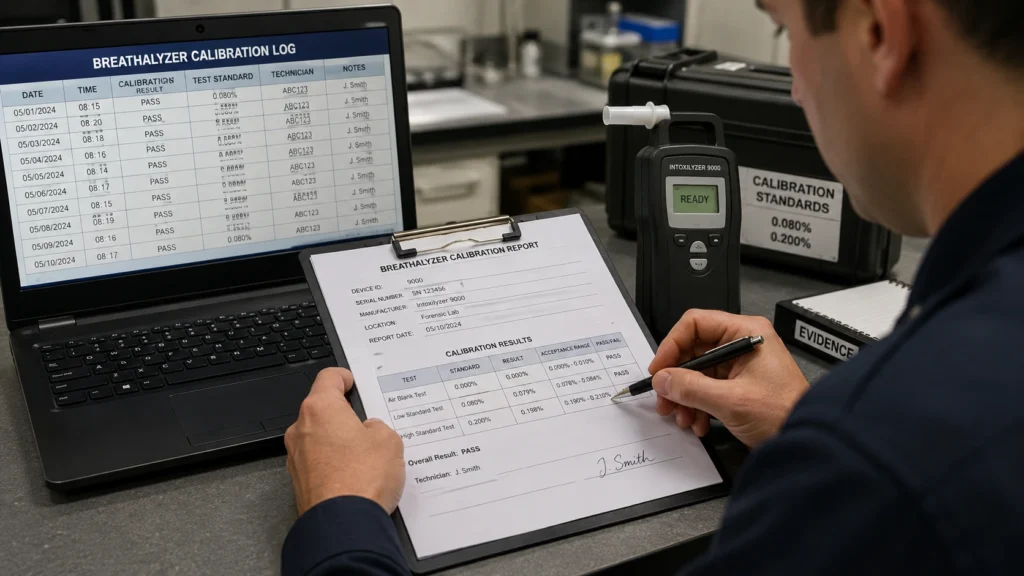
Few people outside the legal field picture an investigator when they think about DUI defense, yet that role is often where the most consequential discoveries happen. Investigators working alongside defense attorneys examine the mechanical and procedural details that determine whether evidence holds up. This includes checking whether a breath testing device was calibrated on schedule, whether the officer administering a field sobriety test followed the standardized procedure, and whether the traffic stop itself had a legally sufficient basis. Breath testing instruments require regular calibration against known standards, a process that traces back to measurement science overseen at a national level. The National Institute of Standards and Technology maintains the underlying reference standards that calibration procedures for these devices are built upon, and an investigator who understands that chain of accuracy can identify gaps that a courtroom argument alone would never surface. This is detailed, unglamorous work, done in file rooms and equipment logs rather than in front of a jury, but it frequently determines the outcome long before a hearing date arrives.
Administrative Staff and the Clock That Never Stops
DUI cases run on strict, overlapping deadlines that rarely align with a single person’s calendar. There is a criminal court timeline and, separately, an administrative timeline tied to license suspension that can move even faster. Missing a short window to request a hearing on a license issue can mean losing driving privileges before the criminal case is even scheduled for its first appearance. Administrative staff inside a law office track these parallel clocks, file the necessary requests, and confirm receipt with agencies that do not send reminders. When someone begins searching for help after an arrest, whether by asking a friend for a referral or searching online with words like a dui lawyer in seattle late on the night of the arrest, they are usually unaware that the person who answers the intake call the next morning is often the one who prevents an early, avoidable loss of driving privileges simply by knowing which forms are due within how many days.
Forensic Consultants Behind the Scenes
Toxicology is another area where the visible attorney depends heavily on invisible expertise. Blood alcohol results are not self-explanatory numbers; they depend on how a sample was drawn, stored, and analyzed, and on assumptions about absorption rates that vary by individual. Defense teams frequently consult forensic toxicologists who review lab protocols and testify, when needed, about margins of error or contamination risks in a sample’s chain of custody. These consultants are rarely household names, and their reports are dense enough that most clients never read them in full. But their analysis often shapes whether an attorney negotiates a plea, challenges a result outright, or requests independent retesting. The courtroom moment where an attorney questions a lab technician is the visible tip of weeks of consultation that happened entirely outside public view.
Why the Misconception Persists
The misconception that DUI defense is a solo performance persists partly because courtrooms are public and back offices are not. News coverage, television dramas, and even casual conversation tend to compress an entire defense effort into the person standing at the podium. It is a natural shorthand, but it obscures how much of the outcome is determined by people whose job titles never appear on a court docket. Recognizing this does not diminish the attorney’s role; it clarifies it. The lawyer’s judgment about strategy, negotiation, and courtroom presentation matters enormously, but that judgment is only as good as the information the support team has assembled. A well-run defense office functions less like a solo practice and more like a coordinated unit, where paralegals, investigators, administrative staff, and forensic consultants each contribute a piece that the attorney ultimately synthesizes into an argument.
Clients who understand this tend to have more realistic expectations about timelines and communication. They are less surprised when a paralegal, rather than the attorney, calls with a document request, and less anxious when weeks pass without a courtroom date because they know that calibration records are being reviewed or lab protocols are being examined. That understanding changes how people experience the process, replacing the assumption of a lone advocate with a more accurate picture of a team working methodically toward the best possible result.
The next time a DUI case makes headlines, it is worth remembering that the headline captures only the final, visible step of a much longer sequence. The people who checked the calibration log, tracked the filing deadline, and reviewed the lab’s chain of custody rarely get mentioned, but their work is what makes the attorney’s argument possible in the first place.