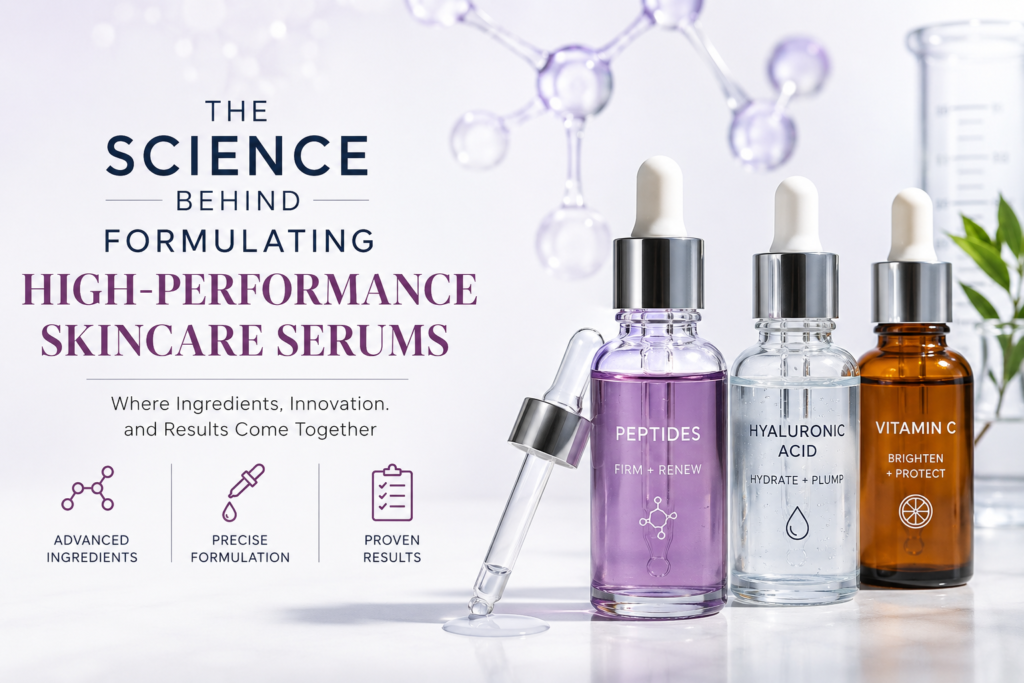
The modern beauty landscape has shifted dramatically over the past decade. Consumers are no longer satisfied with basic moisturisers that merely sit on the surface of the skin. Today, skincare enthusiasts expect high-performance serums packed with active ingredients like retinol, vitamin C, and peptides. This evolution has effectively blurred the lines between professional dermatology and at-home consumer routines. As a result, shoppers are increasingly educating themselves on formulation safety and active concentrations. However, creating a product that delivers visible results while remaining safe for daily use is not a matter of simply mixing ingredients in a vat. It requires complex cosmetic chemistry and rigorous laboratory standards to ensure every drop performs exactly as intended.
The Importance of Precision in Cosmetic Chemistry
Behind every cult-favourite serum is a team of cosmetic chemists working meticulously in research and development laboratories. The formulation phase is highly technical. Scientists must balance volatile active compounds with stabilisers, preservatives, and delivery agents. A major part of this process involves calculating exact ratios and volumes to ensure the final product is both effective and non-irritating. The safety protocols required to launch a new product are immense, and the testing phases can often take years to complete before a single bottle is sold.
When dealing with highly potent acids or botanical extracts, a variation of just a fraction of a per cent can mean the difference between a glowing complexion and severe skin irritation. During these initial trials, cosmetic chemists accurately measure exact microlitres of potent active compounds using a pipette to guarantee absolute precision. This level of exactitude is what allows brands to scale up their formulas from a tiny test beaker to mass production without losing efficacy. It also ensures that batch-to-batch consistency is maintained, providing consumers with the exact same experience whether they buy their first bottle or their fiftieth.
How Molecular Weight Dictates Efficacy
One of the most fascinating aspects of serum development is the manipulation of molecular weight. The skin is naturally designed to keep foreign substances out, which presents a significant hurdle for skincare formulators. If the molecules in a serum are too large, they will simply sit on the epidermis, providing only temporary surface hydration. Conversely, smaller molecules can penetrate the skin barrier to work at a cellular level, communicating with the dermis to encourage collagen production and cellular turnover.
This concept is heavily supported by clinical data. For example, research published in the Journal of Drugs in Dermatology found that topical application of a precisely formulated 0.1% hyaluronic acid significantly improved skin hydration and elasticity, noting that low-molecular-weight variations specifically led to a significant reduction in wrinkle depth after 60 days due to superior penetration. This demonstrates exactly why cosmetic chemists cannot simply add random amounts of popular ingredients to a base formula. They must carefully select the right molecular weight and calculate the exact concentration needed to trigger a genuine biological response in the skin tissue. Understanding these molecular dynamics separates high-quality formulations from generic alternatives.
Key Pillars of a Stable Formulation
Finding the right ingredients is only the first step. For a high-performance serum to remain effective from the moment it is bottled until the last drop is used, formulators must address several complex chemical challenges. The research and development phase focuses heavily on the following critical factors:
- Stability and Oxidation: Many highly effective ingredients, such as pure vitamin C, are notoriously unstable. Exposure to light, air, and heat can cause them to oxidise rapidly. Chemists must design formulas and select packaging (like opaque glass or airless pumps) that protect these fragile compounds from degrading before they ever reach your bathroom shelf.
- Optimal pH Levels: The skin has a natural acid mantle that sits at a pH of around 4.7 to 5.5. A poorly formulated serum with a high pH can disrupt this protective barrier, leading to dryness and irritation. Conversely, certain exfoliating acids require a lower pH to remain active. Balancing these conflicting needs is a delicate chemical dance.
- Advanced Delivery Systems: To ensure active ingredients reach the deeper layers of the skin, scientists often use encapsulation technology. By wrapping active compounds in microscopic lipid spheres known as liposomes, formulators can transport ingredients past the outer skin barrier and release them exactly where they are needed most. This also prevents potential irritation on the upper dermal layers.
- Sensory Experience: A product can be incredibly effective, but if it feels sticky, pills under makeup, or smells unpleasant, consumers will simply not use it. Formulating the perfect texture requires adding the right emulsifiers and thickeners without diluting the active components.
The Future of Targeted Treatments
As technology advances, we can expect even more innovative delivery systems and targeted treatments to emerge from the lab. The journey from an abstract chemical concept to a bottled high-performance serum is a testament to the rigour of modern scientific research. The next time you apply your favourite morning serum, consider the extensive laboratory trials, the precise measurements, and the clinical testing that went into its creation. It is this unwavering commitment to cosmetic chemistry that ensures our daily skincare routines are both safe and highly effective.