

Our eyes aren’t just windows to the soul – they may also provide important clues to our overall well-being. The health of our eyes can hint at a range of existing or impending health issues affecting other parts of the body. From blood vessel abnormalities to irritation of the optic nerve, our eyes can offer possible evidence of many systemic health problems. In some cases, these may even be detected before other more obvious symptoms show up.
The Retina As A Vascular Health Report
There is no other part of the body where a clinician can view living blood vessels without surgery. When an ophthalmologist peers into your retina, they are staring straight at the microvasculature – the tiniest, most delicate network of capillaries that supplies oxygen and nutrients to photoreceptor cells. These vessels are exquisitely responsive to systemic pressure and metabolic insult.
Chronic hypertension causes the arterial walls of retinal vessels to stiffen and constrict, diminishing the blood supply to tissue that can tolerate no more than seconds of ischemia. The photoreceptors found in the macula are among the most metabolically voracious cells in the human body. When your cardiovascular wellness slips, the retina knows – often long before the lights go out for you.
Hence, sometimes retinal shifts are observed long before a patient even harbors a diagnosis of hypertension or early cardiovascular illness. The eye does not fib. What you eat, how frequently you move, and how well you manage systemic inflammation – these things shape what a clinician will spot on inspection.
How Diet Builds Or Breaks Down Macular Protection
The macula is the small central zone of the retina that is used for fine detail and color. This area requires protection – it is exposed to an enormous amount of high-energy light and undergoes the highest metabolic activity of any tissue in the body. However, the macula has somehow been deprived of the blood vessels that deliver oxygen and nutrients throughout the rest of our anatomy. This creates a high-stress and low-nutrient environment. Our photoreceptors have to work hardest, with the least amount of support.
The macula contains a concentrated deposit of pigment made from two dietary carotenoids: lutein and zeaxanthin. These carotenoids are not synthesized endogenously and must be obtained from dietary sources. If macular pigment is thought of as nature’s equivalent of sunglasses and blue-light-blocking safety goggles in one, lutein and zeaxanthin are the tints added to the lens to selectively filter that high-energy blue light before it reaches underlying photoreceptors while enhancing contrast, reducing glare, and preventing that pigment from being oxidatively damaged.
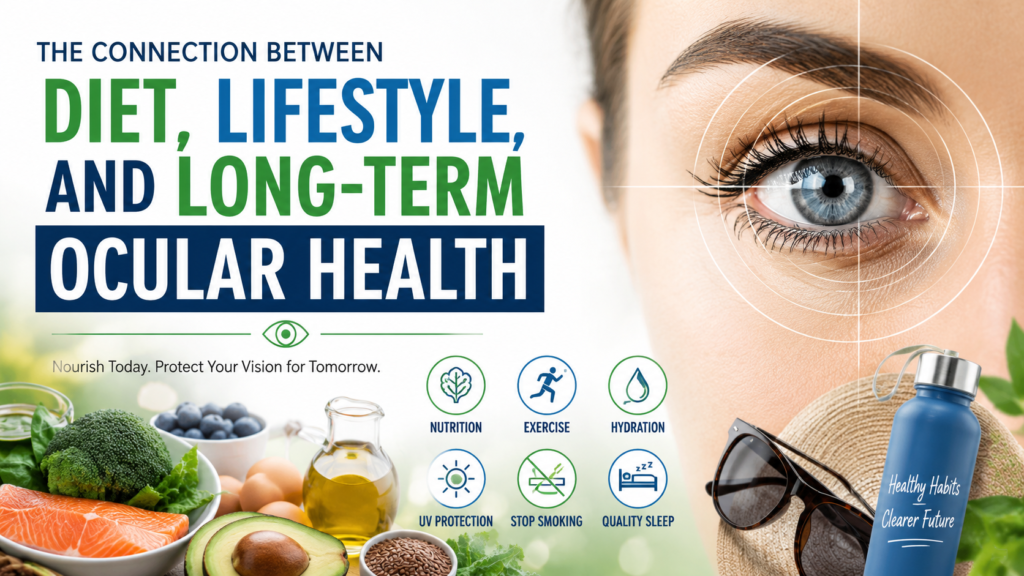
Eating to protect the macula doesn’t require a complicated protocol. It means building meals around foods that actually contain these carotenoids – kale, spinach, broccoli, and eggs – on a regular basis rather than occasionally. Practices like Browns Eye Center can also measure macular pigment density and help you understand where you stand.
Blood Sugar, Insulin, and the Eyes
Diabetic retinopathy causes more new cases of adult blindness globally than any other condition, and it is essentially an outgrowth of long-term glycemic turbulence. If blood sugar remains high for an extended time, it injures the endothelial cells in the smallest blood vessels of the retina. These vessels begin to leak, swell, and close. Neovascular vessels, prone to rupture, form in fragile response. In time, this leads to hemorrhage, retinal detachment, and catastrophic vision loss.
This injury process does not await the diagnosis of diabetes. The retina will typically show subclinical signs of damage during the years when the pre-diabetic state of insulin resistance exists. The continually high levels of both glucose and insulin generated by the high-glycemic processed diet produce low-grade vascular inflammation everywhere, right down to the retinal microvasculature.
Poor blood sugar management is not just a matter of metabolic self-care for many people. It is the primary early-care stage for what becomes an ophthalmologic condition. The glycemic load-reducing, high-protein, high-fiber, minimally processed approach to eating is the fundamental starting point in the effort to reduce the vascular strain that will begin with the retinal capillaries. This is not a different topic. This is the topic.
What Dietary Fat Has To Do With Dry Eye
Long-term dry eye conditions are often reported at optometry clinics and are not solely related to screen exposure or environmental humidity levels. Many cases can be attributed to meibomian gland dysfunction, where the lipid-producing glands in the eyelids do not secrete a healthy, protective oil layer.
In the absence of a proper oil barrier, tears rapidly evaporate, causing irritation. The body’s next response is to overcompensate by producing an abundant aqueous tear layer, resulting in discomfort from inflammation and ocular tissue swelling.
Omega-3 essential fatty acids, eicosapentaenoic acid (EPA), and docosahexaenoic acid (DHA) in cold-water fish, algae oils, flaxseed, and walnuts have been found to directly impact meibomian gland performance, prompting relief from less viscous, fluid-like gland secretions. This improved oil appears to be less prone to stalling, building up, and causing a ruptured meibomian cyst.
A relatively simple but powerful environmental modification that supports healthy gland function is adequate hydration. Tears obviously rely heavily on H2O. Chronic, subclinical dehydration can lead to reduced gland output. Dietary fat quality and quantity together with hydration status can all be easily and cost-effectively targeted for the benefit of dry eye sufferers.
Smoking, UV Exposure, and Accelerated Ocular Aging
Smoking is among the most powerful controllable risk factors for AMD and cataracts. It drains the pool of antioxidants readily available in the bloodstream, constantly injects oxidizing compounds into the tissues of the eye through the bloodstream, and decreases the protective density of pigment in the macula. Smokers are roughly twice as likely to develop AMD as non-smokers, and that risk grows with every year of exposure to smoke.
UV radiation piles on. Cumulative sun exposure without adequate eye protection accelerates cataract formation as the crystalline lens becomes increasingly cloudy over time – if untreated, resulting in significant vision impairment. UV radiation also contributes to macular degeneration through similar oxidative pathways. Wraparound sunglasses with confirmed UV400 blocking lenses aren’t cosmetic – they are protective.
The overlap between UV exposure and smoking can be found in their shared mechanism: both deplete the antioxidants that defend healthy tissue from the regular oxidative burden of simply existing in daylight. Take those defenses away and the tissue ages faster than it should.
Exercise, Intraocular Pressure, and Glaucoma Risk
Glaucoma affects the optic nerve, with elevated intraocular pressure being one of the main risk factors. Intraocular pressure is an indicator of the production and drainage equilibrium of aqueous humor in the eye. Genetic, anatomical, or systemic reasons can lead to an imbalance, causing increased pressure and progressive damage to the optic nerve fibers that connect to the peripheral vision.
Regular aerobic exercise can significantly change intraocular pressure. When engaging in moderate cardiovascular exercises for 30 or more minutes, the intraocular pressure can decrease temporarily and eventually increase the ocular perfusion pressure. The latter is the difference between the blood pressure that reaches the optic nerve and the pressure in the eye that acts against it. A better perfusion can more effectively supply the optic nerve with oxygen. And this structure can’t repair itself when it is damaged.
Exercise also boosts vascular health, decreases systemic inflammation and enhances blood sugar control, which together lead to reducing ocular health risks. Even if the effects on the eyes are not immediate, they are still substantial.
Managing Digital Eye Strain
Extended screen use doesn’t cause irreparable eye damage, but it leads to persistent discomfort for more and more people. The fundamental reason is blinking: people blink much less often when looking at a screen – even about half as much as usual, in some cases – and this breakdown of the normally ample tear film lets the ocular surface dry out.
The 20-20-20 rule provides an easy reset: every 20 minutes, look at something 20 feet away for 20 seconds. This relaxes the ciliary muscles – the muscles within the eye that adjust the focusing ring during near work – and lets the tear film acclimate. Simply taking up conscious blinking, to allow full blinks instead of the partial blinks that increase ocular dryness between breaks, can also help.
The position of the screen matters too. It should be placed slightly below eye level to reduce the size of the lid aperture, slowing the tear evaporation. Similarly, your room lighting should minimize glare and the contrast of the screen against its surroundings in order to reduce the compensating strains that can lead to headache and visual fatigue.
Why Lifestyle Changes Can’t Replace Clinical Care
All the habits discussed above are worth building. But they can’t substitute a full eye check-up. Some of the most severe ocular diseases, such as glaucoma, diabetic retinopathy, early age-related macular degeneration (AMD), and retinal tears cause no symptoms in the early stages. By the time you notice a problem with your vision, the damage – and the missed opportunity for slowing or stopping it – is already significant.
No dietary habit provides an early warning sign for elevated intraocular pressure (IOP). No amount of omega-3 fatty acid can help you see a retinal detachment, especially when your brain is working hard to avoid seeing it.
Lifestyle and dietary habits contribute to overall good ocular health and create favorable conditions from which treatment can work more effectively. But clinical oversight sooner or later catches what your habits miss. This means finding a practice you trust to provide your full check-up becomes the key to successful results.
The Eyes As A Long-Term Investment
Simple decisions protect your eyes. Nothing exotic or complex. Healthy blood sugar, a diet rich in real sources of lutein and omega-3, regular cardio exercise, UV protection, not smoking, and an annual medical check-up – these are the building blocks of a well-run life. What’s interesting is what happens to the eyes. They are among the most reliable beneficiaries. They live downstream from every systemic decision you make, and they reflect the outcome of those decisions with exceptional fidelity. Get the system right, and the eyes often take care of themselves.