Air caster systems offer a smart way to move very heavy loads with minimal effort. These systems create a thin layer of air under the load so it floats just above the floor. This makes it easy to push or pull even massive equipment in any direction. In this guide, we break down the main parts of an air caster system and explain how each one works. Understanding these components helps you choose and use the right setup for your factory or workshop.
What Is an Air Caster System?
An air caster system uses compressed air to lift and move heavy machines smoothly. Unlike wheels or skates that roll, air casters float the load on air. This reduces friction almost to zero, so one or two people can move loads that weigh many tons.
These systems work best on smooth, flat floors like sealed concrete. You find them in manufacturing plants, airplane assembly areas, and large warehouses where heavy equipment needs frequent repositioning. The system is quiet, clean, and does not mark the floor.
Main Components of the Air Caster System
Every air caster system has several key parts that work together. Let us look at each one in detail.
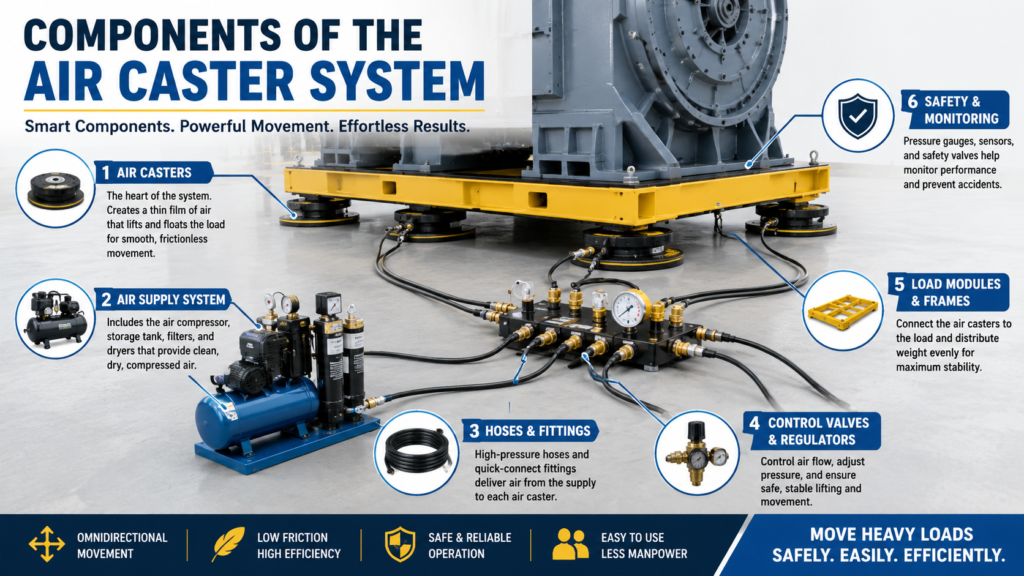
Air Casters
The air casters are the heart of the system. These are round or square pads that sit under the load. Each caster has a special membrane or flexible skirt that holds the compressed air and creates the lifting effect.
When air flows into the caster, it escapes through small holes or around the edges in a controlled way. This forms a thin air film, usually less than one millimeter thick, that lifts the load slightly off the ground. Good air casters can support several tons each. Most systems use four, six, or more casters depending on the total weight.
The material of the caster skirt is important. It needs to be strong and flexible to seal well against the floor while allowing air to flow. Some casters work on slightly uneven surfaces, but smooth floors always give the best results.
Air Supply System
Compressed air is what makes everything work. The air supply system usually starts with an air compressor. This machine takes in regular air and presses it into a tank at high pressure.
From the tank, air travels through hoses to the casters. The compressor must provide enough volume and pressure for all the casters at the same time. Many systems use industrial compressors that can run continuously during long moves.
Filters and dryers are also part of the air supply. They remove water and dirt from the air so the casters stay clean and work properly. Clean, dry air prevents damage and keeps the system reliable.
Hoses and Fittings
Strong hoses carry the compressed air from the compressor to the casters. These hoses need to be flexible enough to move with the load but tough enough to handle high pressure without leaking.
Quick-connect fittings make it easy to attach and remove hoses. Manifolds are central distribution points that split the air flow evenly to multiple casters. Good manifolds help balance the air so the load stays level and moves smoothly.
Control Valves and Regulators
Control valves let you turn the air on and off and adjust the pressure. Simple systems may have one main valve, while advanced setups use separate controls for each caster or group of casters.
Pressure regulators keep the air at the right level. Too much pressure wastes air, while too little may not lift the load properly. Some systems include gauges so you can see the pressure at a glance.
Many modern air caster systems have remote controls or foot pedals. This allows the operator to manage the air flow from a safe distance while guiding the load.
Load Modules and Frames
The load modules connect the air casters to the actual machine or equipment. These are sturdy frames or platforms that spread the weight evenly across all the casters.
Some modules are simple plates, while others have adjustable height or swivel features. This helps when the floor is not perfectly level or when the machine has an uneven base.
For very heavy loads, companies often use modular frames that can be arranged in different patterns. This flexibility lets one system handle many different types of equipment.
Safety and Monitoring Features
Good systems include safety components. Pressure sensors can alert you if air flow drops too low. Automatic shut-off valves protect against sudden leaks.
Some setups have load level indicators or warning lights. These features help prevent accidents and make the operation safer for everyone nearby.
How the Components Work Together
The process is straightforward. First, you position the air casters and load modules under the machine. Next, you connect the hoses and turn on the compressor. Air flows through the hoses and regulators into the casters.
As pressure builds, the load lifts slightly. The operator then guides the floating load to its new position. When the move is complete, the air is turned off and the load settles back down safely.
Each component plays a clear role. The casters provide the lift, the air supply delivers power, the controls manage the flow, and the frames support the weight.
Advantages of Using Air Caster Systems
Air casters move in every direction, including sideways and diagonally. This omnidirectional movement is very useful in crowded factory floors where turning space is limited.
Because there is almost no friction, heavy loads move with very little force. This reduces the need for large teams and heavy machinery like cranes or forklifts. The system also causes less wear on floors compared to wheeled systems.
Common Applications
Many industries use air caster systems. In the aerospace sector, teams move large aircraft parts with precision. Automotive plants use them to reposition assembly equipment. Heavy machinery manufacturers rely on them for installing and moving large presses and lathes.
Maintenance departments like these systems because they can lift and shift machines for repairs without much disassembly. The clean operation also makes them suitable for sensitive environments.
Choosing and Maintaining Your System
When selecting an air caster system, consider the total weight of your loads and add a safety margin. Check your floor condition carefully because smooth, non-porous surfaces work best.
Think about how often you will use the system. Smaller portable setups may suit occasional moves, while larger integrated systems fit daily operations.
Maintenance is usually simple. Check hoses for wear, keep filters clean, and inspect caster skirts regularly. Store components properly when not in use to protect them from damage.
For more information on quality moving equipment, visit cargotrolley.com.
Tips for Safe Operation
Always inspect all components before starting a move. Make sure the path is clear and use spotters for large loads. Start with lower pressure to check balance, then increase as needed.
Train your team on proper setup and air control. Good communication during the move keeps everyone safe. Follow the manufacturer’s guidelines for pressure and load limits.
Common Issues and Solutions
Sometimes air leakage occurs if the floor is dirty or the caster skirt is worn. Regular cleaning and timely replacement of parts solve most problems. Uneven lifting usually means an issue with air distribution, which valves and manifolds can correct.
Having spare hoses and basic tools on hand helps you handle small issues quickly without stopping work.
If you want to learn even more details, check out this helpful resource on the air skate transport system.
Final Thoughts
The components of the air caster system work together to create an efficient and gentle way to move heavy loads. From the air casters themselves to the hoses, controls, and frames, each part has a clear job that contributes to smooth operation.
Understanding these parts helps you make better decisions when buying or using the equipment. With proper setup and care, an air caster system can serve your business for many years while making heavy moves safer and easier.
Take time to match the system size and features to your specific needs. When used correctly, these systems improve productivity and reduce physical strain on your team. Start with the basics covered in this guide and build your knowledge through practical experience on the job.