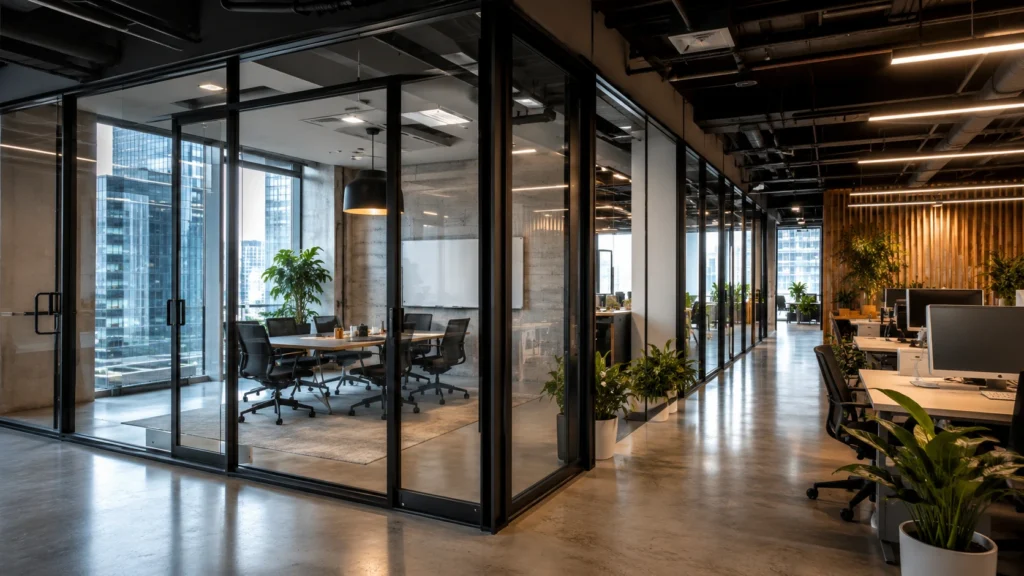
Walk into any forward-thinking office, retail space, or hospitality venue today, and one element tends to stand out immediately: glass. From floor-to-ceiling windows that frame city skylines to interior partitions that define collaborative zones without closing them off, glass has become one of the most powerful tools in contemporary commercial design. What was once considered a purely functional building material has evolved into a strategic asset that shapes how people feel, work, and interact within a space. Understanding why this shift is happening, and what it means for business owners and facility managers, is increasingly important in a competitive real estate landscape.
The Science Behind Natural Light and Workplace Productivity
One of the most compelling reasons businesses are investing in glass-forward design is the growing body of evidence linking natural light exposure to employee wellbeing and performance. Workers who have access to daylight during their shifts report better sleep, improved mood, and higher levels of alertness throughout the day. These are not minor quality-of-life improvements. They translate directly into measurable outcomes: reduced absenteeism, higher retention rates, and stronger overall productivity. According to Harvard Business Review, access to natural light is consistently ranked among the top factors employees consider when evaluating workplace satisfaction, often outranking perks like on-site gyms or subsidized meals. Architects and interior designers have taken this research seriously, and the result is a widespread move toward maximizing glazed surfaces in commercial construction and renovation projects.
Glass as a Tool for Spatial Flexibility
Beyond its relationship with light, glass has become a go-to solution for businesses that need their spaces to do more than one thing. The modern workplace is rarely static. A conference room that serves ten people in the morning may need to function as a training space for forty in the afternoon. Glass partition systems, sliding glass walls, and frameless interior panels allow organizations to reconfigure their layouts without the cost and disruption of traditional construction. These systems create clear visual boundaries while maintaining an open, connected atmosphere that encourages communication and transparency, both literally and culturally. For retail environments, glass storefronts and interior display cases do double duty, protecting merchandise while inviting customers deeper into the shopping experience. The versatility of glass as a spatial element is one of the primary reasons it has become so central to commercial interior strategy.
Energy Efficiency and Sustainable Building Practices
There is a common misconception that more glass means higher energy costs. In reality, advances in glazing technology have made modern commercial glass one of the most energy-efficient choices available to building owners. Low-emissivity coatings, insulated glass units, and thermally broken framing systems work together to minimize heat transfer, reduce solar gain in warmer months, and retain warmth during colder periods. When specified and installed correctly, high-performance glazing can significantly reduce a building’s reliance on artificial heating and cooling systems. This is particularly relevant for businesses pursuing LEED certification or other green building standards, where glazing performance plays a meaningful role in scoring. Partnering with experienced commercial glass services ensures that the right products are selected for a building’s specific orientation, climate, and usage patterns, which is essential for achieving both performance and sustainability goals.
Safety, Security, and Code Compliance
Commercial glass installations are subject to a range of safety and building code requirements that vary by jurisdiction, occupancy type, and application. Tempered glass, laminated glass, and impact-resistant glazing systems each serve specific protective functions, and selecting the wrong product for a given application can create serious liability risks. In high-traffic areas such as lobbies, storefronts, and stairwells, glass must meet strict impact resistance standards to protect occupants in the event of accidental breakage or forced entry. Security glazing is also an increasingly important consideration for businesses that handle sensitive information, valuable inventory, or serve vulnerable populations. Beyond physical safety, proper glazing installation also plays a role in fire-rated assemblies, where tested and certified products must be used to maintain the integrity of fire barriers within a building. Working with qualified professionals who understand these requirements is not optional. It is a fundamental part of responsible facility management.
Aesthetic Identity and Brand Expression Through Glass
In a competitive market, the physical environment of a business communicates something important about the brand behind it. Glass offers a level of design flexibility that few other materials can match. It can be etched, frosted, tinted, printed with custom graphics, or combined with metal and wood to create a look that is entirely unique to a particular organization. For hospitality brands, a dramatic glass facade or a light-filled atrium signals openness and luxury. For tech companies, clean glass partitions and open floor plans reinforce a culture of transparency and innovation. Even in more traditional industries, thoughtful use of glass can modernize a space and signal that an organization is forward-thinking and invested in its people. This is why glass design decisions are increasingly being made at the brand strategy level, not just by contractors or facilities teams. The material has become a genuine tool of identity.
Commercial Renovation and Modern Glass Design
For businesses planning a commercial renovation, modern glass design can be an effective way to update an existing workplace without completely changing its character. Glass partitions, upgraded storefronts, interior glazing, and improved windows can make older commercial spaces feel brighter, more open, and more functional. A well-planned renovation can also improve natural light, energy efficiency, privacy, and the overall appearance of the workplace. By incorporating modern glazing solutions into a commercial renovation project, business owners can create a more welcoming environment for employees, customers, and visitors while supporting the long-term functionality of the property.
Glass has moved well beyond its origins as a simple barrier against the elements. Today it is a design language, a performance system, and a statement of values. For businesses planning new construction, renovation, or even a modest refresh of an existing space, the strategic use of glass deserves serious consideration. The benefits, from improved employee wellbeing and spatial flexibility to energy savings and brand expression, are well documented and increasingly accessible to organizations of all sizes. As glazing technology continues to advance and design expectations continue to rise, the businesses that invest thoughtfully in their glass environments will be better positioned to attract talent, impress clients, and operate more efficiently for years to come.
For more information visit this E find anything