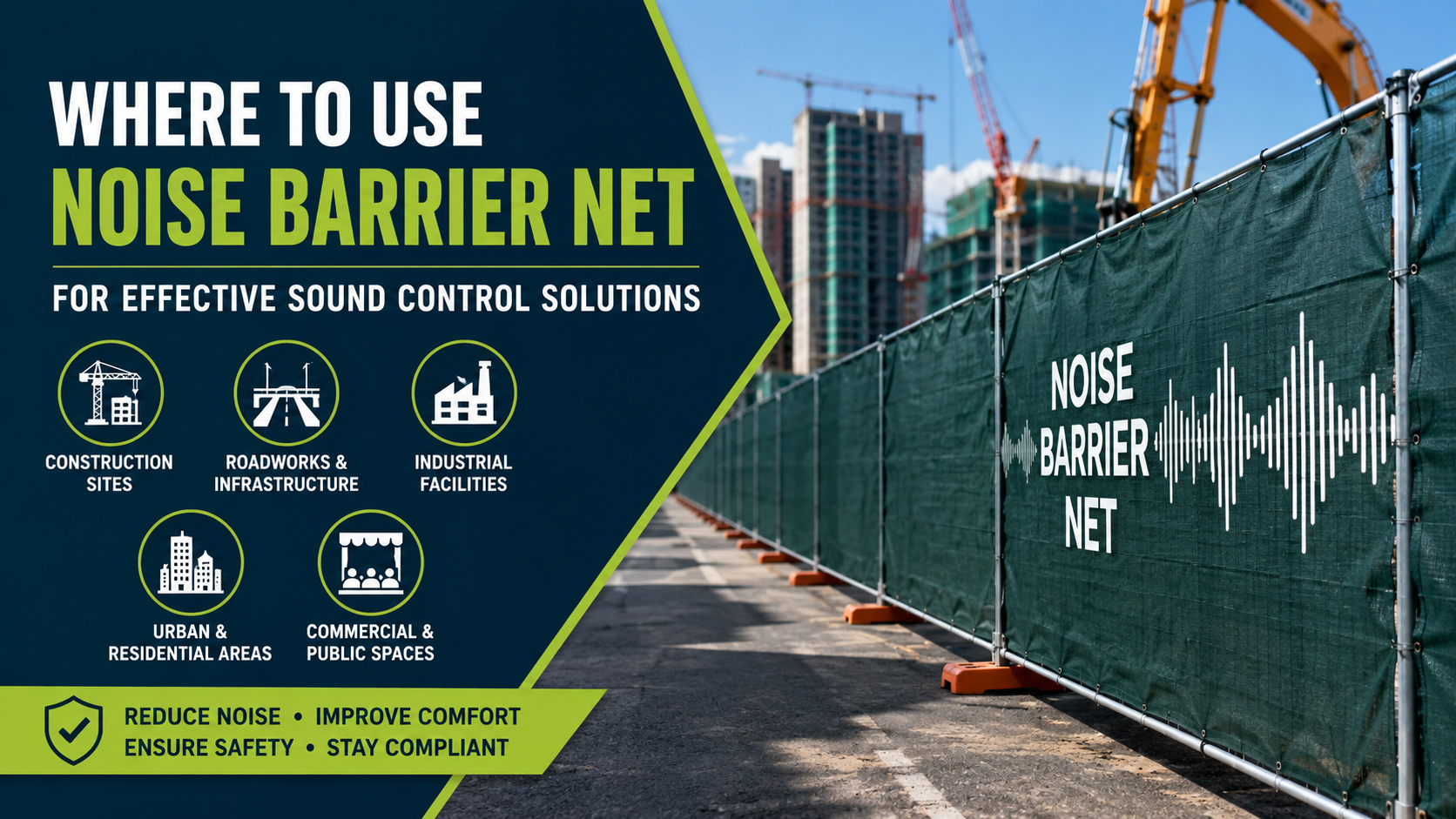
A barrier sheet or noise barrier net is commonly used in environments where controlling sound transmission is necessary for safety, comfort, and productivity. In urban and industrial settings, noise control has become increasingly important due to traffic congestion, construction activities, and dense building layouts.
A barrier sheet works by reducing the transmission of airborne noise from a source to surrounding areas. It is often installed as a temporary or semi-permanent solution in sites that require flexible and effective sound reduction. Understanding where and when to use a barrier sheet helps ensure better noise management outcomes across different environments.
Construction Sites and Outdoor Work Areas
One of the most common applications of a barrier sheet is in construction environments. Construction activities generate high levels of noise from equipment such as jackhammers, excavators, drilling machines, and material handling operations.
When installed around scaffolding, perimeter fencing, or work zones, a barrier sheet helps reduce the spread of noise to surrounding residential or commercial areas.
Key benefits include:
- Reducing disturbance to nearby residents
- Minimizing complaints from surrounding businesses
- Helping maintain compliance with noise regulations
- Improving working conditions within the site
Barrier sheets are particularly useful in urban construction projects where buildings are located close together and noise reflection can intensify sound levels.
Roadworks and Infrastructure Projects
Barrier sheets are also widely used in road construction and infrastructure maintenance projects. These sites often operate near active traffic, residential communities, or commercial districts.
In these settings, barrier sheets help:
- Reduce traffic noise exposure to workers
- Minimize disruption to nearby pedestrians and buildings
- Improve safety by creating a clearer boundary around work areas
- Support phased construction activities along road corridors
Because road projects are often temporary and mobile, barrier sheets provide a flexible solution that can be installed and repositioned as work progresses.
Industrial Facilities and Manufacturing Plants
Industrial environments often involve continuous machine operation, which can produce high levels of noise over long periods.
Barrier sheets are used in these facilities to:
- Contain machinery noise within designated zones
- Reduce noise exposure for workers in adjacent areas
- Improve occupational health and safety conditions
- Support compliance with workplace safety standards
They are commonly installed around production lines, loading bays, and heavy equipment zones where sound control is necessary without building permanent acoustic structures.
Residential and Urban Areas
In dense urban environments, barrier sheets are sometimes used to reduce noise impact from nearby highways, rail lines, or construction developments.
They can be installed along:
- Temporary fencing
- Site perimeters
- Boundary walls
In these situations, barrier sheets help create a buffer between noise sources and living spaces, improving overall comfort for residents. They are especially useful during nearby construction projects that may last several months.
Commercial and Public Spaces
Barrier sheets can also be applied in commercial and public environments where temporary noise control is required.
Examples include:
- Outdoor events and exhibitions
- Temporary staging areas
- Markets and pop-up installations
- Renovation works in shopping areas
In these cases, barrier sheets help manage sound levels while maintaining a functional and accessible environment for the public.
Material Characteristics of Barrier Sheets
The effectiveness of a barrier sheet depends largely on the materials used in its construction. Most modern noise barrier systems combine multiple layers designed to block, absorb, and reduce sound transmission.
Dense Acoustic Layers
Many barrier sheets include dense materials such as mass-loaded vinyl or similar composites. These materials add weight and help block airborne sound from passing through the barrier.
They are effective in reducing mid to high-frequency noise commonly found in urban environments.
Absorptive Layers
Some barrier systems incorporate absorptive materials that help reduce sound reflection. These materials work by trapping sound energy and reducing echo effects, especially in enclosed or semi-enclosed construction areas.
Reinforced Outdoor Fabric
Barrier sheets are often designed with weather-resistant outer layers. These provide durability against:
- Rain and moisture
- UV exposure
- Wind pressure
- Dust and debris
This makes them suitable for long-term outdoor use in varying environmental conditions.
Installation Flexibility and Practical Use
One of the main advantages of barrier sheets is their flexibility. They can be installed quickly on temporary fencing systems, scaffolding, or structural frames without the need for permanent construction.
They are commonly used in projects where conditions change frequently, allowing contractors to:
- Relocate sections as work progresses
- Adjust coverage areas based on noise sources
- Combine with other site safety barriers
- Remove and reuse materials across multiple projects
This adaptability makes barrier sheets a practical choice for dynamic worksites.
Frequently Asked Questions
Where are barrier sheets most effective?
Barrier sheets are most effective in construction sites, roadworks, industrial facilities, and urban areas where temporary noise control is required.
Do barrier sheets completely block noise?
No. Barrier sheets reduce noise levels significantly but do not completely eliminate sound. Their effectiveness depends on material density, installation method, and site conditions.
Are barrier sheets weather-resistant?
Yes. Most barrier sheets used outdoors are designed to withstand rain, sunlight, wind, and general environmental exposure.
Can barrier sheets be reused?
Yes. Many barrier sheet systems are designed for multiple uses and can be relocated to different sites depending on project needs.
You have not enough Humanizer words left. Upgrade your Surfer plan.