
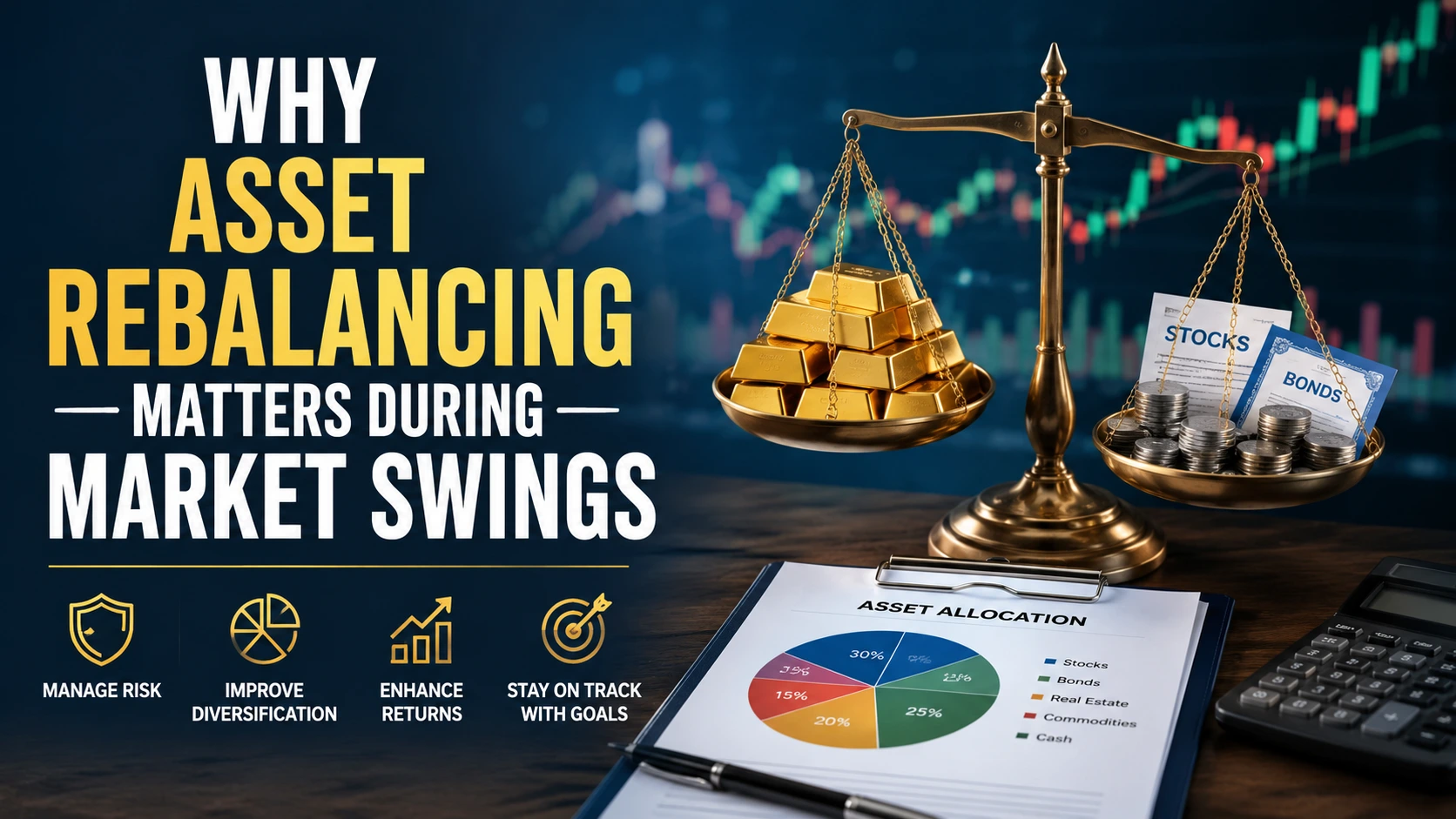

Market swings can test even well-planned investment strategies. When prices move sharply, the mix of assets in a portfolio can shift away from its intended structure, increasing risk or reducing exposure to areas with long-term value. Asset rebalancing helps investors bring their portfolio back into line with their objectives, rather than allowing short-term market movements to dictate the level of risk they are taking.
Keeps Portfolio Risk Under Control
One of the main reasons asset rebalancing matters during market swings is that volatility can quickly change the balance of a portfolio. If one asset rises strongly while another falls, the investor may end up with far more exposure to a single market than originally intended.
For example, if gold performs strongly during a period of uncertainty, it may become a larger share of a precious metals portfolio than planned. Reviewing allocations through structured options such as Auctus Metal Portfolios can help investors think more carefully about how different metals fit within a broader investment strategy.
Rebalancing does not mean reacting emotionally to every price movement. It means checking whether the portfolio still reflects the investor’s risk tolerance, time horizon and financial goals.
Helps Investors Avoid Emotional Decisions
Market swings often lead to emotional investing. Rising prices can create fear of missing out, while falling prices can lead to panic selling. Both reactions can damage long-term outcomes because they are driven by short-term sentiment rather than strategy.
Rebalancing introduces discipline. Instead of chasing assets that have already risen or abandoning assets that have temporarily fallen, investors follow a structured process. This can be especially useful in precious metals markets, where prices may respond to inflation concerns, interest rate expectations, currency movements and geopolitical uncertainty.
A disciplined approach encourages investors to assess value, exposure and risk more clearly. It also helps reduce the chance of making decisions based only on recent headlines.
Supports Better Diversification
Diversification is one of the key reasons investors include precious metals in a portfolio. Gold, silver, platinum, palladium and rhodium can behave differently depending on economic conditions, industrial demand and market confidence.
During periods of volatility, those differences can become more obvious. Gold may attract attention as a defensive asset, while platinum and palladium can be influenced by industrial use, particularly in automotive and manufacturing sectors. Silver can sit between the two, with both investment and industrial characteristics.
Rebalancing helps maintain an appropriate spread across assets. Rather than relying too heavily on one metal, investors can review whether their holdings still provide the mix of stability, growth potential and market exposure they originally wanted.
Locks In Gains Without Guessing The Market
Rebalancing can also help investors take profits in a measured way. When one asset has risen sharply, reducing its allocation back to target levels may lock in some gains without requiring the investor to predict the exact top of the market.
This is different from market timing, which involves trying to buy or sell based on short-term price forecasts. Rebalancing is more systematic. It focuses on whether the current portfolio mix still makes sense, not on guessing where prices will move next.
This approach can be particularly useful during uncertain markets. It gives investors a framework for making adjustments while avoiding the pressure of trying to make perfect entry or exit decisions.
Keeps Long-Term Goals In Focus
A portfolio should reflect an investor’s broader financial goals, not just current market conditions. Market swings can make short-term performance feel more important than it really is, especially when prices move quickly.
Rebalancing helps bring attention back to the original purpose of the investment. For some investors, precious metals may provide a hedge against inflation. For others, they may offer diversification outside traditional shares, property or cash. The right balance depends on the investor’s goals, risk profile and expected holding period.
By reviewing the portfolio regularly, investors can make sure temporary volatility does not push them into a position that no longer suits their needs.
A Steadier Way Through Volatile Markets
Asset rebalancing matters during market swings because it brings structure to uncertain conditions. It helps control risk, supports diversification, reduces emotional decision-making and keeps the portfolio aligned with long-term objectives. For investors considering precious metals, regular rebalancing can be an important part of maintaining a clearer, more disciplined investment strategy through both rising and falling markets.