
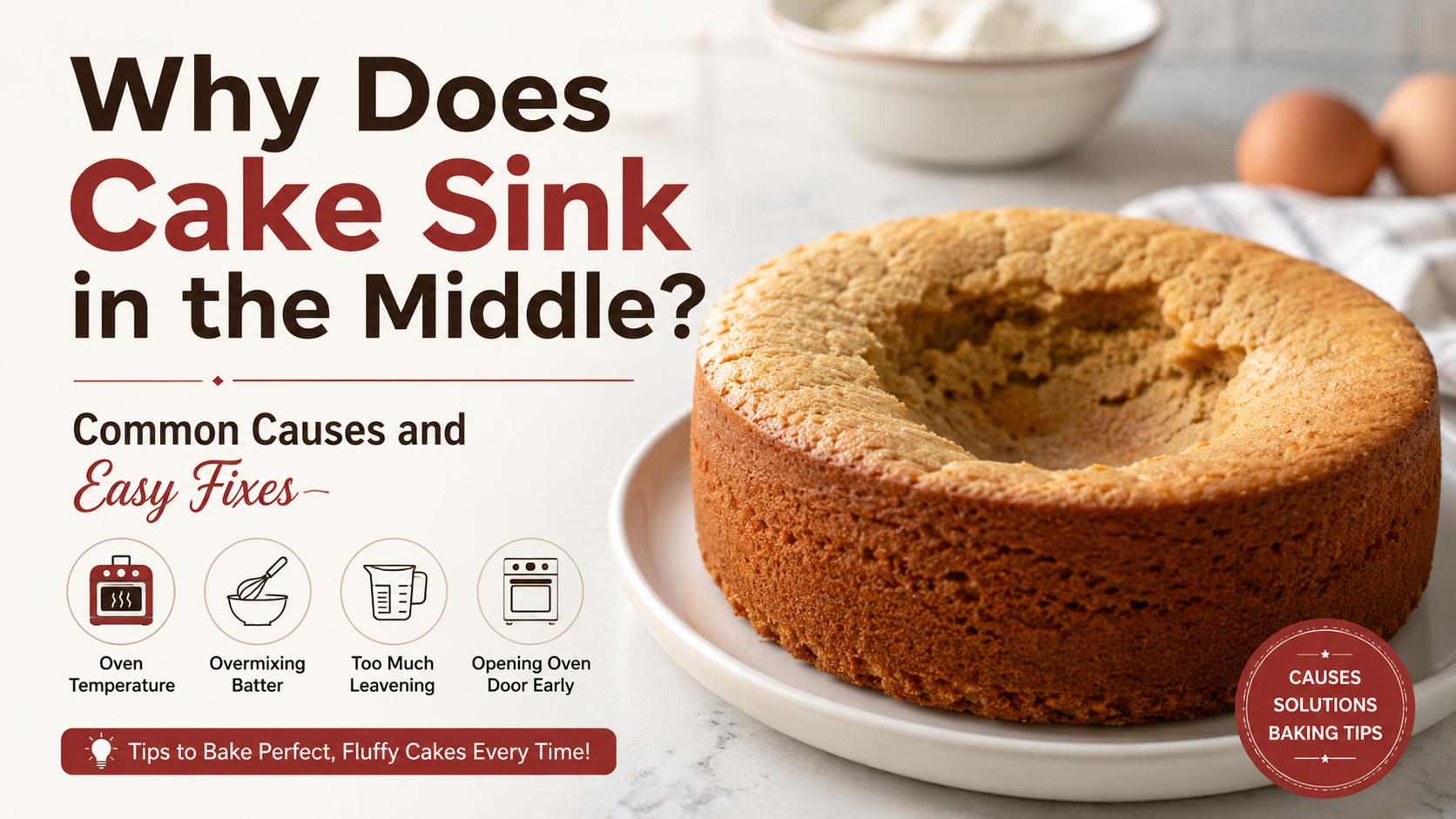
Have you ever baked a cake that looked perfect in the oven, only to discover the center had collapsed after cooling? If you’re wondering why does cake sink in the middle, you’re not alone. This is one of the most common baking problems beginners and even experienced bakers face.
A sinking cake can happen for several reasons, including incorrect oven temperature, overmixing the batter, opening the oven door too early, or using too much baking powder. The good news is that most of these issues are easy to fix once you understand what causes them.
In this guide, we’ll explain why cakes sink in the middle, how to prevent it, and tips for baking perfectly fluffy cakes every time.
What Does It Mean When a Cake Sinks in the Middle?
A cake sinks in the middle when the structure of the cake is too weak to support itself after rising. During baking, heat causes the batter to expand and rise. If the cake hasn’t fully set before losing heat or structure, the center collapses.
This usually results in:
- A dip or crater in the center
- Gooey or undercooked middle
- Dense texture
- Uneven cake layers
Understanding the cause is the first step toward fixing the problem.
Common Reasons Why Cake Sinks in the Middle
1. The Cake Is Undercooked
One of the biggest reasons cakes sink is that the center is not fully baked. The outside may look done, but the middle remains soft and unstable.
When you remove the cake too early, the structure collapses as it cools.
How to Fix It
- Use a toothpick to test the center
- Bake until the toothpick comes out clean
- Avoid guessing baking time
2. Opening the Oven Door Too Early
Opening the oven door before the cake has fully set can cause a sudden drop in temperature. This interrupts the baking process and may make the center collapse.
This is especially common with sponge cakes and cheesecakes.
How to Fix It
- Avoid opening the oven during the first 75% of baking time
- Use the oven light instead of opening the door
- Check the cake only near the end
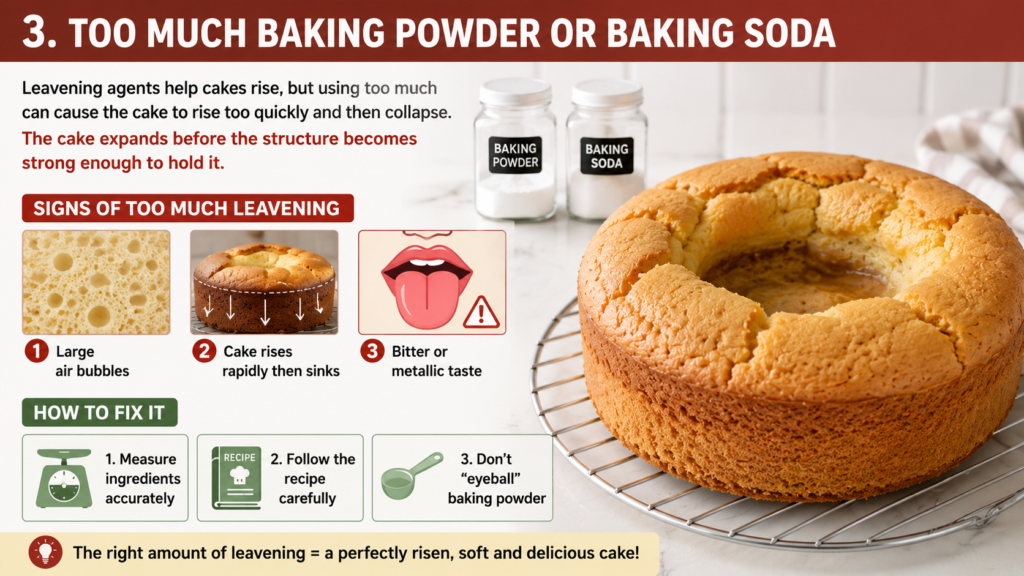
3. Too Much Baking Powder or Baking Soda
Leavening agents help cakes rise, but using too much can cause the cake to rise too quickly and then collapse.
The cake expands before the structure becomes strong enough to hold it.
Signs of Too Much Leavening
- Large air bubbles
- Cake rises rapidly then sinks
- Bitter or metallic taste
How to Fix It
- Measure ingredients accurately
- Follow the recipe carefully
- Don’t “eyeball” baking powder
4. Overmixing the Batter
Overmixing adds too much air into the batter and develops excess gluten. This can create a weak cake structure that rises unevenly and sinks after baking.
How to Fix It
- Mix until ingredients are just combined
- Use low speed when adding flour
- Avoid excessive stirring
5. Incorrect Oven Temperature
If the oven temperature is too high, the outside of the cake cooks faster than the center. The middle stays undercooked while the top looks finished.
If the temperature is too low, the cake may never properly set.
How to Fix It
- Use an oven thermometer
- Preheat the oven fully
- Follow recommended baking temperatures
6. Too Much Liquid in the Batter
Adding too much milk, water, oil, or other liquids can make the batter too heavy and unstable.
This prevents the cake from setting properly in the middle.
How to Fix It
- Measure liquids carefully
- Avoid altering recipes too much
- Use proper measuring cups
7. Expired Baking Ingredients
Old baking powder or baking soda may not work correctly, causing uneven rising and sinking.
How to Check Freshness
- Baking powder should fizz in hot water
- Baking soda should bubble in vinegar
Replace ingredients regularly for better baking results.
8. Removing the Cake Too Quickly
Sudden temperature changes can shock the cake and cause collapse.
How to Fix It
- Let the cake cool gradually
- Leave it in the oven for a few minutes after turning off heat
- Avoid placing hot cake in cold areas immediately
How to Prevent a Cake From Sinking
Here are some simple baking tips to prevent sinking cakes:
Measure Ingredients Properly
Use measuring cups and spoons instead of estimating.
Preheat the Oven
Always bake in a fully heated oven.
Follow the Recipe
Changing ingredient amounts can affect cake structure.
Don’t Overmix
Mix gently for a soft and stable cake.
Check Doneness Carefully
Use a toothpick or cake tester before removing the cake.
Use the Correct Pan Size
A pan that’s too small or too large can affect baking.
Can You Fix a Sunken Cake?
Yes! Even if your cake sinks, it can still taste delicious.
Here are a few ways to save it:
- Cover the center with frosting
- Add whipped cream or fruit
- Turn it into cake pops
- Use it for trifles or layered desserts
A sunken cake is often still perfectly edible.
Why Does Cake Sink in the Middle After Baking?
Sometimes a cake looks fine in the oven but sinks while cooling. This usually means the structure wasn’t fully set.
Common causes include:
- Underbaking
- Too much moisture
- Rapid cooling
- Excess leavening
Allowing the cake to bake fully and cool slowly can help prevent this issue.
Best Cakes That Commonly Sink
Some cake types are more likely to sink because they are delicate or moist.
These include:
- Cheesecake
- Sponge cake
- Angel food cake
- Molten lava cake
- Flourless chocolate cake
Careful baking techniques are especially important for these recipes.
Conclusion
If you’ve been asking why does cake sink in the middle, the answer usually comes down to baking technique, ingredient balance, or oven temperature. Common causes include underbaking, overmixing, opening the oven door too early, and using too much baking powder.
Fortunately, most sinking cake problems are easy to prevent with proper measuring, careful mixing, and accurate baking times. With a little practice, you can bake light, fluffy cakes that stay perfectly risen every time.
Frequently Asked Questions (FAQ)
Why does my cake sink after taking it out of the oven?
This usually happens because the center is undercooked or the cake cools too quickly.
Can overmixing cause cakes to sink?
Yes. Overmixing weakens the cake structure and may lead to collapsing.
Why is my cake raw in the middle?
Your oven temperature may be too high, or the cake may need more baking time.
Does opening the oven door make cakes sink?
Yes. Sudden temperature drops can cause cakes to collapse before fully setting.
Can I still eat a cake that sank in the middle?
Absolutely. Most sunken cakes are safe and delicious to eat.