


Choosing the right senior living community is one of the most important decisions families make for aging loved ones. Whether you are planning ahead for yourself or helping a parent transition into supportive housing, understanding how to choose a senior living community ensures comfort, safety, and long-term well-being. With many housing options available today, knowing what to evaluate can help you make a confident and informed choice.
This comprehensive guide explains the types of senior communities, what to look for during visits, how costs work, and the most important questions to ask before making a final decision.
What Is a Senior Living Community?
A senior living community is a residential environment designed specifically for older adults who want varying levels of independence, assistance, or medical support. These communities provide safe housing, social engagement opportunities, dining services, and access to healthcare depending on the type selected.
Unlike traditional housing, senior living communities are structured to support aging residents through changing physical, emotional, and lifestyle needs.
Types of Senior Living Communities
Understanding available housing options is the first step in learning how to choose a senior living community that matches lifestyle needs.
Independent Living Communities
Independent living communities are ideal for active seniors who want a maintenance-free lifestyle while enjoying social activities, dining options, and transportation services. Medical care is usually not included but may be available nearby.
Assisted Living Communities
Assisted living communities help residents with daily activities such as dressing, bathing, medication reminders, and meal preparation while maintaining independence.
Memory Care Communities
Memory care communities specialize in supporting individuals living with Alzheimer’s disease or other forms of dementia. These communities provide secure environments and trained staff supervision.
Skilled Nursing Facilities
Skilled nursing facilities provide 24-hour medical care for seniors recovering from surgery, illness, or chronic health conditions requiring ongoing monitoring.
Continuing Care Retirement Communities (CCRCs)
Continuing care retirement communities allow residents to transition between independent living, assisted living, and skilled nursing as needs change over time.
Signs It May Be Time to Consider Senior Living
Families often begin researching housing options when everyday routines become difficult or unsafe. Some common indicators include:
- Frequent falls or mobility challenges
- Difficulty managing medications
- Isolation or loneliness
- Declining personal hygiene
- Memory loss affecting daily life
- Challenges maintaining household responsibilities
Recognizing these signs early makes the transition smoother and less stressful.
How to Choose a Senior Living Community Step by Step
When evaluating housing options, following a structured approach makes decision-making easier.
1. Identify Care Needs
Start by assessing whether the senior needs independent living, assistance with daily activities, or specialized medical support. Choosing the correct care level prevents unnecessary relocation later.
2. Consider Location and Accessibility
Proximity to family members, hospitals, shopping centers, and transportation services improves quality of life. Many families prioritize communities within short driving distance for frequent visits.
3. Evaluate Staff Qualifications
Professional caregivers play a major role in resident well-being. Ask about staff certifications, training programs, and staff-to-resident ratios.
4. Review Safety and Security Features
A high-quality community should include emergency response systems, secure entrances, fall-prevention designs, and 24-hour supervision when necessary.
5. Explore Social and Recreational Activities
Strong activity programs help residents maintain mental health and emotional well-being. Look for communities offering group fitness classes, hobby workshops, educational events, and social gatherings.
6. Inspect Dining Services
Nutrition plays a critical role in healthy aging. Ask about menu variety, dietary accommodations, and meal scheduling flexibility.
7. Check Cleanliness and Maintenance Standards
Well-maintained living spaces reflect strong management practices and contribute to resident comfort and safety.
8. Read Reviews and Speak with Residents
Current residents and their families often provide honest insights into daily life within the community.
9. Compare Costs and Contract Details
Understanding pricing structures helps avoid unexpected expenses later.
10. Visit Multiple Communities Before Deciding
Comparing several communities allows families to identify the environment that feels most welcoming and supportive.
Questions to Ask When Touring a Senior Living Community
- What services are included in monthly fees?
- How are medical emergencies handled?
- What staff training programs are required?
- Are personalized care plans available?
- How often are recreational activities scheduled?
- Can residents transition to higher care levels if needed?
- Are transportation services provided?
- What security measures protect residents?
Asking these questions ensures transparency and helps families compare communities effectively.
Understanding the Cost of Senior Living Communities in the USA
Costs vary depending on location, services provided, and level of care required. Independent living communities generally have lower monthly fees compared to assisted living or skilled nursing facilities.
Typical pricing factors include:
- Apartment size and layout
- Meal plans
- Medical support services
- Transportation availability
- Recreational programming
- Personal care assistance
Some communities charge entrance fees, while others operate on monthly rental agreements.
What to Look for in Assisted Living Communities
When evaluating assisted living options specifically, focus on staff responsiveness, personalized care planning, medication management support, and accessibility features such as handrails and wheelchair-friendly layouts.
Comfortable common areas and opportunities for social interaction also contribute to a positive living experience.
Checklist for Choosing the Right Senior Living Community
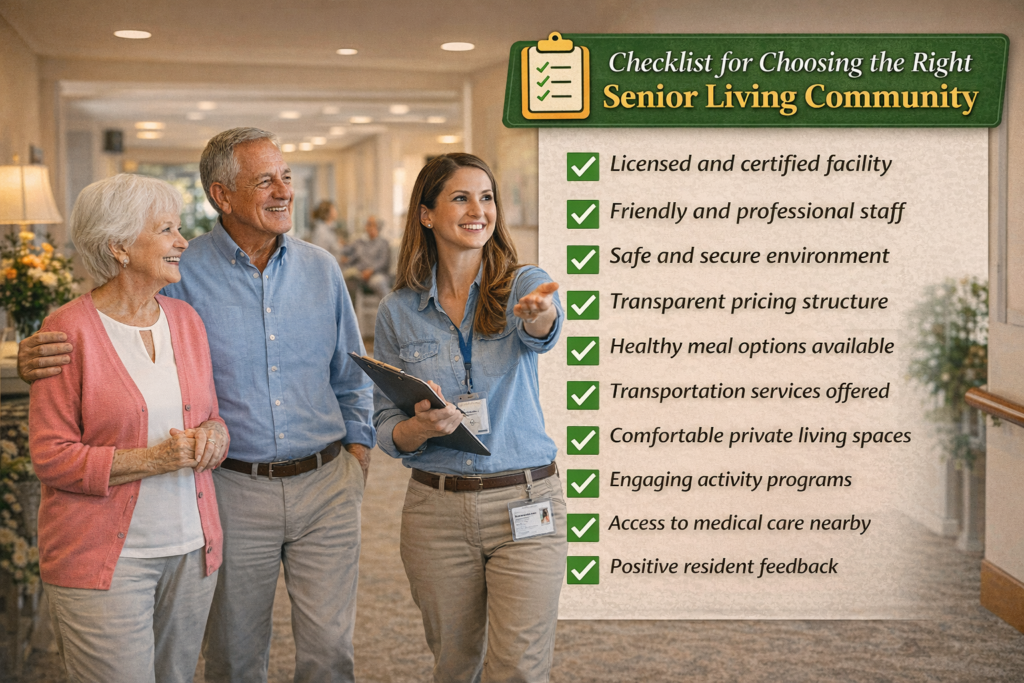
Use this checklist while touring potential communities:
- Licensed and certified facility
- Friendly and professional staff
- Safe and secure environment
- Transparent pricing structure
- Healthy meal options available
- Transportation services offered
- Comfortable private living spaces
- Engaging activity programs
- Access to medical care nearby
- Positive resident feedback
Mistakes to Avoid When Choosing a Senior Living Community
Families sometimes rush decisions during stressful situations. Avoid these common mistakes:
- Choosing based only on cost
- Skipping in-person tours
- Ignoring contract details
- Overlooking future care needs
- Not involving the senior in decisions
Careful planning ensures long-term satisfaction and comfort.
Benefits of Moving Into a Senior Living Community
Many seniors experience improved quality of life after relocating to supportive housing environments.
- Reduced household responsibilities
- Increased social engagement
- Access to healthcare services
- Improved safety and security
- Structured daily routines
- Opportunities for lifelong learning
These benefits contribute to emotional well-being and independence.
How Family Members Can Support the Transition
Moving into a senior living community represents a major life change. Family members can make the transition easier by involving seniors in decision-making, visiting regularly, and helping personalize their new living spaces.
Maintaining familiar routines and encouraging participation in activities helps residents adjust quickly.
Final Thoughts on How to Choose a Senior Living Community
Learning how to choose a senior living community requires careful evaluation of care needs, budget, safety features, and lifestyle preferences. By touring communities, asking the right questions, and comparing available services, families can select an environment that supports independence while providing peace of mind.
The right community not only enhances daily comfort but also promotes long-term health, happiness, and social connection for seniors and their families.
Frequently Asked Questions About How to Choose a Senior Living Community
What is the best age to move into a senior living community?
There is no universal age requirement. Many seniors choose to move when maintaining a home becomes difficult or when additional support improves safety and quality of life.
How much does assisted living cost per month?
Costs vary by location and services provided, but assisted living communities typically charge monthly fees covering housing, meals, and personal care support.
What should I look for during a senior living tour?
Observe staff interaction with residents, cleanliness, safety features, dining quality, and available activity programs during your visit.
Is independent living cheaper than assisted living?
Independent living is generally more affordable because it does not include daily personal care services.
Can seniors bring their own furniture?
Most communities encourage residents to personalize their living spaces with familiar furniture and belongings.
{ “@context”: “https://schema.org”, “@type”: “FAQPage”, “mainEntity”: [ { “@type”: “Question”, “name”: “What is the best age to move into a senior living community?”, “acceptedAnswer”: { “@type”: “Answer”, “text”: “There is no specific age requirement. Many seniors move when maintaining a home becomes difficult or when additional support improves safety and quality of life.” } }, { “@type”: “Question”, “name”: “How much does assisted living cost per month?”, “acceptedAnswer”: { “@type”: “Answer”, “text”: “Assisted living costs vary depending on location and services provided, but monthly fees typically include housing, meals, and personal care support.” } }, { “@type”: “Question”, “name”: “What should I look for during a senior living community tour?”, “acceptedAnswer”: { “@type”: “Answer”, “text”: “During a tour, evaluate staff friendliness, safety features, cleanliness, dining quality, available activities, medical support access, and overall resident satisfaction.” } }, { “@type”: “Question”, “name”: “Is independent living cheaper than assisted living?”, “acceptedAnswer”: { “@type”: “Answer”, “text”: “Yes, independent living is generally more affordable because it does not include daily personal care services such as medication management or mobility assistance.” } }, { “@type”: “Question”, “name”: “Can seniors bring their own furniture to a senior living community?”, “acceptedAnswer”: { “@type”: “Answer”, “text”: “Most senior living communities encourage residents to bring personal furniture and belongings to make their living space comfortable and familiar.” } }, { “@type”: “Question”, “name”: “How do I choose the right senior living community for my parents?”, “acceptedAnswer”: { “@type”: “Answer”, “text”: “Start by assessing care needs, comparing services, visiting multiple communities, reviewing safety features, checking staff qualifications, and evaluating costs before making a decision.” } } ] }